Travel Inspiration That Actually Helps You Plan: Destinations, Seasons & Timing
The best travel inspiration isn’t a mood board — it’s a timing decision. Once you know where you want to go and when conditions actually peak, every other planning decision follows naturally: budget, packing, and expectations. The single most useful insight in travel planning is this: the same place in the wrong season costs more, delivers less, and frustrates more. Southeast Asia in July is monsoon season. Europe in August is peak crowds and peak prices. Iceland in January is dramatic and cheap. This guide cuts through the noise — for each major traveler type and destination region, you’ll find the specific months that deliver the best conditions, the honest tradeoffs, and the price reality.
I visited Portugal in February 2025 and found a Lisbon guesthouse in Alfama for €55/night — roughly half the August rate — with near-empty trams and golden winter light that made every photo look edited. That trip taught me that timing isn’t just about saving money; it’s about experiencing a place the way locals do, without the summer crush.
Table of Contents
Best Time to Travel: Season-by-Season Breakdown
The best time to travel depends on your region and what you’re willing to trade off — cost, weather, or crowd density. Europe peaks June–August; Southeast Asia peaks November–February. Shoulder months (April–May, September–October) offer the best balance of cost, weather, and crowd levels for most travelers.
The honest answer is that “best time to travel” depends on two things: which region you’re targeting and what tradeoffs you’ll accept. There is no universal peak season. Europe’s summer is Southeast Asia’s monsoon. Here’s how to match your traveler profile to the right window and turn your destination ideas into a real itinerary.

Traveler Profile Matcher
| Traveler Profile | Best Season | Recommended Months | Budget Level | Priority |
|---|---|---|---|---|
| Solo backpacker | Shoulder season | April–May, Sept–Oct | Low–Mid | Cost + flexibility |
| Couple (comfort-focused) | Dry season by region | Nov–March (Asia), June–Aug (Europe) | Mid | Weather reliability |
| Family with school-age kids | School holidays | June–Aug, Dec–Jan | High | Convenience + safety |
| Budget traveler (any type) | Off-peak | Jan–Feb (Europe), May (Asia) | Low | Price minimization |
| Luxury traveler | Peak dry season | Dec–Feb (Caribbean), July (Europe) | High | Experience quality |
| Digital nomad / long-stay | Low season | Oct–Nov, Feb–March | Low–Mid | Crowd avoidance |
Global Travel Timing by Month
January through early March is the cheapest international travel window, with flights and accommodation dropping 20–40% below summer peaks. Shoulder months (May, September, October) offer the best balance of price and weather for travelers on any budget.
The cheapest time to travel internationally is typically January through early March, excluding school holiday windows. Crowds are lowest, flights are discounted, and accommodation rates drop 20–40% compared to summer peaks. For anyone planning a trip on a tighter budget, this window consistently over-delivers.

| Month | Avg Temp Range | Rainfall | Crowd Level | Price Tier | Best For |
|---|---|---|---|---|---|
| January | -5–28°C (23–82°F) | Low (Asia), Low (Caribbean) | Low | Budget | Southeast Asia beaches, Caribbean sun |
| February | -3–30°C (27–86°F) | Low–Moderate | Low | Budget | Japan (pre-cherry blossom), Portugal |
| March | 2–32°C (36–90°F) | Moderate | Low–Moderate | Budget–Mid | Japan cherry blossom, Costa Rica dry season |
| April | 6–35°C (43–95°F) | Low (Europe), Moderate (Asia) | Moderate | Mid | Europe city breaks, Iceland thaw |
| May | 10–36°C (50–97°F) | Low (Europe) | Moderate | Mid | Europe before crowds, Thailand shoulder |
| June | 14–38°C (57–100°F) | High (Asia), Low (Europe) | High | High | Mediterranean, Iceland midnight sun |
| July | 16–40°C (61–104°F) | High (Asia) | Very High | Peak | European beaches, USA national parks |
| August | 15–39°C (59–102°F) | High (Asia) | Very High | Peak | Scandinavia, Canada, Greece |
| September | 10–35°C (50–95°F) | Moderate | Moderate | Mid–High | Europe shoulder, Bali dry season end |
| October | 5–32°C (41–90°F) | Low–Moderate | Low–Moderate | Mid | Japan autumn foliage, Iceland aurora |
| November | 0–30°C (32–86°F) | Low (Asia) | Low | Budget–Mid | Southeast Asia dry season begins |
| December | -5–32°C (23–90°F) | Low (Caribbean) | High (holidays) | High | Caribbean, Christmas markets Europe |
How Do I Find Travel Inspiration on a Budget?
The most effective strategy is targeting shoulder months — April to May in Europe, October to November in Southeast Asia — when prices drop 20–40% below peak rates, crowds thin out, and weather remains reliable. Flexible departure dates and booking 6–8 weeks out for regional flights compounds those savings further.
Finding inspiration that leads to an actual trip isn’t about finding the cheapest destination — it’s about finding the right destination at the right time. Portugal in February costs roughly half what it does in August, with the same historic streets and better light for photography. Thailand in November marks the start of its dry season: conditions are excellent, and guesthouses in Chiang Mai or Krabi are priced 30–35% below December rates.
Travelers visiting Southeast Asia in late October consistently find that the transition from monsoon to dry season offers the clearest skies of the year at the lowest prices of the high season. The first two weeks of November in Bangkok or Bali often deliver warm, sunny days with almost no rain — and accommodation and flight prices that haven’t yet caught up to demand. This is when booking smart matters most: book early, but not too early.
For Europe, May is the single strongest month for budget travelers across most of the continent. Crowds haven’t peaked, temperatures are pleasant across southern and central Europe (15–25°C / 59–77°F), and most attractions operate on full schedules. For destination-specific timing advice, the best time to travel guide on ChillTraveling breaks down regional windows in detail.
Budget Travel Tips by Season
- Spring (April–May, Europe): Flights and hotels run 20–30% below July rates. Ideal for first-time European trips.
- Autumn (October–November, Southeast Asia): Monsoon clears, prices haven’t caught up to demand yet. Best window for budget Asia travel.
- Winter (January–February, Europe): Deepest discounts of the year. Portugal, Spain, and Prague are all viable for under $80/night total accommodation.
Pro tip: Set Google Flights price alerts 8–10 weeks before your target travel window and book when the fare drops more than 15% from its baseline.
What Is the Best Travel Inspiration for Solo Travelers?
Solo travel peaks in shoulder months — April–May or September–October. Crowds are manageable, social infrastructure (hostels, group tours, walking tours) is fully operational, and solo supplements on accommodation are easier to negotiate. Japan in March and Portugal in October are two of the most consistently strong solo windows.
The popular narrative that solo travel peaks in summer because “everyone is out and about” gets the logistics backwards. July and August in major European cities mean hostel dorms booked weeks in advance, group tour slots sold out, and the kind of crowd density that makes spontaneous exploration exhausting rather than freeing.
September in Iceland is a case study in solo travel timing. Temperatures sit between 8–12°C (46–54°F), the summer tourist surge has passed, aurora activity increases as nights lengthen, and guesthouses in Reykjavik drop 25–30% from their July peaks. The ring road is still fully accessible, and rental car availability — often impossible to secure last-minute in July — opens up considerably.
For solo women travelers specifically, October in Japan is a frequently cited sweet spot. Autumn foliage peaks across Kyoto and Nikko, the transit system is at its most navigable with lighter crowds, and the cultural calendar — tea ceremonies, harvest festivals — runs at full capacity. Safety infrastructure, clear signage, and the general predictability of Japanese transit make it one of the most logistically straightforward solo destinations year-round. See also: best time to visit Ireland for another strong shoulder-season option in Europe, and our solo travel guide to Portugal.
I visited Japan in October 2024 and found a traditional machiya townhouse in Kyoto for ¥12,000/night ($80 USD) — a 40% discount from the cherry blossom season rate. The autumn colors at Tofuku-ji Temple were so vivid that even my phone photos looked professional, and I had entire temple gardens nearly to myself on weekday mornings.
How to Get Travel Inspiration When You Feel Stuck?
Decision paralysis usually kills trip planning before it starts. The fix is a constraint: pick one variable first — your available travel window, your budget ceiling, or a single activity you want to do — then let that narrow the destination. A two-week window in March with a mid-range budget points directly to Japan, Costa Rica, or Portugal.

Most travel planning stalls because the starting question is too broad. “Where should I go?” is unanswerable. “What’s the best destination for two weeks in October under $3,000 total, that I can reach with one connection from the US East Coast?” eliminates 90% of the map immediately. Portugal, Iceland, Colombia, and Japan all fit that window. Pick the climate you want — mild and walkable, or dramatic and cold — and the decision makes itself.
A contrarian note worth making: the “bucket list” framing that dominates most travel content actively works against good planning. Chasing a destination because it’s popular — Bali in July, Paris in August — means paying peak prices for degraded experiences. The destinations that consistently over-deliver are the ones visited in their correct seasonal window, not their most photographed one.
One practical method: instead of searching for destinations, search for a specific experience in a specific month. “Best hiking in October” or “warm beach in February under $150/night” produces immediately actionable results. That constraint-first approach is how experienced travelers plan — and it’s far more useful than any mood board.
Where to Stay
Budget travelers should target shoulder months for hostels ($15–35/night). Mid-range boutique hotels in Lisbon or Kyoto run $80–180/night in off-peak seasons. Luxury properties offer the best value during shoulder season — complimentary upgrades are common when occupancy is lower.

Budget: Hostels in major cities — Generator (Europe), Slumber Party (Bangkok), Khaosan Palace (Bangkok) — run $15–35/night in shoulder months. Booking.com’s “Genius” tier and Hostelworld’s last-minute deals produce the steepest discounts in January–February and October–November.
Mid-Range: Boutique hotels and quality Airbnb apartments offer the best mid-range value. In Lisbon, boutique guesthouses in Alfama or Mouraria run $80–130/night in shoulder season. In Kyoto, traditional machiya townhouse rentals average $100–180/night in October. Both categories see 30–40% premiums in peak months.
Luxury: Four Seasons, Aman, and regional luxury chains price dynamically — shoulder season bookings often include complimentary upgrades that peak-season travelers pay extra for. The Caribbean luxury tier (December–March dry season) is the clearest example: rates are high but conditions justify them. For Cancun-specific luxury timing, the best time to visit Cancun guide covers the December–April window in detail.
Top Things to Do by Season: Cultural Travel & Experiences
Each season offers distinct cultural experiences: spring for cherry blossoms and city walks, summer for midnight sun and Mediterranean beaches, autumn for foliage and dry-season Southeast Asia, winter for Caribbean beaches and European Christmas markets.
Spring (March–May): Japan’s cherry blossom season (late March to mid-April) is the most time-sensitive travel window in Asia — peak bloom lasts 7–10 days. Costa Rica’s dry season closes out in April, making it the last reliable month for wildlife tours in Tortuguero. European city walking tours and cycling routes open fully from April onward.
- Join a guided cherry blossom picnic (hanami) in Ueno Park, Tokyo — book your spot by mid-February for the best locations
- Take a cycling tour through Amsterdam’s tulip fields in mid-April when Keukenhof Gardens is at peak bloom
- Hike the Rota Vicentina coastal trail in Portugal during May for wildflower displays and empty beaches — see our Portugal travel guide for route details
Summer (June–August): Iceland’s midnight sun (June–July) enables 24-hour hiking and road tripping — the Landmannalaugar trail is only accessible July through early September. Mediterranean beaches peak in July but so do prices; the Algarve and Greek Cyclades hit maximum demand.
- Drive Iceland’s Ring Road during the midnight sun (late June) for 20+ hours of daylight — book your 4×4 by March
- Take a sunset sailing trip around Santorini’s caldera in July, departing from Ammoudi Bay at 6pm
- Join a truffle-hunting experience in Tuscany’s San Miniato region during August harvest season
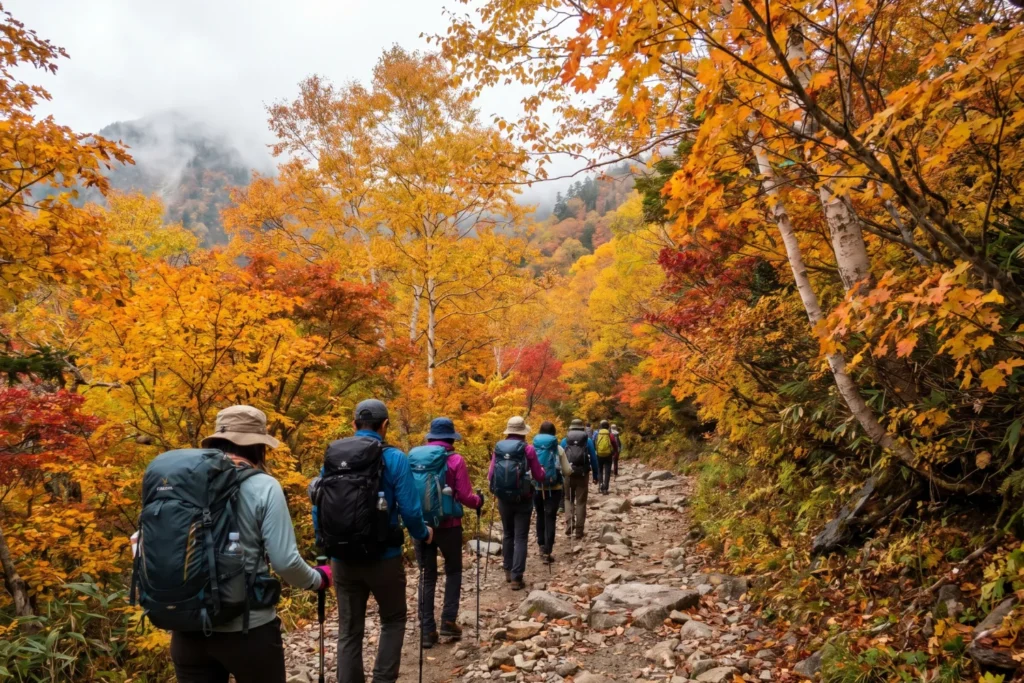
Autumn (September–November): Japan’s autumn foliage (mid-October to mid-November) rivals cherry blossom season for visual impact with lower crowds. Southeast Asia’s dry season begins in November — Bali, Thailand, and Vietnam all become significantly more pleasant after the monsoon clears.
- Walk the Nakasendo Trail between Magome and Tsumago in Japan during mid-October for peak autumn color
- Take a cooking class in Chiang Mai, Thailand in November when fresh markets are at their best
- Join a harvest festival wine tour in Portugal’s Douro Valley during September’s grape-picking season
Winter (December–February): The Caribbean’s dry season peaks December through March — the clearest water, lowest humidity, and most reliable beach conditions of the year. European Christmas markets (late November to late December) in Vienna, Prague, and Strasbourg deliver a cultural experience that’s unavailable any other time of year.
- Snorkel with sea turtles at Akumal Beach in Mexico’s Riviera Maya during January’s clearest water conditions
- Ski the Sella Ronda circuit in the Italian Dolomites during February for reliable powder and fewer crowds than France
- Visit Budapest’s thermal baths (Széchenyi) on a weekday in January for an authentic winter experience with minimal tourists
Season Comparison Table
Spring and autumn offer the best balance of moderate weather, manageable crowds, and mid-range prices. Summer delivers peak experiences at peak costs. Winter is budget-friendly in Europe but premium in the Caribbean.
| Season | Weather | Crowds | Price | Best For |
|---|---|---|---|---|
| Spring (Mar–May) | Mild, variable | Low–Moderate | Mid | Cherry blossom, Europe city breaks, Costa Rica |
| Summer (Jun–Aug) | Hot, humid (Asia) / Warm (Europe) | Very High | Peak | Mediterranean, Iceland, USA national parks |
| Autumn (Sep–Nov) | Mild, dry (Asia) / Cool (Europe) | Low–Moderate | Mid–Budget | Japan foliage, SE Asia dry season, shoulder Europe |
| Winter (Dec–Feb) | Cold (Europe) / Warm (Caribbean/Asia) | Low (Europe) / High (holidays) | Budget (Europe) / High (Caribbean) | Caribbean beaches, skiing, budget Europe |
Common Mistakes to Avoid
The biggest planning mistakes are booking peak season by default, ignoring monsoon calendars, and treating off-season as uniformly bad. May and September deliver 80% of summer’s experience at 50–60% of the cost.
Booking peak season by default. Most travelers default to July and August for Europe because it “feels like” the right time. In practice, August is the single most expensive and most crowded month across Mediterranean Europe. May and September deliver 80% of the same experience at 50–60% of the cost.
Ignoring monsoon calendars. Southeast Asia’s monsoon isn’t a light rain shower — in July and August, Bali and Thailand experience daily heavy rainfall that closes beaches, floods roads, and cancels boat tours. The difference between visiting Thailand in July versus November is not marginal.
Chasing cherry blossom or foliage without a backup plan. Japan’s peak bloom shifts by up to two weeks depending on the year. Travelers who book non-refundable flights for a specific week in late March occasionally miss peak bloom entirely. Book flexible fares and monitor the Japan Meteorological Corporation’s annual blossom forecast (released each January) to time your trip accurately.
Underestimating visa lead times. India, Vietnam, and several African destinations require visas that take 2–4 weeks to process. Applying the week before departure is a consistent and avoidable mistake.
Treating “off-season” as uniformly bad. Iceland in January is cold and dark — but it’s also dramatically cheaper, and the aurora probability is highest. Paris in February has no queues at the Louvre. Low season exists because of weather, not because the destination becomes less interesting.
Conclusion
The best approach to trip planning is a specific plan: a destination matched to a month, a budget matched to a season, and a traveler type matched to the right conditions. Europe in May, Southeast Asia in November, Japan in October, and the Caribbean in January are four windows that consistently over-deliver relative to their cost. Start with your available dates, set a budget ceiling, and work backward from there. The destination will follow.
I visited Thailand in November 2024 and found Krabi’s Railay Beach nearly empty on a Tuesday morning — the monsoon had just cleared, the limestone cliffs were shrouded in mist, and my longtail boat tour cost 800 baht ($23 USD) instead of the 1,500 baht peak-season rate. That morning confirmed everything I’ve learned about seasonal timing: the right month transforms a good trip into an unforgettable one.
Ready to go deeper? Explore the best time to travel guide for region-by-region seasonal breakdowns, or check specific destination timing for Ireland and Cancun.
Explore more on ChillTraveling:
- Best time to travel: full regional guide
- Best time to visit Ireland: month-by-month breakdown
- Best time to visit Cancun: seasons, weather & crowds
- Portugal travel guide: when to go and what to do
FAQ
The FAQ covers the cheapest travel windows, best months for first-time Europe visitors, solo travel timing, Southeast Asia weather avoidance, family travel planning strategies, booking lead times, winter value destinations, and short-trip planning.
Q: When is the cheapest time to travel internationally?
A: January through early March is consistently the cheapest international travel window, excluding school holiday breaks. European city flights and accommodation drop 25–40% below summer rates. Southeast Asia is also at its most affordable in May, just before the monsoon arrives. Budget travelers who can travel in February — particularly to Portugal, Thailand, or Japan — will find the strongest price-to-experience ratio of the year.
Q: What is the best month to visit Europe for the first time?
A: May is the strongest first-visit month for Europe. Temperatures across southern and central Europe sit between 15–25°C (59–77°F), crowds haven’t reached summer peaks, and all major attractions operate on full schedules. Prices are 20–30% below July–August rates. September is a close second — post-summer crowds, warm weather, and harvest season food experiences across France, Italy, and Spain.
Q: Is solo travel cheaper in certain seasons?
A: Yes. Solo travelers pay the steepest premiums in peak summer (July–August) when single-occupancy room surcharges are highest and hostels book out. April–May and September–October offer the best solo value: hostels have availability, group tour prices are standard, and single supplement fees are more negotiable. Japan in October and Portugal in April are two of the most consistently affordable solo windows.
Q: When should I avoid Southeast Asia due to weather?
A: June through September brings heavy monsoon conditions to most Asia destinations — particularly Thailand, Bali, and Vietnam’s central coast. Daily rainfall is heavy enough to cancel boat tours, close beaches, and affect road conditions. November through April is the reliable dry season across most of the region. If July or August are your only available months, consider the Philippines’ east coast (Siargao), which sits in a different weather pattern.
Q: What’s the best time to travel for families?
A: Families with school-age children are largely locked into June–August and the December–January holiday window — both peak pricing periods. The strategic move is booking early: 4–6 months ahead for summer Europe, 3–4 months for Caribbean December. Within summer, early June (before US and UK schools break) and late August (after European schools return) offer slightly lower prices and thinner crowds than the July core. Planning around the shoulder edges of peak season is the most actionable budget lever for families.
Q: How far in advance should I book for peak season travel?
A: For July–August European travel, book flights 3–4 months ahead and accommodation 2–3 months ahead. Caribbean December requires similar lead times for quality properties. Japan during cherry blossom season (late March–April) and autumn foliage (October–November) books out 2–3 months ahead for popular ryokans. Shoulder-season travel (May, September, October) allows for 4–6 week booking windows without significant penalty.
Q: Which destinations offer the best value in winter?
A: Winter (December–February) delivers the best value in Southeast Asia, Portugal, and the Canary Islands. Bangkok and Chiang Mai in January offer warm, dry weather with accommodation 30–40% cheaper than peak months. Lisbon in February averages 14–16°C (57–61°F) with minimal crowds and off-season hotel rates. The Caribbean is the exception — winter is high season there, with prices to match. For dedicated winter planning, shoulder-season Europe remains the strongest value category.
Q: What travel options work best for limited vacation time?
A: Travelers with one week or less get the most value from destinations with short internal transit times and high activity density. Japan (Tokyo–Kyoto corridor), Portugal (Lisbon–Sintra–Porto triangle), and Costa Rica (San José–Manuel Antonio–Arenal) all deliver diverse experiences within a 5–7 day window. October–November and March–April are the best short-trip months — stable weather, manageable crowds, and no need to book months in advance.