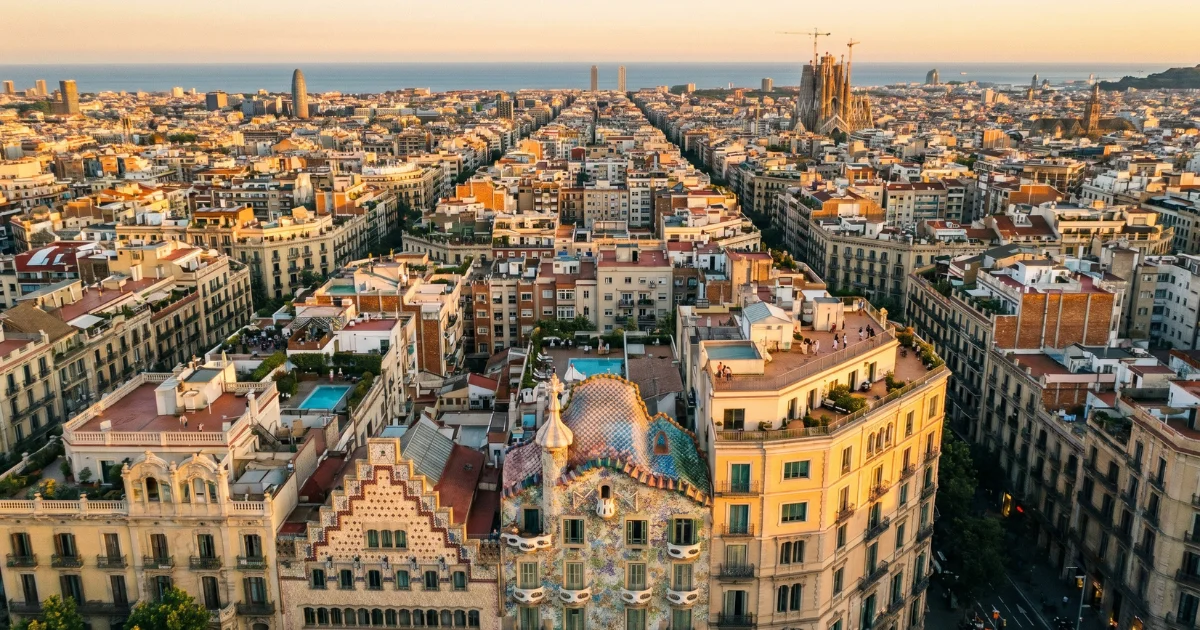
The Barcelona Travel Guide That Actually Tells You What to Expect
Barcelona is one of Europe’s most visited cities — and that’s precisely the problem no other guide wants to say out loud. The crowds at La Sagrada Família can hit 10,000 visitors a day in summer, Las Ramblas is more pickpocket corridor than promenade, and the “perfect weather” window is narrower than most guides admit. That doesn’t make Barcelona a bad trip. It makes preparation non-negotiable.
This Barcelona travel guide skips the filler and focuses on what actually shapes your experience: when to go, where to sleep, how much to spend, and which version of Barcelona you’re actually going to get. Whether you have three days or ten, travel solo or with kids, spend on a shoestring or splash on a suite at Hotel Arts — the decisions you make before you land matter more than any single attraction.
Start with timing, because it changes everything else.
Table of Contents
What Is the Best Time to Visit Barcelona?
Quick Answer: The best time to visit Barcelona is April to June or September to October. These months offer temperatures between 18–25°C, significantly fewer crowds than July and August, and lower hotel prices. July and August are the busiest and most expensive months — beach weather, but expect queues everywhere and peak-season surcharges on accommodation.
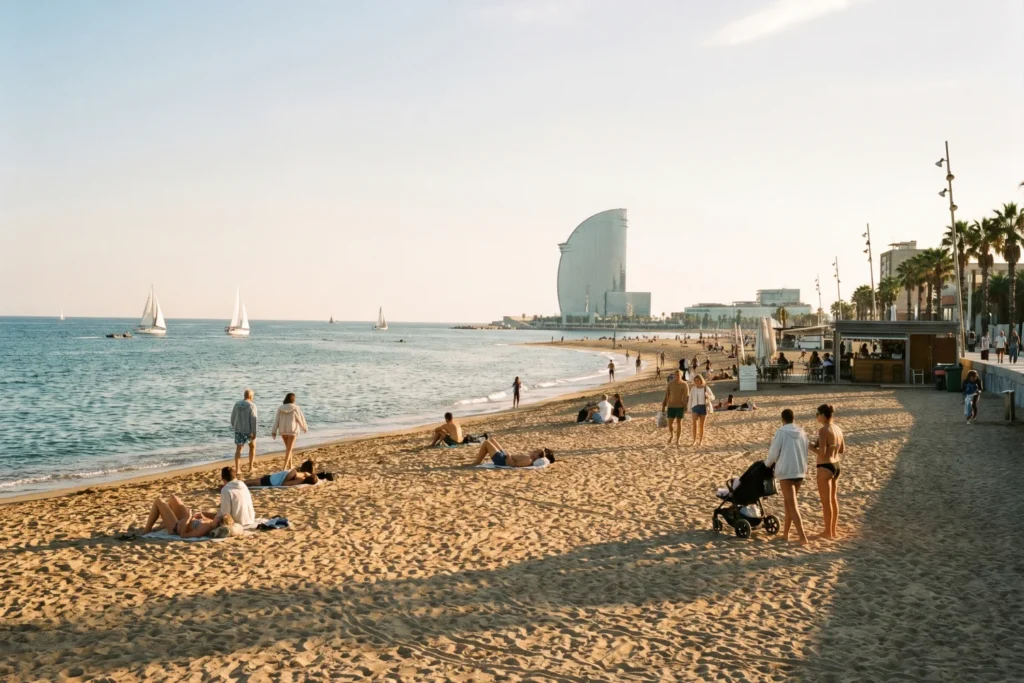
Here’s a stat most guides bury: Barcelona receives over 12 million tourists a year, and a significant chunk of them arrive between June and August. If you show up in July expecting a relaxed Mediterranean city, you’re going to find a city that’s running at full capacity — and charging accordingly.
Season-by-season breakdown:
- April–June (Best overall): Pleasant temperatures, long daylight hours, lower hotel rates than summer, and manageable queues at major attractions. Rain is possible in April but rarely disruptive.
- July–August (Peak season): Hot (often 30°C+), extremely crowded, and expensive. Good if beaches are your priority. Book everything — accommodation, Sagrada Família, Park Güell — months in advance.
- September–October (Second-best window): The sea is still warm enough to swim, the summer crowds have thinned, and prices drop noticeably after the first week of September. This is the window locals prefer.
- November–March (Off-season): Cool, occasionally rainy, but genuinely quieter. Sagrada Família without a queue is a real thing in January. Hotel rates can be 40–50% lower than peak. Outdoor dining and beach days are mostly off the table.
One thing competitors consistently get wrong: they call summer the “best time” because of the weather. But for most travelers, September hits a better balance — warm water, cooler evenings, and a city that’s recovered from its summer exhaustion.
The season you pick also determines your budget more than almost any other factor — which leads directly into what you should expect to spend.
Is Barcelona Safe for Tourists?
Quick Answer: Barcelona is generally safe for tourists, but petty theft — particularly pickpocketing — is one of the highest rates of any European city. The risk concentrates in specific locations: Las Ramblas, La Boqueria market, the Gothic Quarter, and the metro lines connecting the airport. Violent crime against tourists is rare. Awareness and basic precautions reduce risk significantly.
Most travel guides tell you to “watch your pockets.” That’s not enough. Here’s what actually happens: a group of two or three people creates a distraction — a stumble, a question, a map held up in your face — while a third person lifts your phone or wallet. It’s fast, practiced, and happens in broad daylight. During my September 2024 visit, I watched a pickpocketing attempt on Las Ramblas at 2pm — a woman was distracted by someone asking for directions while another person tried to unzip her backpack. She noticed just in time, but it was a stark reminder that this happens in plain sight, even in the middle of the day.
Where the risk is highest:
- Las Ramblas — the single most reported location for pickpocketing in the city
- La Boqueria market — crowded, narrow aisles, easy for someone to brush past you
- Metro Line 3 (Green Line) — particularly between Passeig de Gràcia and Paral·lel
- Barceloneta Beach — unattended bags while swimming
- The Gothic Quarter at night — poorly lit alleys; stick to main streets after midnight
Practical steps that actually work:
- Use a crossbody bag worn in front, not a backpack
- Keep your phone in a front pocket or zipped bag — not on café tables
- Store your passport in your accommodation safe; carry a photo copy
- If someone approaches you aggressively or persistently, walk away without engaging
- Download the Barcelona Metro map → TMB (Transports Metropolitans de Barcelona) before you arrive.
Travelers who arrive in Barcelona expecting a low-crime city because it’s Western Europe consistently get caught out. Those who treat it like any major tourist-heavy city — Rome, Paris, Prague — almost never have problems.
That said, the neighborhoods you’ll actually enjoy spending time in are generally calm, well-lit, and easy to navigate — especially once you understand how the city is laid out.
Getting There & Getting Around – Barcelona Travel Guide
Quick Answer: The Aerobus (€6.75, 35 min) is the best balance of cost and convenience for most travelers. The metro (L9 Sud, €5.50) is cheaper but slower with luggage. Taxis cost €35–€45 flat rate. For getting around, the T-Casual card (10 trips, €12.15) covers metro, bus, and tram within Zone 1.
Most travelers arriving at Barcelona–El Prat Airport (BCN) head straight for the first taxi they see outside arrivals. That taxi will cost €35–€45 to the city center. The Aerobus — a direct coach to Plaça de Catalunya — costs €6.75 one way and takes about 35 minutes. The difference is €30, and the experience is nearly identical.
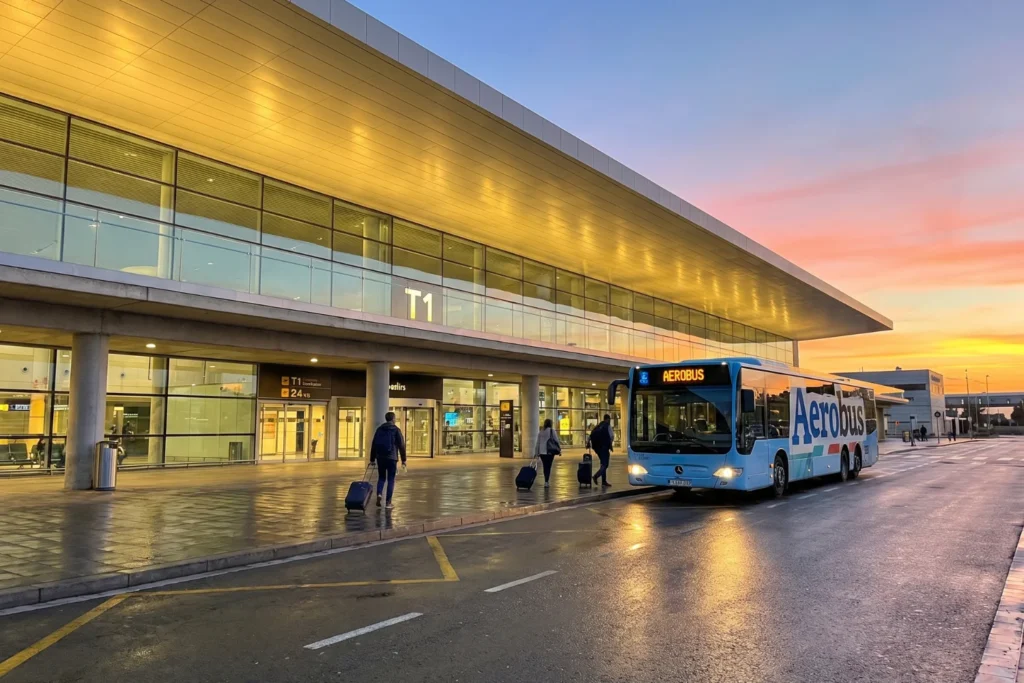
From the airport to the city center:
| Option | Cost | Time | Best For |
|---|---|---|---|
| Aerobus | €6.75 one way | 35 min | Most travelers |
| Metro (L9 Sud) | €5.50 (airport supplement) | 45–55 min | Budget travelers with light luggage |
| Taxi | €35–€45 flat rate | 25–40 min | Groups, heavy luggage, late night |
| Ride-share (Cabify/Uber) | €25–€35 | 25–40 min | Slightly cheaper than taxi |
| RENFE train (R2 Nord) | €4.60 | 25 min to Sants | Best value if staying near Sants or Passeig de Gràcia |
Getting around the city
Barcelona’s metro is clean, frequent, and covers every major area. The T-Casual card (10 trips, €12.15) is the standard choice for most visitors — it works on metro, bus, and tram within Zone 1, which covers everything you’ll likely need.
- Metro: Fastest for cross-city travel. Lines 2, 3, and 5 cover most tourist areas.
- Bus: Slower but useful for areas not on the metro (Montjuïc cable car access, for example).
- Bike / e-scooter: Bicing is the city’s bike-share system (subscription required). Tourist-facing rentals are widely available around the Gothic Quarter and Barceloneta.
- Taxi / Cabify / Uber: All operate legally. Cabify and Uber are usually cheaper than street taxis.
- On foot: Eixample and the Gothic Quarter are genuinely walkable. The grid layout of Eixample makes navigation easy.
One scam to know: unofficial “taxi” drivers inside the arrivals hall who approach you before you reach the official taxi rank. Always use the official rank outside, or book a ride-share app before you land.
Now that you know how to move around, the next question is where to base yourself — and that decision affects both your daily logistics and your total bill.
Where to Stay — Best Neighborhoods & Options
The neighborhood you pick in Barcelona shapes your entire experience. Staying in the Gothic Quarter puts you inside the tourist core — convenient, atmospheric, and loud until 3am. Staying in Gràcia means a 20-minute metro ride to Sagrada Família but actual sleep and local breakfast spots. I booked a €160/night room at Hotel Praktik Rambla in June 2025 and the location was perfect — just off Passeig de Gràcia, a five-minute walk to Casa Batlló, and quiet enough at night to actually sleep with the windows closed.
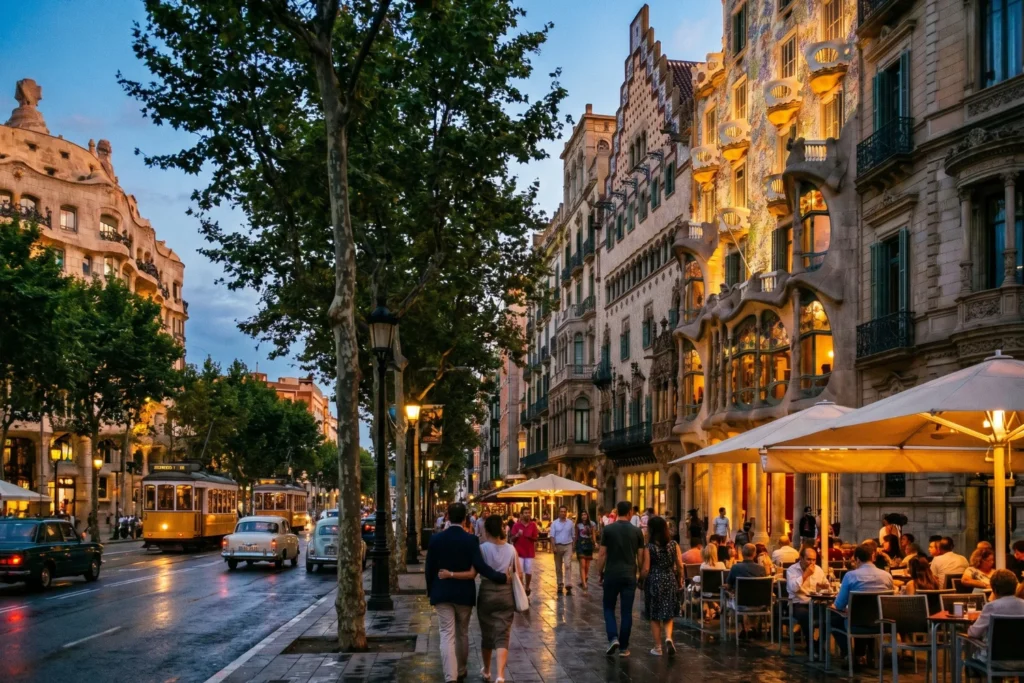
Neighborhood comparison:
| Neighborhood | Vibe | Price Range/Night | Best For |
|---|---|---|---|
| Gothic Quarter | Historic, tourist-heavy, loud | €80–€200 | First-timers, short stays |
| Eixample | Elegant, central, walkable | €100–€300+ | Couples, mid-range, luxury |
| Gràcia | Local, quieter, charming | €70–€160 | Repeat visitors, longer stays |
| El Raval | Edgy, diverse, improving | €50–€120 | Backpackers, budget travelers |
| Barceloneta | Beach access, party scene | €90–€200 | Beach-focused, summer stays |
| El Born | Trendy, walkable, good food | €90–€220 | Foodies, design travelers |
Named recommendations by budget:
Budget (under €70/night):
- Generator Barcelona (Gràcia) — reliable hostel chain, private rooms available, good common areas
- Sant Jordi Hostel Rock Palace (Eixample) — social atmosphere, central location
Mid-range (€100–€200/night):
- Hotel Praktik Rambla (Eixample) — solid value, Modernista building, 5-minute walk to Las Ramblas
- Yurbban Trafalgar (El Born) — boutique feel, rooftop pool, reasonable rates outside peak season
Luxury (€250+/night):
- Hotel Arts Barcelona (Barceloneta) — 44-floor tower directly on the beach, Ritz-Carlton managed
- W Barcelona (Barceloneta) — the sail-shaped tower on the waterfront; views are genuinely exceptional
Honest tradeoff: El Raval has improved significantly but still has pockets that feel uncomfortable at night, particularly around Carrer de Sant Pau after midnight. It’s not dangerous, but it’s not relaxing either. If you’re traveling solo or with children, Eixample or El Born are easier bases.
Once you’ve picked your neighborhood, the next variable is how much the whole trip is actually going to cost you.
Budget & Cost of the Trip – Barcelona travel guide
Barcelona is not a cheap city. It’s not Paris-expensive either, but travelers who arrive expecting budget-Mediterranean prices — thinking Lisbon or Porto — consistently overspend.
Daily budget breakdown:
| Traveler Type | Accommodation | Food & Drink | Transport | Activities | Daily Total |
|---|---|---|---|---|---|
| Budget backpacker | €25–€40 (hostel dorm) | €20–€35 | €5–€8 | €10–€20 | €60–€100 |
| Mid-range | €100–€160 (hotel) | €50–€80 | €8–€12 | €25–€40 | €120–€180 |
| Comfort/luxury | €200–€400+ (hotel) | €100–€160 | €20–€40 | €50–€100+ | €250–€500+ |
A comfortable trip to Barcelona costs approximately €120–€180 per day for a mid-range traveler, including a centrally located hotel, two sit-down meals, metro use, and one paid attraction.
What costs more than expected:
- Attraction entry fees — La Sagrada Família costs €26–€36 depending on the package; Park Güell’s Monumental Zone is €10
- Eating near the main tourist corridors — a tourist-menu lunch on Las Ramblas can run €20–€25 for food that costs €10 three blocks away
- Taxis from the airport if you don’t research alternatives first
- Bar and club entry in the nightlife district around Port Olímpic
Where to save:
- The T-Casual metro card (€12.15 for 10 trips) pays for itself in two days
- Lunch menus (menú del día) at local restaurants: €10–€14 for three courses including wine
- Many city beaches, parks, and the Gothic Quarter itself cost nothing
- Montjuïc’s free walking paths and gardens are worth an afternoon without spending anything
The food scene in Barcelona is one of its genuine strengths — but only if you know where to eat and what to order.
Where to Eat & What to Eat
La Boqueria is beautiful. It’s also one of the worst places in Barcelona to actually eat. The market stalls lining the main entrance are priced for tourists — €8 for a small fruit cup, €12 for a plate of jamón that costs half that two streets away. Walk through it, take photos, buy a snack if you want. Just don’t make it a meal destination. I paid €14 for a menú del día at Can Culleretes in March 2025 — three courses with wine, in a restaurant that’s been open since 1786, tucked away in the Gothic Quarter. That’s the kind of meal that makes Barcelona worth visiting.
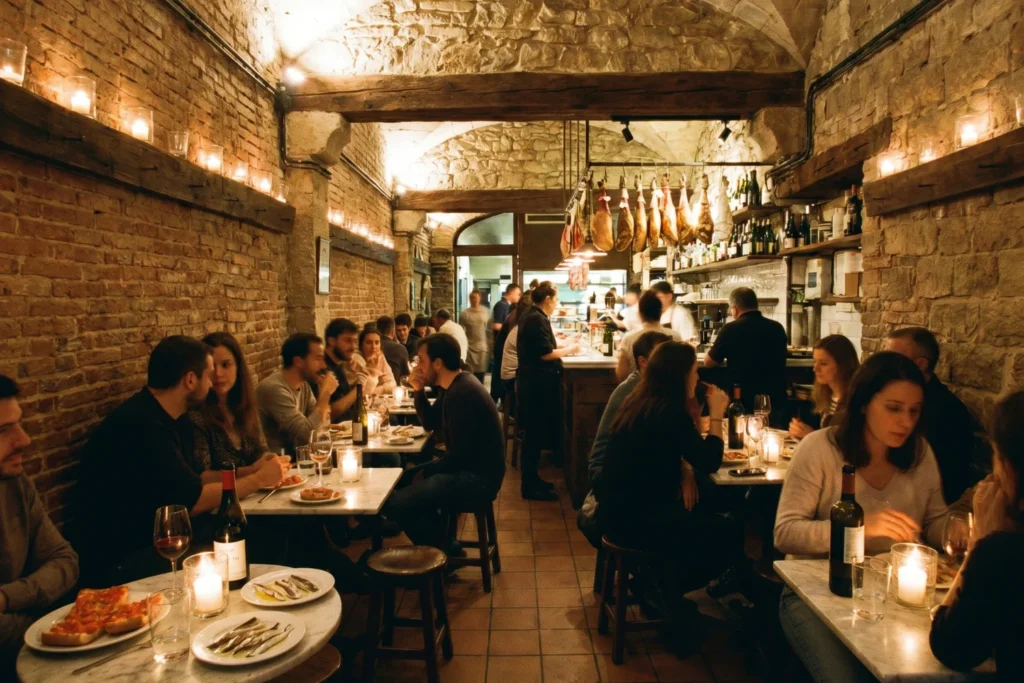
Dishes worth ordering:
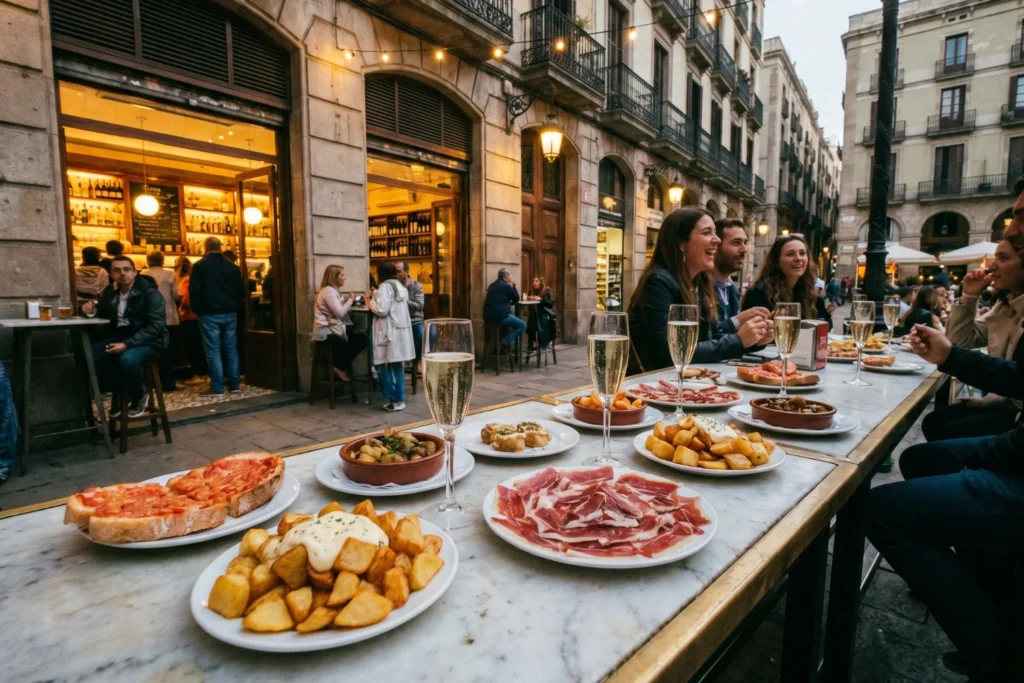
- Pan con tomate (pa amb tomàquet) — grilled bread rubbed with tomato and olive oil; the Catalan default, and it’s excellent
- Patatas bravas — fried potato cubes with a spicy tomato sauce and aioli; every bar does them, quality varies enormously
- Croquetes — fried béchamel croquettes, usually with jamón or bacallà (salt cod); the best ones are dense and creamy inside
- Fideuà — like paella but made with short noodles; try it at a restaurant on the Barceloneta waterfront
- Vermut — the pre-lunch vermouth ritual is genuinely local; order it with olives and anchovies at a traditional bar in Gràcia or El Born
Named restaurant recommendations:
- Can Culleretes (Gothic Quarter) — Barcelona’s oldest restaurant, open since 1786, Catalan classics, lunch menus around €14, always busy, worth booking ahead
- Tickets (Eixample) — Albert Adrià’s tapas restaurant; you need to book months ahead online, but it’s one of the more genuinely creative meals in the city
- Bar Calders (Sant Antoni) — local neighborhood bar, excellent vermut, no tourist markup
- La Cova Fumada (Barceloneta) — the bar credited with inventing the bombas (stuffed potato fritters); cash only, no sign outside, closes by early afternoon
One practical note: most Barcelona restaurants don’t open for dinner until 8:30–9pm. If you sit down at 7pm, you’ll be eating with other tourists. At 9:30pm, you’ll be eating with locals — and the energy is different.
Knowing where to eat is one thing. Knowing which attractions are actually worth your time — and which ones are overrated — is a different conversation.
Top Things to Do & Places to Visit
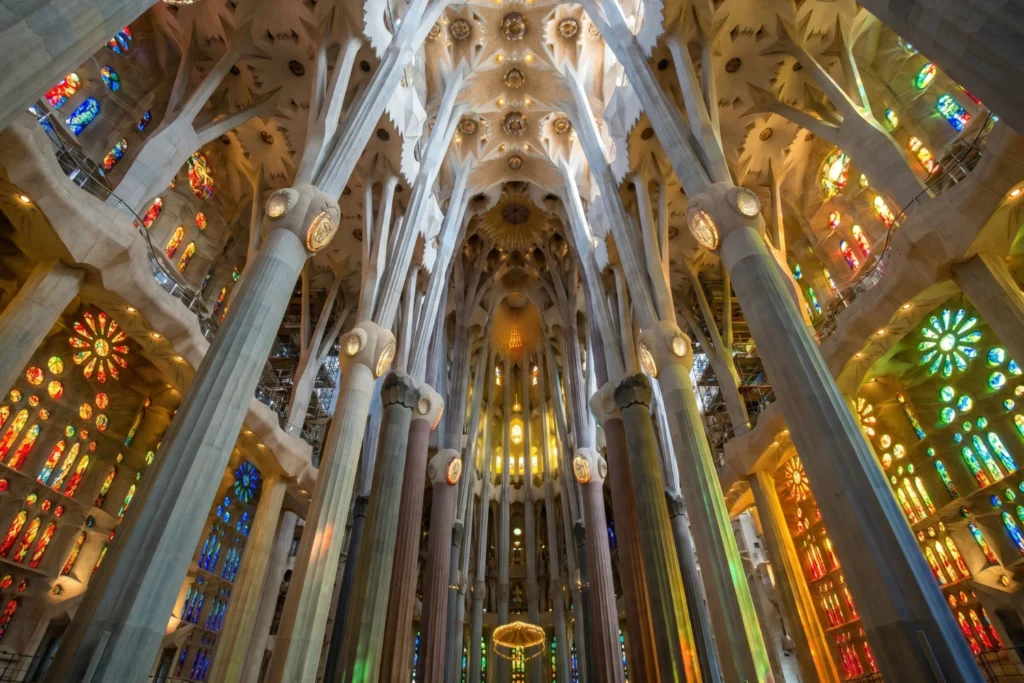
Ten thousand people visit La Sagrada Família every single day. That number should tell you something about the booking situation — and about the experience you’ll have if you show up without a ticket.
The major attractions — honest notes:
La Sagrada Família
Gaudí’s unfinished basilica is genuinely unlike anything else in Europe. The interior — with its forest of branching columns and floor-to-ceiling stained glass — justifies the hype. Book online at least 2–3 weeks ahead in peak season. Entry from €26; tower access costs extra and is worth it for the views.
Park Güell
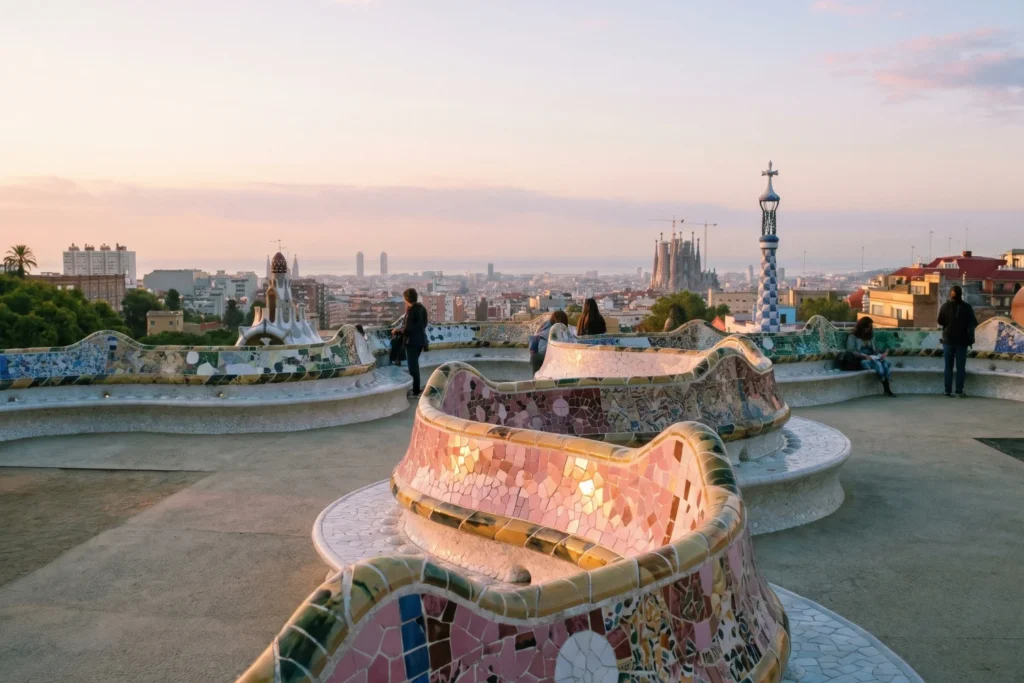
The Monumental Zone (the mosaic terrace and main structures) requires a timed ticket (€10). The surrounding park is free. Arrive right at opening (8am) to beat the crowds. The views over the city from the terrace are genuinely good, but the experience is rushed if you arrive mid-morning.
Gothic Quarter
Free to walk, easy to get lost in, and genuinely atmospheric at night. The Roman ruins beneath the medieval streets are visible through glass floors in parts of the old city. Skip the tourist restaurants on the main drag and find the smaller squares.
Las Ramblas
Walk it once. It’s a pedestrian boulevard lined with newspaper kiosks, flower stalls, and tourist traps. The architecture on either side is interesting; the street itself is overrated. Keep your bag in front of you.
Barceloneta Beach
A wide, sandy urban beach that gets extremely crowded in summer. The water is clean. The beach bars (chiringuitos) range from decent to overpriced. Better beaches exist further along the coast (Ocata, Sitges), but Barceloneta is convenient.
Montjuïc
The hill southwest of the city has the Fundació Joan Miró (worth it for art lovers), the 1992 Olympic stadium, and free gardens with city views. The cable car from Barceloneta is scenic; the funicular from Paral·lel metro is cheaper.
Camp Nou
FC Barcelona’s stadium is the largest in Europe by capacity. The museum and stadium tour run €28–€35. Worth it for football fans; skippable for everyone else.
The underrated pick: El Born neighborhood, specifically the Mercat de Santa Caterina (not La Boqueria). Same market energy, a fraction of the tourists, and a mosaic roof that’s more visually interesting than anything on Las Ramblas.
With the key attractions mapped out, here’s how to sequence them across five days without burning out.
5-Day Barcelona Itinerary — How to Make the Most of Your Trip
For a 5-day trip to Barcelona, the ideal itinerary covers Gaudí’s major works, the Gothic Quarter, Barceloneta, Montjuïc, and at least one local neighborhood — with enough flexibility for a long lunch and an unplanned evening.
Day 1 — Arrive, orient, Gothic Quarter
- Morning: Check in, walk Las Ramblas once, then immediately leave Las Ramblas
- Afternoon: Gothic Quarter on foot — Plaça Reial, the Roman temple of Augustus, the Cathedral
- Evening: Dinner in El Born; try Can Culleretes if you book ahead
Day 2 — Gaudí day
- Morning (8am sharp): Park Güell — Monumental Zone ticket pre-booked; arrive at opening
- Midday: Walk down through Gràcia, lunch at a local restaurant on Carrer de Verdi
- Afternoon: La Sagrada Família — pre-booked ticket, allow 2 hours minimum
- Evening: Passeig de Gràcia to see Casa Batlló and Casa Milà (La Pedrera) exteriors; consider the Casa Batlló night tour
Day 3 — Barceloneta & waterfront
- Morning: Barceloneta beach, early before crowds arrive
- Midday: Fideuà lunch at a waterfront restaurant
- Afternoon: El Born neighborhood, Mercat de Santa Caterina, Basílica de Santa Maria del Mar
- Evening: Vermut at Bar Calders in Sant Antoni, then dinner in Eixample
Day 4 — Montjuïc & local Barcelona
- Morning: Montjuïc via funicular; Fundació Joan Miró (allow 2 hours)
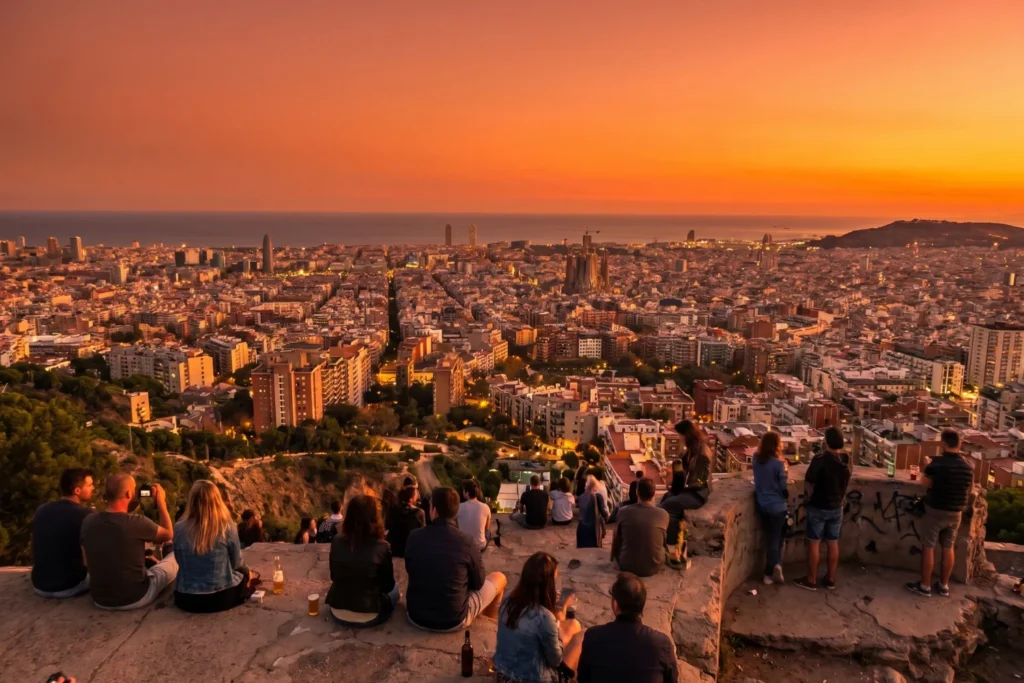
- Afternoon: Bunkers del Carmel — the anti-aircraft gun ruins above Gràcia offer the best 360° view of the city, free, and almost no one in guidebooks mentions it prominently
- Evening: Gràcia neighborhood for dinner — Plaça del Sol for a pre-dinner drink
Day 5 — Day trip or slow morning
- Option A: Day trip to Montserrat (90 min by train from Plaça de Catalunya; the mountain monastery is genuinely dramatic)
- Option B: Slow morning in Eixample, Picasso Museum in El Born, afternoon at leisure
- Evening: Farewell dinner at a proper Catalan restaurant; book ahead
Seasonal note: In July and August, flip the beach day to early morning and use afternoons for indoor attractions (museums, Sagrada Família) to avoid peak heat. In winter, skip Barceloneta entirely and replace with extra museum time and longer lunches.
The itinerary only works if you avoid the mistakes that derail most first-time visitors — and a few of those mistakes are specific enough that most guides don’t bother to name them.
Mistakes to Avoid & Scams to Watch Out For
1. Booking La Sagrada Família at the door
The basilica sells out weeks in advance during peak season. Showing up without a ticket means standing in a queue for hours — or not getting in at all. Book online at official La Sagrada Família tickets → sagradafamilia.org the moment your dates are confirmed.
2. Eating on Las Ramblas
Every restaurant with an English menu displayed outside on Las Ramblas is priced for tourists who don’t know better. A three-course menú del día costs €10–€14 at local restaurants; the same meal costs €25–€35 here. Walk two blocks in either direction.
3. Taking the “official tourist bus” from the airport
There is no official tourist bus from the airport. The Aerobus is a private coach service — legitimate and convenient, but not the only option. The RENFE R2 Nord train is cheaper (€4.60) and faster if your hotel is near Sants or Passeig de Gràcia.
4. Ignoring the T-Casual card
Single metro tickets cost €2.55 each. The T-Casual (10 trips) costs €12.15 — a 52% saving. If you’re staying more than two days, you’ll use 10 trips easily. Buy it at any metro station from the machines.
5. Visiting Park Güell at midday in summer
The mosaic terrace is a 15-minute outdoor experience with limited shade. At noon in July, with 2,000 other people, it’s genuinely unpleasant. The 8am slot is the same price and a completely different experience.
6. The “friendship bracelet” scam
Men near La Sagrada Família, Park Güell, and the Gothic Quarter approach tourists and begin wrapping a bracelet around their wrist before asking for money. Once it’s on, the social pressure is intense. The move: hands in pockets, direct “no,” keep walking. Don’t stop.
7. Assuming the Gothic Quarter is safe at all hours
The Gothic Quarter is fine during the day and early evening. After midnight, the alleys around Carrer dels Escudellers and the lower Gothic Quarter attract a rougher crowd. Stick to the main squares (Plaça Reial, though even that gets rowdy late) or head to El Born or Eixample for nightlife.
8. Underestimating walking distances
Barcelona looks compact on a map. La Sagrada Família to Park Güell is a 40-minute walk uphill. Barceloneta to the Gothic Quarter is 25 minutes on foot. Most visitors underestimate transit time and end up rushing. Build 20–30 minutes of buffer into every half-day plan.
Barcelona Travel Guide Conclusion
Barcelona rewards travelers who do the homework. The city is genuinely extraordinary — the architecture alone justifies the trip — but it’s also one of Europe’s most visited destinations, and it shows in the crowds, the prices, and the scam density around major attractions. Go in September if you can. Book Sagrada Família the day your flights are confirmed. Eat where locals eat.
That said: if you need a quiet, slow-paced destination with empty streets and bargain meals, Barcelona is not that city. It’s dense, loud, and perpetually busy. The travelers who love it most are the ones who lean into that energy rather than fight it.
Ready to plan further? Explore the best places to visit in Europe for more destination ideas, or check out Spain’s best travel destinations if Barcelona has you curious about the rest of the country.
Explore more on ChillTraveling:
- Discover Spain’s best travel destinations — from San Sebastián to Seville, the full picture beyond Barcelona
- Browse the best places to visit in Europe — ranked and honest, for every travel style and budget
- Find inspiration in our guide to the best places to travel — wherever you’re headed next
FAQ
Q: What is the best time to visit Barcelona?
A: April to June and September to October are the best months. Temperatures sit between 18–25°C, crowds are manageable compared to summer, and accommodation prices are lower. July and August offer peak beach weather but come with long queues at every major attraction, higher hotel rates, and a city running at full tourist capacity. Winter is quiet and cheap but limits outdoor and beach activities.
Q: How many days do you need in Barcelona?
A: Five days is the practical minimum for a well-rounded trip. Three days covers the headline attractions — Sagrada Família, Park Güell, Gothic Quarter — but leaves no time for neighborhoods, day trips, or meals that aren’t rushed. Seven or more days allows for day trips to Montserrat or Sitges and deeper exploration of local areas like Gràcia, El Born, and Poblenou.
Q: Is Barcelona safe for tourists?
A: Barcelona is safe in terms of violent crime, which is rare against tourists. The real risk is pickpocketing, which is among the highest of any European city. Las Ramblas, La Boqueria, and metro Line 3 are the most reported hotspots. Use a front-worn crossbody bag, keep your phone in a zipped pocket, and don’t leave belongings unattended on Barceloneta Beach. Late-night alleys in the lower Gothic Quarter warrant extra caution.
Q: What is the best area to stay in Barcelona?
A: Eixample is the best all-around base — central, walkable, well-connected by metro, and quieter than the Gothic Quarter at night. El Born suits travelers who prioritize food and boutique shopping. The Gothic Quarter is convenient for first-timers but noisy. Gràcia offers a more local feel with slightly longer transit to major sights. Barceloneta works for beach-focused summer trips but has a party-heavy atmosphere.
Q: How much does a trip to Barcelona cost?
A: A mid-range traveler should budget approximately €120–€180 per day, covering a central hotel, two sit-down meals, metro use, and one paid attraction. Budget backpackers can manage on €60–€100 per day using hostel dorms and menú del día lunches. Luxury travelers spending at Hotel Arts or W Barcelona with dinner at Tickets should plan for €300–€500+ per day. Attraction fees add up quickly — La Sagrada Família alone is €26–€36.
Q: What is the best way to get around Barcelona?
A: The metro is the fastest and most practical option for most journeys. Buy a T-Casual card (10 trips, €12.15) — it covers metro, bus, and tram within Zone 1. Walking works well in Eixample and the Gothic Quarter. Bikes and e-scooters are good for the waterfront. Taxis and Cabify/Uber are reliable but unnecessary for most city-center trips. Avoid renting a car — parking is expensive and the city is not designed for driving tourists.
Q: What should I eat in Barcelona?
A: Start with pan con tomate (bread rubbed with tomato and olive oil) — it comes with almost everything and is genuinely good. Order patatas bravas, croquetes, and fresh anchovies at any decent tapas bar. For a full meal, try fideuà (noodle paella) near Barceloneta or a three-course menú del día at a local restaurant for €10–€14. Avoid eating on Las Ramblas. The Sant Antoni neighborhood and El Born have the best concentration of quality, non-tourist restaurants.