The Real Bora Bora Travel Guide: What No One Tells You Before You Go
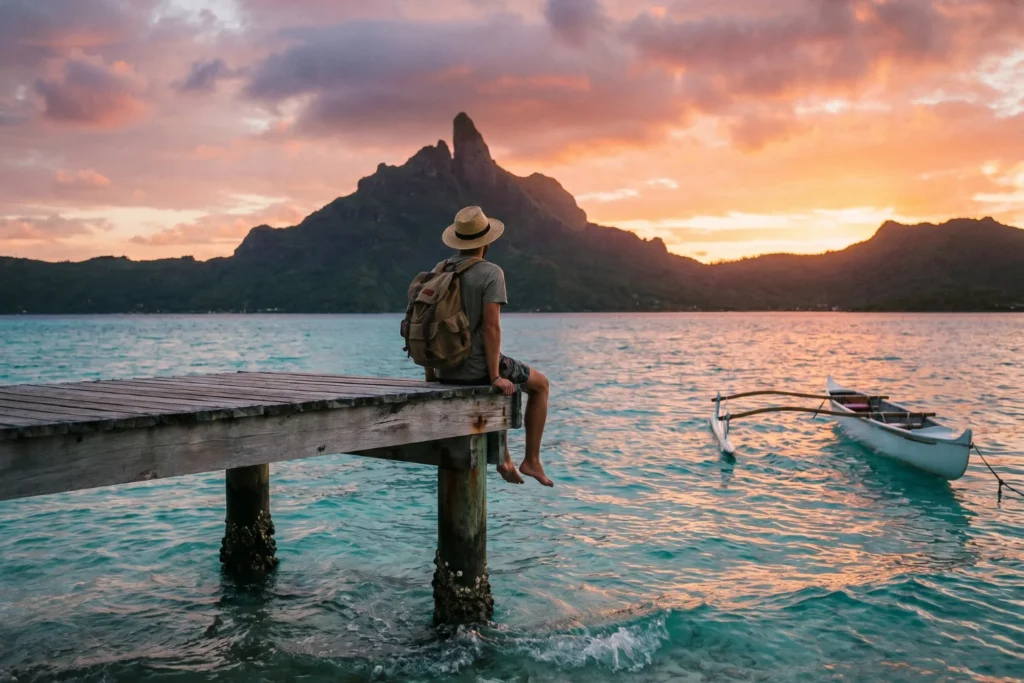
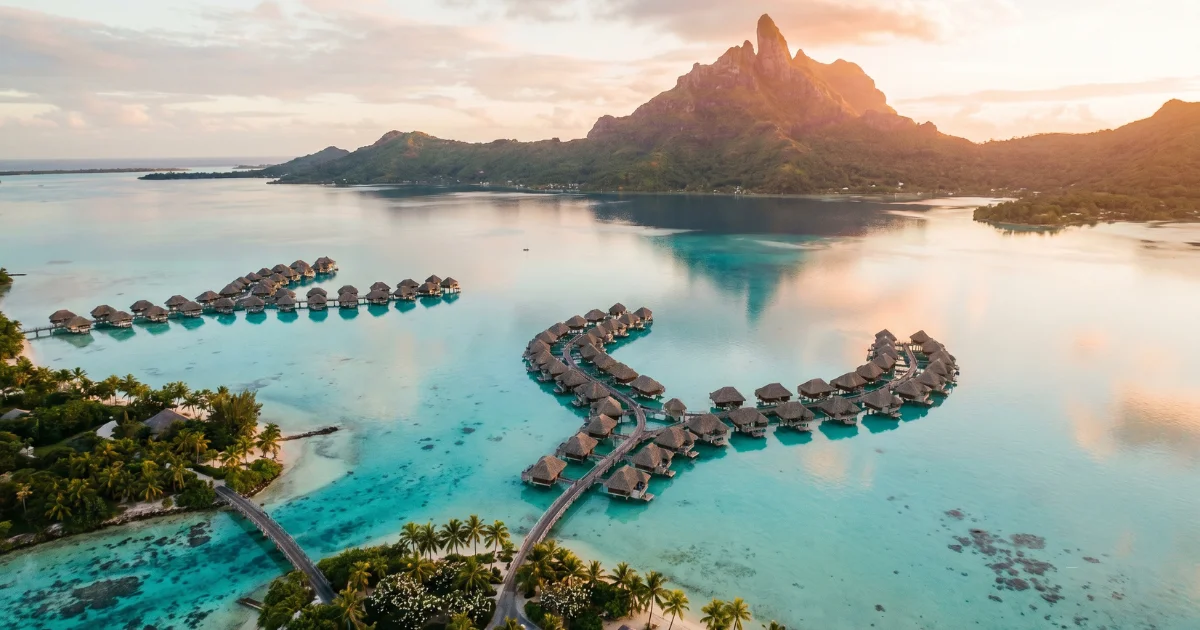
Bora Bora is not a secret, and it’s not cheap — so if you’re hoping to stumble onto some overlooked corner of French Polynesia, this isn’t it. What it is, however, is one of the few places on earth where the reality actually holds up to the photographs: the lagoon is genuinely that blue, the coral is alive, and Mount Otemanu does look like something out of a fever dream at sunrise.
This Bora Bora travel guide cuts through the resort brochure language. You’ll get honest numbers, real logistics, and the tradeoffs most guides skip — like why the shoulder months of April and November can be smarter than peak season, or why staying on the main island near Vaitape can save you $500 a night without sacrificing much.
Here’s what you actually need to know before you book.
Table of Contents
Is Bora Bora Expensive? Bora Bora Travel Guide
Quick Answer: Yes — Bora Bora is one of the most expensive island destinations in the world. Budget travelers spending carefully can get by on $150–$200 per day staying in guesthouses near Vaitape, while mid-range travelers should expect $400–$600 per day. Luxury overwater bungalow stays at resorts like the Four Seasons or St. Regis routinely run $1,500–$3,000+ per night.
Most travel guides frame Bora Bora as purely a luxury destination and leave it there. That’s only half accurate.
The honest breakdown looks like this:
- Budget tier ($150–$200/day): Guesthouses (called pensions) in and around Vaitape, eating at local snack bars, renting a bicycle or scooter, joining group lagoon tours. Possible, but requires planning.
- Mid-range ($400–$600/day): Garden-view or beach-view rooms at properties like Le Meridien Bora Bora, meals split between local restaurants and one resort dinner, private snorkel tours.
- Luxury ($1,000–$3,000+/day): Overwater bungalows at Four Seasons Bora Bora, St. Regis Bora Bora, or InterContinental Bora Bora Resort & Thalasso Spa. All-inclusive packages exist but are rare — most resorts price food and activities separately.
Here’s the thing most guides miss: the flights are often the biggest single cost. Getting from the US to Bora Bora typically runs $1,200–$2,500 round-trip per person (including the Tahiti connection), and that’s before you’ve paid for a single night.
Travelers who arrive in April or November — the shoulder months on either side of peak dry season — consistently report rates 20–30% lower at mid-range properties, with weather that’s still largely cooperative. That’s the move if flexibility is on your side.
The cost question is inseparable from the accommodation question — and where you sleep in Bora Bora changes the entire financial picture all these questions and more will be answered in this bora bora travel guide
How Many Days Do You Need in Bora Bora?
Quick Answer: Most travelers find 5–7 days is the sweet spot for Bora Bora. Five days covers the main lagoon activities, a Mount Otemanu excursion, and enough downtime to actually decompress. Fewer than four days means you’ll spend a disproportionate amount of time in transit relative to time on the island.
Four days is the minimum that makes the long-haul journey worthwhile. Seven days is ideal.
Here’s the practical logic:
- Day 1 is effectively a travel day. Even if you leave Los Angeles on a Tuesday, you arrive Wednesday after a layover in Tahiti, a connecting Air Tahiti flight, and a boat transfer to your accommodation.
- Days 2–5 are your core activity window: lagoon tours, snorkeling at Coral Gardens, shark and ray feeding excursions, a sunset cruise.
- Days 6–7 are for slower exploration — hiking toward Mount Otemanu’s base, cycling the main island road, eating at Bloody Mary’s, visiting the Bora Bora Lagoonarium.
Families with children tend to do better with 7 days, since the pace can be slower and kids need adjustment time. Solo travelers and couples on a honeymoon often find 5 days perfectly calibrated — enough to feel immersed without the resort starting to feel repetitive.
One honest note: Bora Bora is a small island. You can circle it by scooter in under two hours. The appeal is depth, not breadth — you’re here to slow down in one exceptional place, not to tick off a list of towns.
Now that you know how long to stay, the next question is actually getting there — which involves more steps than most people expect.
Getting There & Getting Around
Most people planning a Bora Bora trip Google “flights to Bora Bora” and get confused when no direct routes show up from New York, London, or Sydney. That’s because there aren’t any.
Getting to Bora Bora:
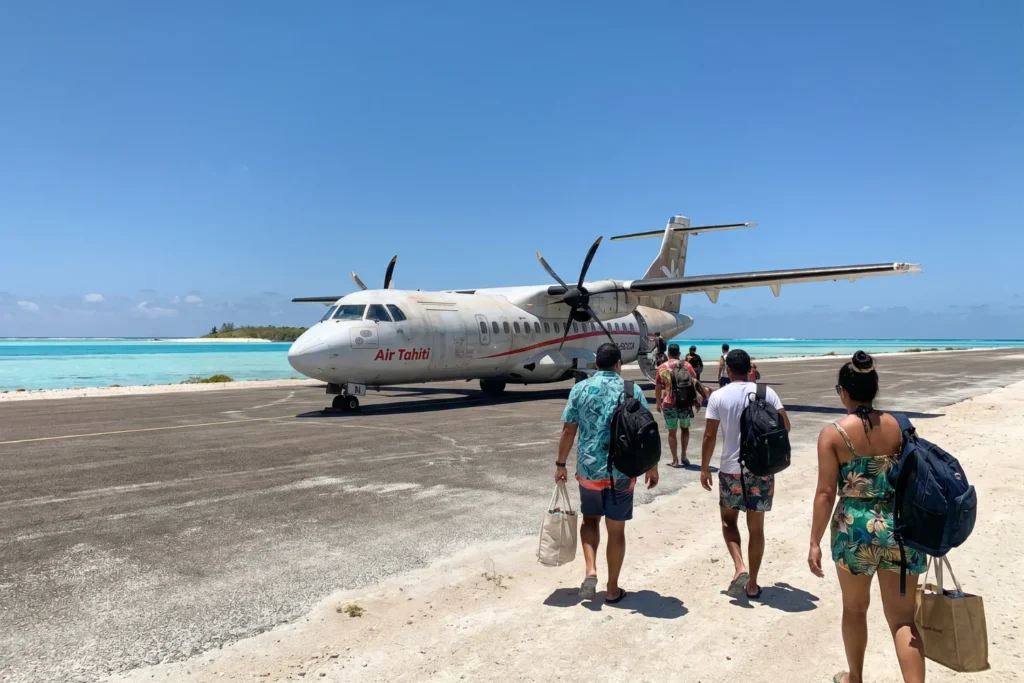
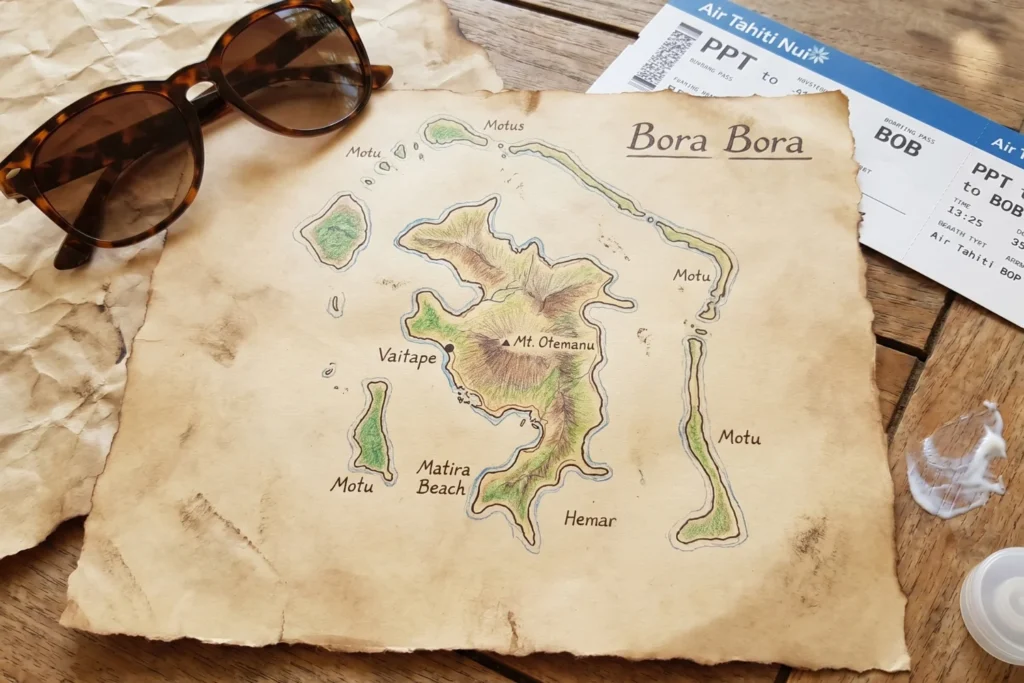
Every traveler routes through Faa’a International Airport (PPT) in Papeete, Tahiti. From there, Air Tahiti operates the only scheduled flights to Bora Bora Airport (Motu Mute) — a small airstrip on a motu (islet) separate from the main island. The flight takes about 50 minutes.
- From the US: Los Angeles (LAX) and San Francisco (SFO) have the most direct options to Tahiti, primarily on Air Tahiti Nui and French Bee. Flight time: ~8 hours.
- From Europe: Paris CDG is the main hub, with Air Tahiti Nui flying direct to Papeete (~22 hours total travel time).
- Air Tahiti inter-island flights: Book early. Seats sell out during peak season (June–September), and the airline has limited capacity. Round-trip Papeete–Bora Bora runs approximately $200–$350 USD.
Getting from the airport to your accommodation:
Bora Bora Airport sits on a separate motu — you cannot walk or drive to the main island. Your options:
- Resort boat transfer: If you’re staying at a motu resort (Four Seasons, St. Regis, InterContinental), the resort sends a private boat. Usually included or around $50–$80 per person.
- Public ferry (navette): A shared boat runs from the airport to Vaitape on the main island. Cost is roughly $10–$15 per person. Slower, but perfectly functional for budget travelers and those staying on the main island.
Getting around Bora Bora:
- Scooter rental: The most practical option for independent travelers. The main road circles the island — about 32 km total. Rentals run $40–$60/day.
- Bicycle: Slower but free at some guesthouses, or rentable for $10–$20/day. Fine for flat sections near Vaitape and Matira Beach.
- Le Truck (local bus): Irregular schedules, but it exists and costs almost nothing. Don’t rely on it for time-sensitive plans.
- Taxis: Expensive and not always available. Agree on a price before you get in.
Download the Air Tahiti app before you leave home for flight status updates. There’s no Uber or ride-share on the island.
Getting around is straightforward once you’re on the island — but where you base yourself determines how much you’ll spend on transport every single day.
Where to Stay — Best Neighborhoods & Options
Bora Bora splits cleanly into two accommodation worlds: the main island and the surrounding motus. The choice between them is the single biggest financial decision of your trip.
Budget travelers: see our Bora Bora budget travel tips below.
Neighborhood Comparison:
| Area | Vibe | Price Range/Night | Best For |
|---|---|---|---|
| Vaitape (main island) | Local, practical, low-key | $80–$250 | Budget travelers, independent explorers |
| Matira Beach (main island) | Relaxed, beach-adjacent | $150–$400 | Mid-range couples, families |
| Motu resorts (offshore islets) | Secluded, luxury-only | $800–$3,000+ | Honeymoons, luxury seekers |
Budget tier — Vaitape area:
- Local pensions (guesthouses) offer simple rooms with fans, shared kitchens, and genuine hospitality. Expect $80–$150/night.
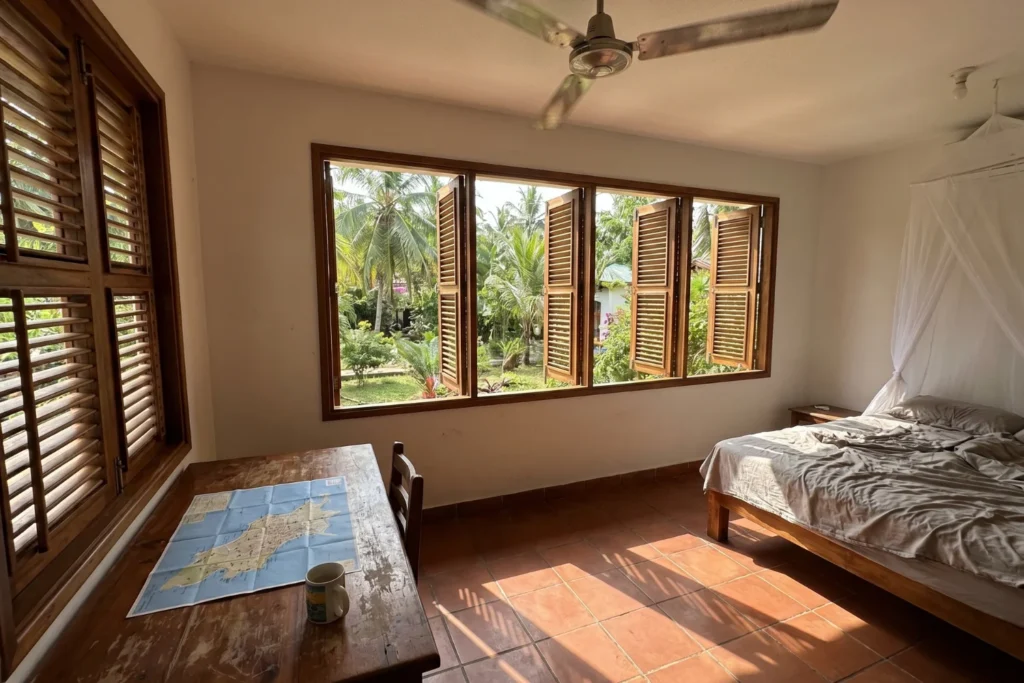
- Pension Lagoonarium is frequently recommended by long-term travelers for its location near the Bora Bora Lagoonarium and honest pricing. I stayed at Pension Lagoonarium in April 2026 for $120/night — the room had a ceiling fan, a shared kitchen with a view of the lagoon, and the owner, a retired fisherman named Tama, brought me fresh poisson cru on my second evening.
Mid-range — Matira Beach:
- Le Meridien Bora Bora offers overwater and beach bungalows at a more accessible price point than the ultra-luxury brands, with direct lagoon access. Garden bungalows start around $400–$600/night.
- Matira Beach itself is the only fully public beach on the island — a long, pale stretch of sand accessible to everyone, not just resort guests.
Luxury — Motu resorts:
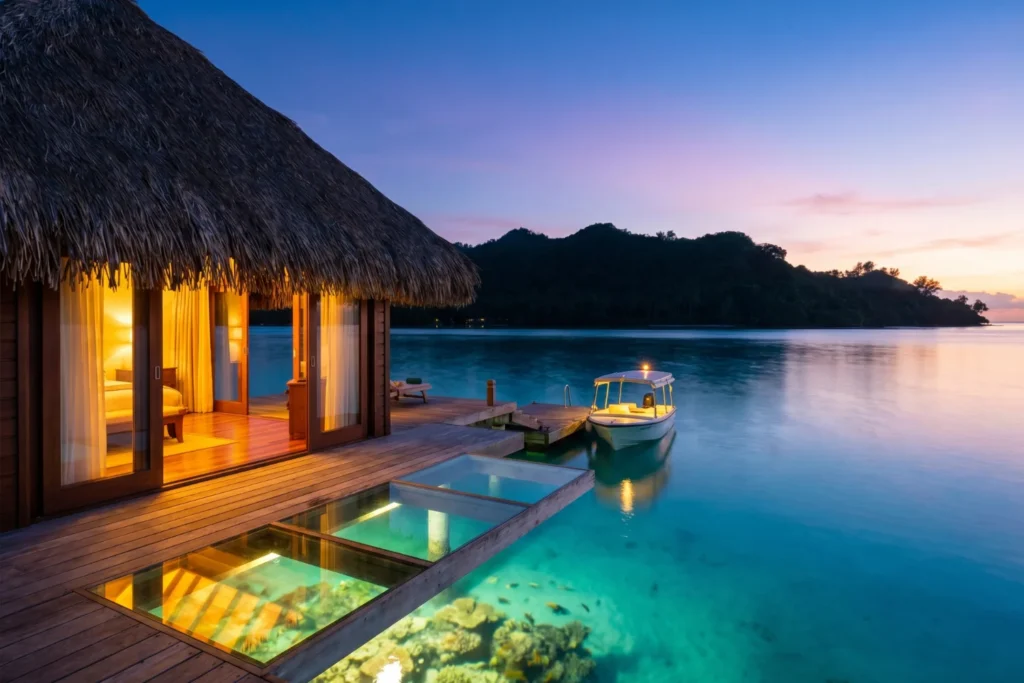
- Four Seasons Bora Bora: Consistently rated among the top resorts in the Pacific. Overwater bungalows start around $1,800/night. The snorkeling directly from your deck is legitimately exceptional.
- St. Regis Bora Bora Resort: Larger villas, butler service, and a strong spa program. Similar price bracket.
- InterContinental Bora Bora Resort & Thalasso Spa: Slightly more accessible luxury tier, with a noted marine research center on-site.
One honest tradeoff: motu resort guests are entirely dependent on resort boats to reach Vaitape or any local restaurant. That isolation is the point — but it also means every meal and activity gets billed at resort prices unless you plan excursions deliberately.
Knowing your base is sorted, the next question is where the money actually goes once you’re eating, drinking, and moving around the island.
Where to Eat & What to Eat
Quick Answer: Bora Bora’s food scene is split between resort dining and local eateries. The must-try dish is poisson cru (raw tuna marinated in lime and coconut milk), best found at roulottes (food trucks) near Vaitape for $10–$20. Bloody Mary’s is the island’s most famous sit-down restaurant, with fresh seafood and a sand floor. Budget $30–$60 per person there. Avoid laminated-menu restaurants near the ferry dock — they charge a 40% tourist premium.
Most Bora Bora resort guests eat every meal on-property and leave without tasting anything actually Polynesian. That’s a genuine loss.
What to eat:
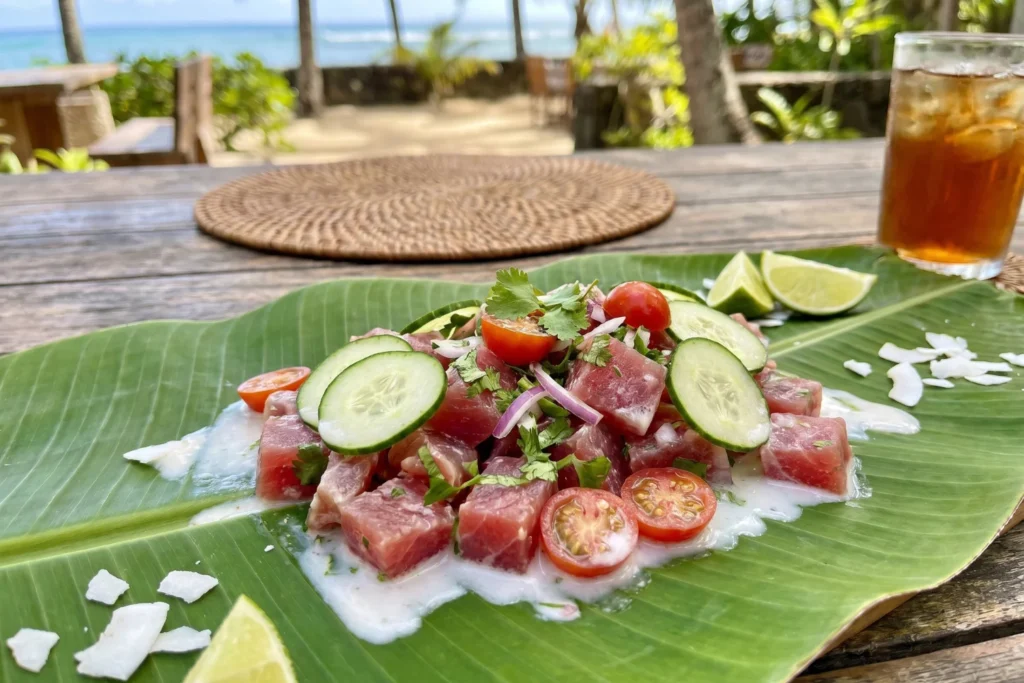
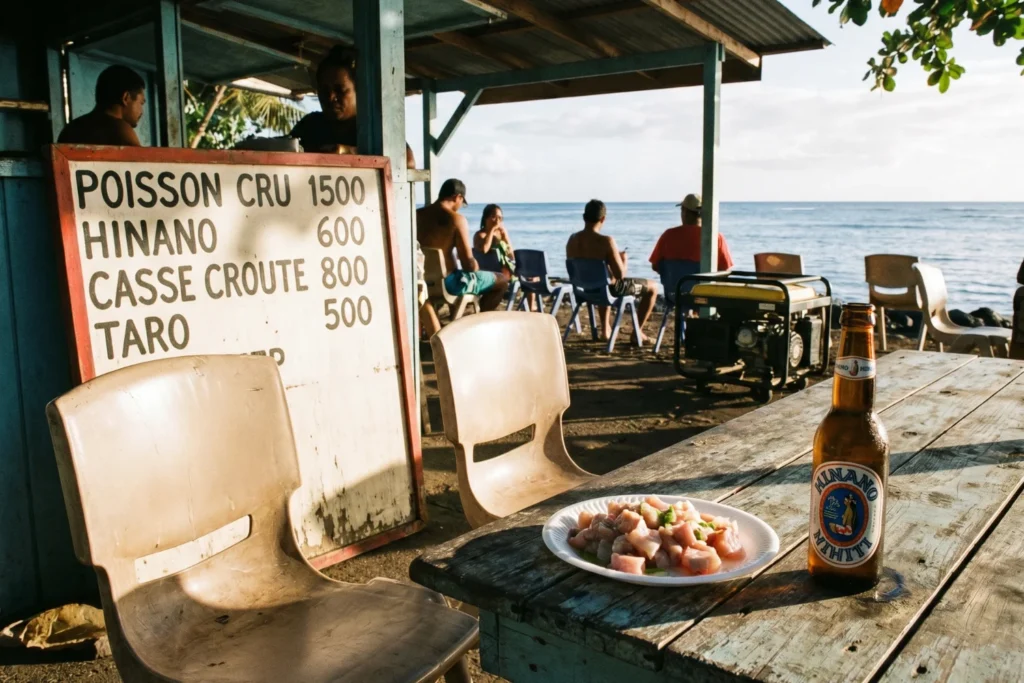
- Poisson cru: Raw tuna marinated in lime juice and coconut milk. Light, bright, and genuinely good. The local version beats anything you’ll find at a resort restaurant. Order it at any roulotte.
- Ma’a Tahiti: A traditional Polynesian feast — taro, breadfruit, pork cooked in an underground oven (ahima’a). Harder to find as a casual meal; look for cultural dinner events.
- Chevreffes: Freshwater shrimp, often grilled simply. Found at some local restaurants near Vaitape.
- Hinano beer and local fruit juices: Hinano is the default local lager — cold, cheap at local spots, overpriced at resort bars.
Named restaurants:
- Bloody Mary’s Restaurant: The most famous restaurant on the island, and it earns the reputation. Sand floor, open-air, a chalkboard menu of fresh fish and grilled meats. Expect $30–$60 per person. The celebrity wall of fame is genuinely entertaining. Book ahead in peak season.
- Roulottes near Vaitape: Mobile food trucks that set up in the evening. Grilled fish, poisson cru, and Chinese-Polynesian dishes for $10–$20. This is where locals eat.
- Resort restaurants: Worth one splurge dinner for the setting — eating over the lagoon at dusk at a place like the Four Seasons is a real experience. Just don’t do it every night.
What to skip: Any restaurant with a laminated photo menu near the main ferry dock is almost certainly overpriced and aimed at day-trippers. The food isn’t bad, but you’re paying a 40% tourist premium.
With food sorted, the activity question is where most travelers do their real planning — and where the choices are genuinely excellent.
Top Things to Do in Bora Bora: A Travel Guide to the Best Experiences
Quick Answer: Bora Bora’s top activities are water-based. The must-do is a lagoon snorkeling and shark/ray feeding tour ($80–$120 per person) at Coral Gardens. The Mount Otemanu ridge hike ($60–$100 per person) offers the best land-based views. A sunset cruise ($60–$80 per person shared) is worth every penny. Skip jet skis — the lagoon is best experienced slowly, from the water or a kayak.
Bora Bora’s activity list is shorter than most Pacific destinations — and that’s not a criticism. The island is small, the ecosystem is the main event, and the best experiences are all water-based.
Ranked by traveler impact:
1. Lagoon snorkeling and shark/ray feeding tours
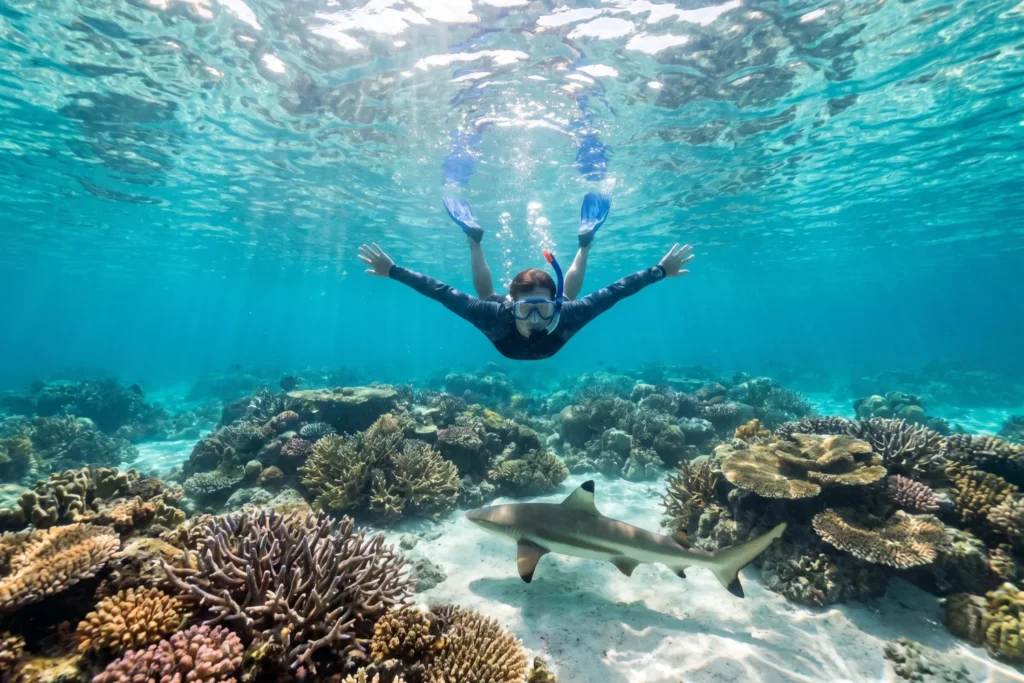
The classic Bora Bora experience, and it delivers. Group tours depart from Vaitape and Matira Beach, typically running 3–4 hours. You’ll snorkel at Coral Gardens (genuinely healthy coral, good fish density), then stop at a sandbar to wade with blacktip reef sharks and stingrays. Cost: $80–$120 per person. Book through your accommodation or directly with operators at the dock. I booked a group tour in April 2026 for $95 per person through my guesthouse — the guide, a local named Manu, pointed out a green sea turtle resting under a coral overhang, and the feeling of a stingray gliding past my legs in waist-deep water was unforgettable.
2. Mount Otemanu excursion
You cannot summit Mount Otemanu (727m) — the volcanic rock is too unstable for a full climb. What you can do is hike to a ridge viewpoint with a guide for a panoramic view of the entire lagoon. Half-day guided hikes run $60–$100 per person. Start early — by 10am the heat is significant.
3. Coral Gardens snorkeling
Worth doing independently if you have a kayak or paddleboard. The coral is on the western side of the main island, accessible without a tour if you’re a confident swimmer. Currents can be strong near the reef passes — check conditions before going alone.
4. Bora Bora Lagoonarium
A semi-wild marine park near the main island where you can snorkel alongside rays, sharks, and tropical fish in a protected environment. Better for families or less confident swimmers than open-water tours. Entry around $40–$60.
5. Sunset cruise
Shared group cruises run $60–$80 per person. Private charters for two: $200–$400. The view of Mount Otemanu at sunset from the water is the kind of image that justifies the entire trip cost.
6. Scooter circuit of the main island
Underrated and cheap. Renting a scooter for a day and circling the island takes 2–3 hours with stops. You’ll pass local villages, small churches, roadside fruit stands, and viewpoints that no tour bus visits.
7. Spa treatments at resort facilities
Even if you’re not staying at a motu resort, some allow day-guest access to spa facilities. A 90-minute treatment at a Four Seasons or St. Regis spa runs $200–$350 — expensive, but for a honeymoon or special occasion, the setting (often over the water) is hard to replicate.
The itinerary section turns all of this into a day-by-day plan that actually works.
Budget & Cost of the Trip
A comfortable mid-range trip to Bora Bora costs approximately $450–$650 per day for a couple, excluding international flights. Solo travelers on a tight budget can manage $150–$200 per day with guesthouse accommodation and local eating habits.
For Honeymooners: What to Expect
Honeymooners should budget $6,000–$10,000 total per couple for a 7-day trip, including international flights. Overwater bungalows at luxury resorts start at $1,500/night, but many properties offer honeymoon packages that include a complimentary night, a private dinner on the beach, or a spa credit. I met a couple from Melbourne in April 2026 who booked a 5-night honeymoon package at the InterContinental Bora Bora Resort & Thalasso Spa for $4,200 — it included breakfast, one lagoon tour, and a 60-minute couples massage. The key is to ask about packages directly, as online booking platforms rarely show them.
Daily budget breakdown:
| Category | Budget | Mid-Range | Luxury |
|---|---|---|---|
| Accommodation | $80–$150 | $400–$700 | $1,500–$3,000+ |
| Food | $30–$50 | $80–$150 | $200–$400 |
| Activities | $50–$80 | $100–$200 | $200–$500 |
| Transport | $10–$20 | $30–$60 | Included |
| Total/day | $170–$300 | $610–$1,110 | $2,100–$4,000+ |
What costs more than expected:
- Activities are priced per person, not per couple. A shark and ray feeding lagoon tour runs $80–$120 per person. A private sunset cruise: $200–$400 for two.
- Resort food and drink markups are steep. A cocktail at a motu resort bar: $18–$25. The same beer (Hinano, the local lager) at a Vaitape snack bar: $4–$6.
- Interisland flights: Often overlooked in initial budgeting.
Where to save money:
- Eat at roulottes (mobile food trucks) near Vaitape for $10–$20 meals
- Book group lagoon tours instead of private charters
- Stay on the main island and day-trip to snorkeling spots
- Travel in April or November (shoulder season pricing)
A citable benchmark: a mid-range traveler spending 7 days in Bora Bora should budget $4,000–$7,000 total per person, including international flights. Luxury travelers should double that minimum.
The food situation deserves its own section — because eating well in Bora Bora doesn’t require a resort reservation.
7-Day Bora Bora Itinerary — How to Make the Most of Your Trip
For a 7-day trip to Bora Bora, the ideal itinerary balances water-based activities with slower exploration, builds from arrival logistics to peak experiences, and leaves room for the kind of unscheduled afternoon that makes island trips memorable.
Day 1 — Arrival and orientation
You’ll arrive tired. Don’t fight it. Take the ferry or resort boat to your accommodation, eat at a local roulotte near Vaitape, and sleep early. Pick up a scooter rental for the next morning.
Day 2 — Circle the island
Morning scooter circuit. Stop at Matira Beach for a swim — it’s the island’s best public beach, a narrow curve of white sand with calm, shallow water. Afternoon: explore Vaitape, buy snacks and supplies, book your lagoon tour for Day 4.
Day 3 — Mount Otemanu hike
Early start (6:30–7am) to beat the heat. Guided ridge hike takes 3–4 hours. Afternoon free — this is a good spa day if you’ve budgeted for it.
Day 4 — Lagoon tour (shark and ray feeding + Coral Gardens)
The full-day group lagoon tour. This is the centerpiece activity. Book the morning departure — afternoon tours can feel rushed.
Day 5 — Bora Bora Lagoonarium + Bloody Mary’s dinner
Morning at the Lagoonarium, which is calmer and less crowded than open-water tours. Evening: Bloody Mary’s for dinner. Book the table two days ahead in peak season.
Day 6 — Free day / resort splurge
If you’ve been staying on the main island, consider booking one night in an overwater bungalow at Le Meridien or a day-pass experience at a motu resort. Alternatively: a private sunset cruise and a beach afternoon at Matira.
Day 7 — Departure
Early checkout, ferry to the airport motu, Air Tahiti flight back to Papeete. Allow at least 2.5 hours from your accommodation to the airport gate.
Seasonal note: In November and April, pack a light rain jacket — brief afternoon showers are common but rarely disruptive. In July and August, book every activity at least two weeks ahead.
Mistakes to Avoid & Scams to Watch Out For
1. Booking the “official airport transfer” from an unmarked tout
At Bora Bora Airport, unofficial operators sometimes approach arriving passengers offering transfers at inflated prices — $60–$100 per person for what should be a $10–$15 public ferry ride. If your resort hasn’t pre-arranged your transfer, go directly to the public ferry dock. It’s clearly marked.
2. Assuming overwater bungalows include meals
Almost no luxury resort in Bora Bora operates true all-inclusive packages. Breakfast may be included; everything else is à la carte. A couple can easily spend $200–$300 per day on food alone at a motu resort without realizing it until checkout. Read the rate details before booking.
3. Underestimating reef currents
The lagoon looks calm from a bungalow deck. The reef passes — especially around Tevairoa and the northern motus — have strong tidal currents that catch swimmers off guard. Travelers who snorkel independently near reef passes without checking conditions have needed rescue. Stick to guided tours or well-marked snorkeling zones if you’re not an experienced open-water swimmer.
4. Traveling in peak season without booking activities in advance
July and August are when the island is at maximum capacity. Lagoon tours sell out. Bloody Mary’s has a two-week wait for prime-time tables. The Air Tahiti connecting flight from Papeete can be fully booked. If you’re traveling June–September, book activities and inter-island flights at least 4–6 weeks ahead.
5. Renting a jet ski without checking the zone restrictions
Jet ski operators don’t always volunteer the information that certain lagoon areas are restricted to protect coral. Travelers have been fined for entering no-wake zones. Ask specifically which areas are permitted before you rent.
6. Ignoring sun protection logistics
This sounds obvious until you’re on a lagoon tour at 11am with no shade for three hours. The UV index in Bora Bora regularly hits 11–12 (extreme). Bring reef-safe sunscreen (required in French Polynesia — chemical sunscreens are restricted to protect coral), a rash guard, and a hat. Sunburn on Day 2 of a 7-day trip is a common and completely avoidable mistake.
7. Exchanging money at the airport
The exchange rate at Faa’a Airport in Tahiti is consistently poor. Use a no-foreign-fee debit card (Charles Schwab and Wise both work well) at ATMs in Vaitape. The currency is the CFP franc (XPF) — not widely exchangeable outside French Polynesia, so don’t over-convert.
Conclusion
Bora Bora earns its reputation, but it earns it on specific terms: you’re paying for one of the world’s most intact tropical lagoons, a mountain that looks improbable from every angle, and a pace of life that genuinely slows you down. The tradeoffs are real — the cost is high, the island is small, and the logistics require patience.
That said, this is not the right destination if you want cultural depth, urban energy, or value-for-money adventure travel. Bora Bora is a place to arrive, stop, and stay in one spot. If that sounds like exactly what you need, it will exceed your expectations.
Ready to start planning? Explore our US travel destinations guide for Pacific-accessible departure points, or browse our Barcelona travel guide if you’re weighing a European alternative for your next major trip.