
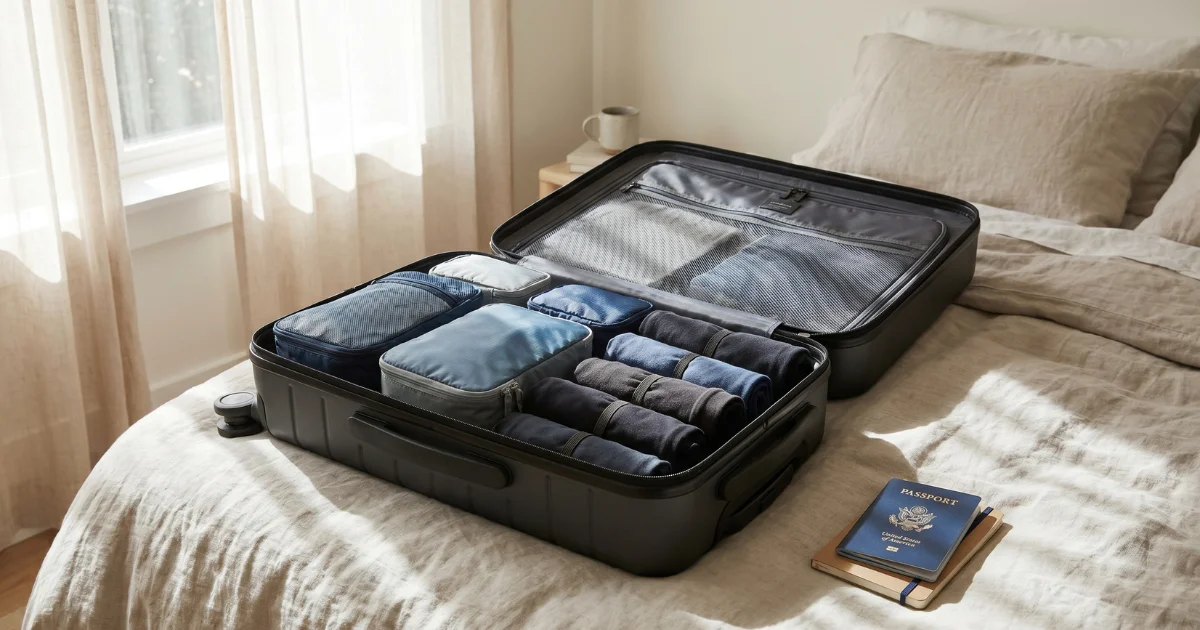
Pack Smart, Travel Light: The Only Travel Packing List You’ll Need
Every competitor guide tells you a travel packing list is about “covering all the bases.” That advice is why most travelers overpack by 30–40% and pay $35–$70 in checked bag fees they didn’t need to spend. The real skill isn’t knowing what to pack — it’s knowing what to leave out based on your specific trip type, season, and bag constraints.
This guide builds your packing list in reverse: start with your bag limit and travel dates, then subtract. Whether you’re a solo backpacker heading to Southeast Asia in July or a family flying to Europe over the December holidays, the checklist below adapts. It covers carry-on strategy, TSA-compliant toiletries, seasonal layering, packing by trip type, and the exact timeline for when to start buying gear versus when to start packing.
If you’ve ever stood at baggage claim regretting your choices, this is the fix — starting with the one packing rule most people get backwards.
Table of Contents
What’s a Light Travel Packing List contain ?
Quick Answer: Pack light by choosing a bag under 40 liters, limiting clothing to 5–7 versatile pieces in a single color palette, using packing cubes or compression bags, and wearing your bulkiest items on the plane. Most travelers can handle 7–14 days carry-on-only with this method.
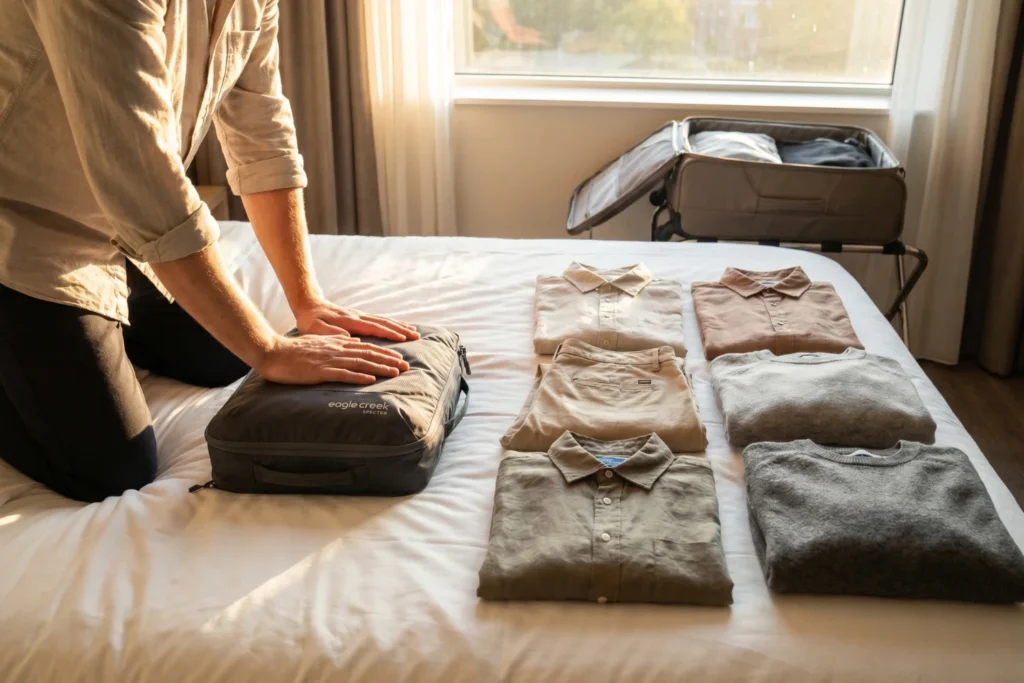
The mistake isn’t packing too many things — it’s packing too many categories. Travelers who bring three pairs of shoes, two jackets, and “just in case” outfits aren’t bad packers. They just never set a constraint before they started.
The carry-on-only framework:
- Set a bag limit first. A 22″ × 14″ × 9″ carry-on (standard for most airlines) or a 38–45L travel backpack like the Osprey Farpoint or Patagonia Black Hole forces every item to earn its space.
- Apply the 5-7-2 rule: 5 tops, 7 underwear/socks, 2 bottoms. Everything should mix and match.
- Wear your heaviest items on travel day — boots, jacket, jeans. This alone frees 2–3 liters of bag space.
- Replace “what if” items with cash. You can buy a $5 umbrella or a $3 sunhat almost anywhere. You can’t buy back the shoulder pain from a 20kg bag.
Travelers who switched to packing cubes — particularly compression cubes from Eagle Creek or Peak Design — consistently report fitting approximately 30% more into the same bag. The cubes don’t create space; they eliminate dead air between items.
On the road: In June 2025, I packed for a 10-day trip to Japan using only a 38L bag — and still had room to bring back a silk kimono and a set of ceramic sake cups. The trick was sticking to a navy-and-cream color palette: three tops, two bottoms, one dress, and a packable rain jacket. I wore my chunky sneakers and denim jacket on the plane, which freed at least 4 liters of space. No checked bag, no baggage carousel wait at Narita, no regrets.
One planning note: if you’re traveling in winter or to multiple climates, packing light requires a different strategy — layering systems instead of heavy single-use coats. Check our summer packing list guide for warm-weather specifics, and keep reading for how seasons change everything about what goes in your bag.
Toiletries Travel Packing List for Air Travel?
Quick Answer: TSA requires all liquids in carry-on bags to be in containers of 3.4 oz (100 ml) or less, packed inside one quart-sized clear zip-top bag. Solid alternatives — bar shampoo, toothpaste tablets, solid deodorant — bypass the liquid rule entirely and save significant space.
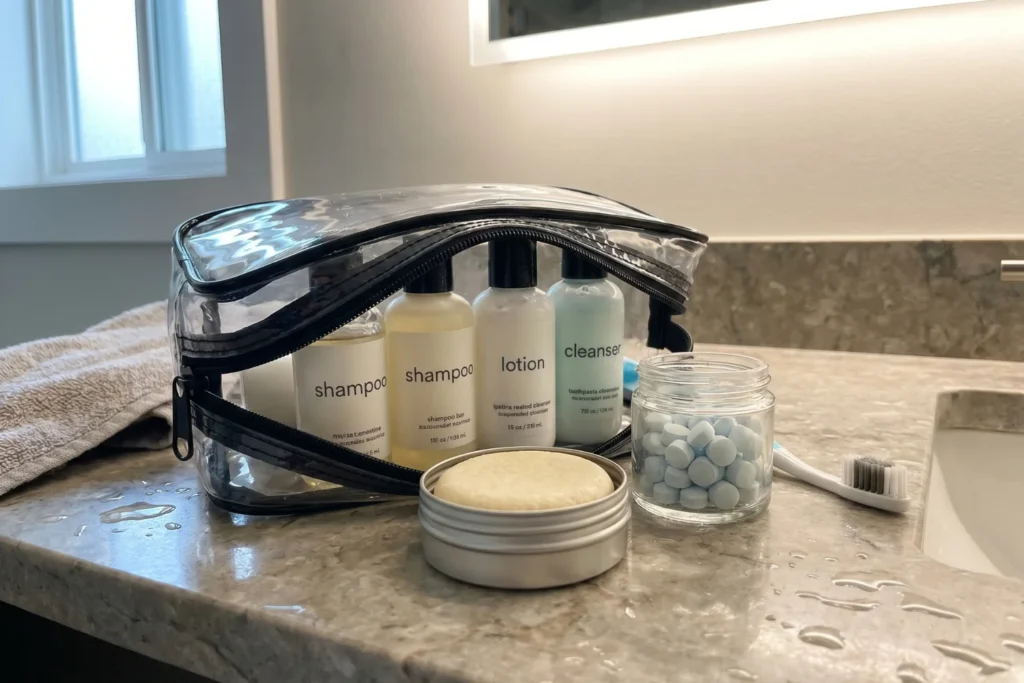
Most travelers buy miniature versions of their home products. That’s the expensive, wasteful approach. A smarter strategy: switch to solid-format toiletries for anything you can, and reserve your limited liquid allowance for items with no solid alternative — contact lens solution, prescription liquids, and liquid sunscreen for full-body coverage.
Carry-on toiletry packing list:
- 1 quart-sized clear zip bag
- Solid shampoo + conditioner bar
- Toothpaste tablets or travel-size tube (3.4 oz max)
- Solid deodorant
- Sunscreen stick (face) + small liquid sunscreen (body, 3.4 oz)
- Contact solution (if needed — counts toward liquid limit)
- Prescription medications in original packaging
- Small first-aid kit: adhesive bandages, ibuprofen, antihistamine, blister pads
One caveat most guides skip: TSA PreCheck and Global Entry members still follow the same liquid rules. PreCheck speeds your screening — it doesn’t change container sizes. International airports generally enforce the same 100 ml standard, but CT-scan airports (including most major US hubs as of 2026) allow liquids to remain in your bag during screening if you have PreCheck — the bag still needs to meet the 3.4 oz rule regardless.
A Sea to Summit hanging toiletry bag doubles as your quart bag and your hotel organizer. Costs $20–$30 and lasts years.
Toiletries are the easiest place to cut weight — but the hardest savings come from how you time your packing around your trip season and destination climate.
Travel packing list for a 7-Day Trip?
Quick Answer: For a 7-day trip, pack 5 tops, 2 bottoms, 7 underwear and socks, one jacket, and one pair of versatile shoes. Add a TSA-compliant toiletry bag, your electronics and chargers, and travel documents. This fits a standard carry-on with packing cubes. In summer, swap the jacket for a packable rain shell. In winter, wear your heaviest layer on the plane and add one thermal base layer.
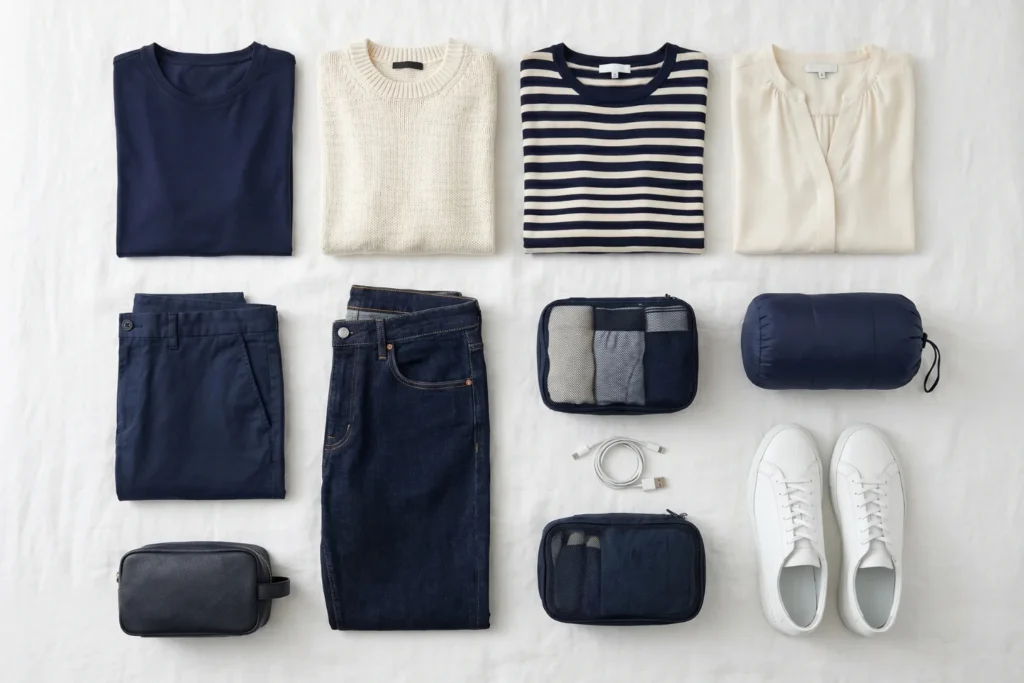
A 7-day trip is the ideal test case for carry-on-only packing. It’s long enough to stress-test your wardrobe choices and short enough that you can survive one laundry session mid-trip if needed.
The 7-day carry-on pack by category:
| Category | Items | Notes |
|---|---|---|
| Tops | 5 | Neutral tones that mix with both bottoms |
| Bottoms | 2 | One casual, one smart-casual |
| Underwear/socks | 7 each | Merino wool socks pull double duty |
| Outerwear | 1 | Packable rain jacket in summer; fleece mid-layer in winter |
| Shoes | 1 pair (+ flip-flops optional) | Wear bulkier pair on travel day |
| Toiletries | 1 quart bag + solid alternatives | See toiletries section above |
| Electronics | Phone, charger, power bank, earphones | Adapter if international |
| Documents | Passport, insurance, boarding passes | Digital backup required |
| Medications | Full course + 2-day buffer | In original packaging in personal item |
The one item most people forget: a power bank. Hotel and café charging points are not always available when you need them, and a dead phone at a train station or airport gate is a genuinely disruptive problem. Pack one rated at least 10,000 mAh — enough to charge a phone twice.
For trips over 7 days, add one laundry strategy: either plan a laundromat stop at day 5–6 ($5–$10 in most cities) or pack a small travel clothesline and a bar of Dr. Bronner’s soap for sink washing overnight.
Travel Packing List by Trip Type — Backpacking vs. City Break vs. Family Travel
A generic packing list fails because it doesn’t know what kind of trip you’re taking. A 5-day city break in Amsterdam and a 10-day backpacking circuit through Vietnam require different bags, different clothing logic, and different priorities entirely. Here’s how each trip type changes your list.
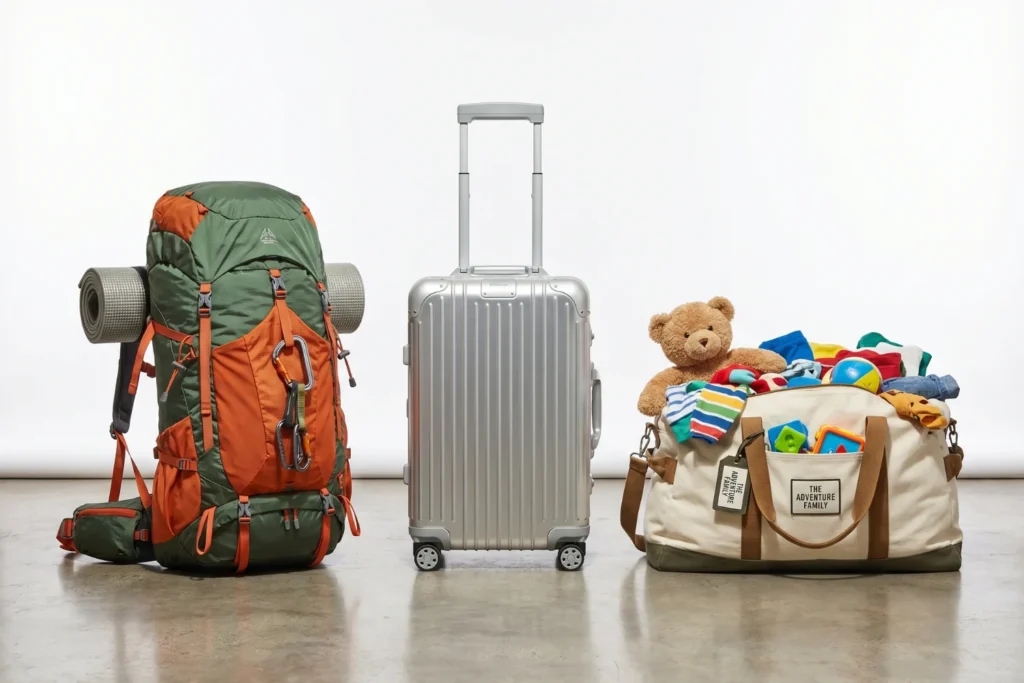
Backpacking (Multi-Stop, Budget, 10–21 Days)
Bag: 38–45L travel backpack (Osprey Farpoint, Nomatic Travel Pack). Hip belt essential for walking distances.
Key differences from a city break:
- Add a padlock (hostels require them for lockers)
- Pack earplugs and a sleep mask (dorm rooms)
- Bring a packable day bag (folds into itself, under 10L)
- Lightweight quick-dry towel (many hostels charge for towels)
- Offline maps downloaded for every country on the route — wifi is unreliable at budget guesthouses
What to cut: Formal or semi-formal clothing. Nobody in a Southeast Asia hostel needs dress shoes.
City Break (3–5 Days, Mid-Range, One Destination)
Bag: 22″ carry-on roller or 30–35L travel backpack.
Key differences:
- One smart-casual outfit for dinners and evenings out
- Smaller toiletry kit — most mid-range hotels provide shampoo and soap
- No towel needed
- Portable charger still essential — city days are long and phone-heavy
What to cut: Multiple pairs of casual shoes. One versatile pair handles most city days; dress shoes add dead weight.
Family Travel (Any Duration, 2 Adults + 1–2 Kids)
Bag setup: Each adult carries a 22″ carry-on. Each child over 8 carries a small personal item (10–15L) with their own entertainment and snacks.
Key differences:
- Children’s medications and first-aid kit in every personal item, not buried in checked luggage
- Snacks and entertainment in the top pocket of your personal item, not the carry-on
- One extra outfit per child in your personal item — not theirs — for spills and delays
- Collapsible strollers and car seats follow separate airline policies; confirm 6 weeks before departure
What to cut: “Kid entertainment backup” items you’ll never reach. One tablet with downloaded content per child handles 99% of travel day entertainment.
Honest note: Family travel almost always requires a checked bag for trips over 5 days. The carry-on-only math doesn’t survive children’s bulkier shoes, extra layers, and the reality of variable weather. Budget $70–$120 round-trip for one family checked bag, and pack it deliberately — not as overflow for everything that didn’t fit elsewhere.
How Far in Advance Should You Pack?
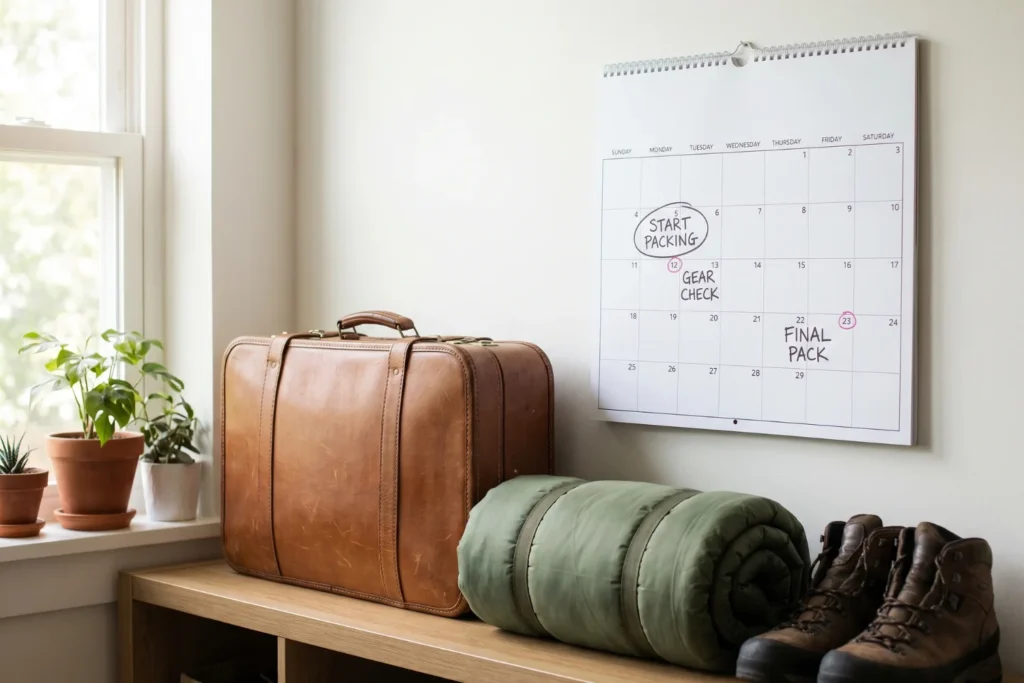
The night-before-packing ritual is the single most common reason travelers forget essentials and overpack simultaneously. Rushed packing means grabbing extras “just in case.” Planned packing means testing your bag, identifying gaps, and buying missing items at non-airport prices.
| What to Do | How Far Ahead | Why | Cost Impact |
|---|---|---|---|
| Audit existing gear (bag, cubes, adapters) | 6–8 weeks before | Time to repair, replace, or order new items at normal retail | Saves $20–$50 vs. airport/last-minute purchases |
| Buy missing essentials (packing cubes, toiletry kit, adapter plugs) | 4–6 weeks before | Shipping time + return window if item doesn’t fit your bag | November and January sales save 20–50% |
| Do a trial pack | 2–3 weeks before | Test whether everything fits carry-on; identify what to cut | Prevents $35–$70 checked bag fees |
| Wash and prep travel wardrobe | 1 week before | Ensures everything is clean, fits, and hasn’t been damaged | No cost — just avoids day-of stress |
| Final pack + documents check | Day before departure | Passport, boarding pass, insurance card, medications | Missing documents can cost $200+ in rebooking |
For budget travelers: Start your gear audit 8 weeks out. This gives you time to watch for sales, use cashback apps, or order from Amazon warehouse deals. Travelers who buy compression bags and packing cubes at full retail in July pay 30–40% more than those who bought during November sales.
For peak-season travelers (June–August, late December): Book any checked luggage allowance at the time of flight booking. Airlines charge $15–$30 more for bag fees added at the gate versus prepaid online.
Citable sentence: For any trip, start your travel packing list at least 6 weeks before departure — not for the packing itself, but for the gear audit and trial pack that prevent overpacking and last-minute spending.
Trip Budget Breakdown: What Packing Smart Actually Saves You
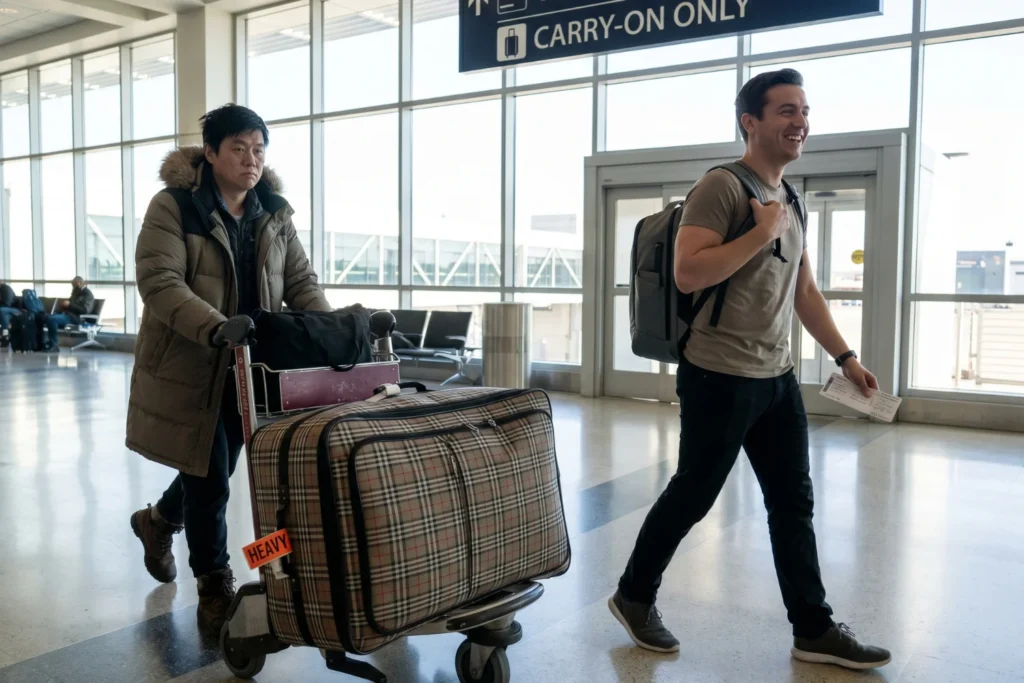
Most budget guides ignore packing as a cost category. That’s a mistake. The difference between a well-packed carry-on traveler and a checked-bag overpacker can be $150–$400 over a two-week trip — before you factor in laundry strategy.
On the road: On a 2024 trip to Portugal, I saved $180 by going carry-on only. My checked-bag travel companion paid €65 round-trip on TAP Air Portugal, €25 for luggage wrapping at Lisbon Airport, and an extra €40 in taxis because a 23kg bag made the Lisbon Metro genuinely impractical. Meanwhile, I walked straight from arrivals onto the Metro with my 38L backpack, did one sink wash in Porto, and never paid a cent for luggage. That €130 difference bought a port wine tasting in Vila Nova de Gaia and a hand-painted azulejo tile to bring home.
| Expense Category | Overpacker (Checked Bag) | Smart Packer (Carry-On Only) | Savings |
|---|---|---|---|
| Checked bag fees (round trip, avg. airline) | $70–$140 | $0 | $70–$140 |
| Airport luggage wrapping/locks | $15–$25 | $0 | $15–$25 |
| Forgotten items bought at airport | $30–$60 | $5–$10 (pre-packed) | $25–$50 |
| Taxi vs. transit (heavy bags limit transit use) | $40–$80 per trip | $10–$20 (metro/bus accessible) | $30–$60 |
| Laundry on the road (7+ day trips) | $0 (packed enough) | $10–$20 (laundromat or sink wash) | −$10–$20 |
| Estimated total savings | — | — | $130–$255 per trip |
Citable sentence: A carry-on-only traveler on a 7–14 day trip saves approximately $130–$255 compared to checking luggage, factoring in bag fees, ground transport flexibility, and avoided impulse airport purchases.
Where packing costs more than expected: Travel adapters and packing cubes feel like small purchases, but a quality set (adapter + 4 cubes + toiletry bag) runs $60–$90 upfront. The payoff comes on trip two — these items last 5–10 years.
Where to save without cutting quality: Skip brand-name travel-sized toiletries ($3–$5 each) and buy reusable silicone bottles ($8 for a set of four) you refill from home products. Over 3–4 trips per year, this saves $40–$60 annually.
For broader trip budgeting beyond packing, browse our travel inspiration hub for destination-specific cost breakdowns.
Travel Packing List Checklist — By Timeline
Every packing list you’ve seen gives you what to pack. Few tell you when each step should happen. This timeline-based travel packing checklist prevents the two biggest failures: forgetting critical items and panic-buying at the airport.
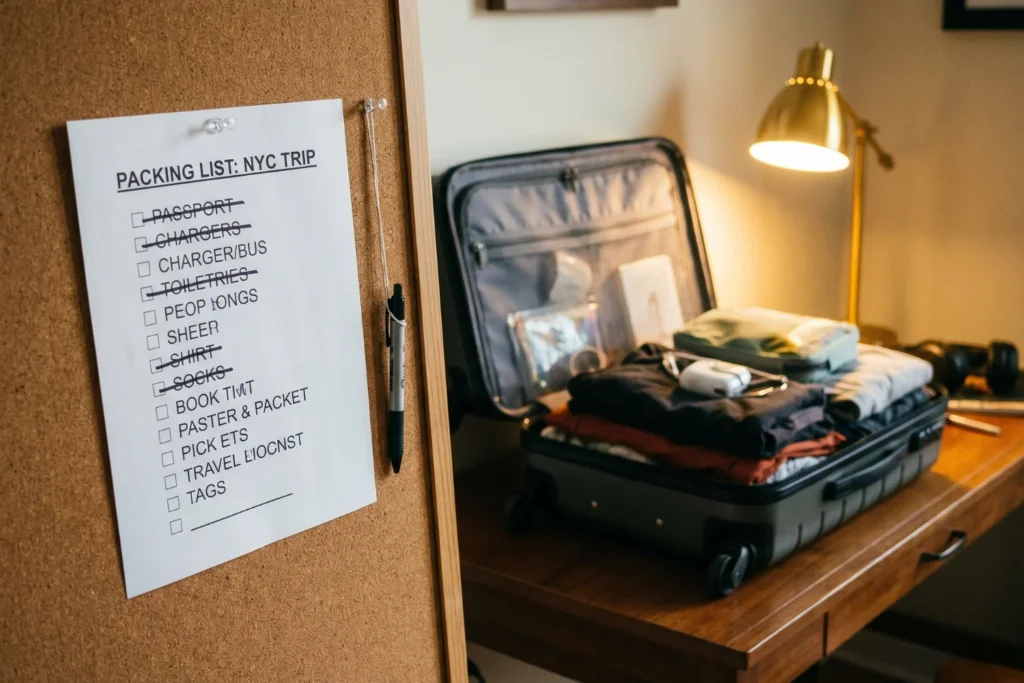
6–8 Weeks Before Departure
- Confirm your bag meets airline carry-on dimensions (check your specific airline — sizes vary)
- Audit packing cubes, compression bags, and toiletry kit for wear or damage
- Check passport expiration — many countries require 6 months validity beyond travel dates
- Order any missing gear: travel adapter plugs, packing cubes (Eagle Creek or Peak Design), reusable water bottle
- Research destination weather for your exact travel dates (not just the season average)
3–5 Weeks Before
- Do a trial pack: fit everything into your carry-on, weigh it, identify what to cut
- Buy solid toiletries (shampoo bars, toothpaste tablets) if switching from liquids
- Print or download travel insurance documents — confirm coverage for your activities (hiking, scuba, etc.)
- Purchase any destination-specific items: sunscreen for tropical trips, thermal base layers for cold climates
- Arrange pet care, mail hold, or home security if traveling more than 5 days
1–2 Weeks Before
- Wash and inspect all travel clothing — check for missing buttons, broken zippers
- Charge all electronics: power bank, headphones, e-reader, camera
- Download offline maps, translation apps, and boarding passes
- Scan and email yourself copies of passport, insurance, and itinerary
- Confirm accommodation check-in times and airport transfer logistics
Day Before Departure
- Final pack using packing cube system: clothes in cubes, electronics in top pocket, documents in personal item
- Fill reusable water bottle (empty it before security, refill after)
- Set out travel-day outfit: wear your bulkiest shoes and heaviest layer
- Confirm flight status and gate assignment
- Place chargers, snacks, and one change of underwear in your personal item (not deep in carry-on)
Day Of
- Passport, phone, wallet — pat-check before leaving home
- Screenshot boarding pass in case of connectivity issues
- Remove any prohibited items from bags (pocket knives, oversized liquids)
- Arrive at airport 2.5 hours before international flights, 1.5 hours before domestic
This checklist is designed for screenshot saving. Pin it, print it, or bookmark it — it works for any destination.
Practical Logistics — TSA Rules, Insurance, Connectivity
TSA and Airport Security Rules
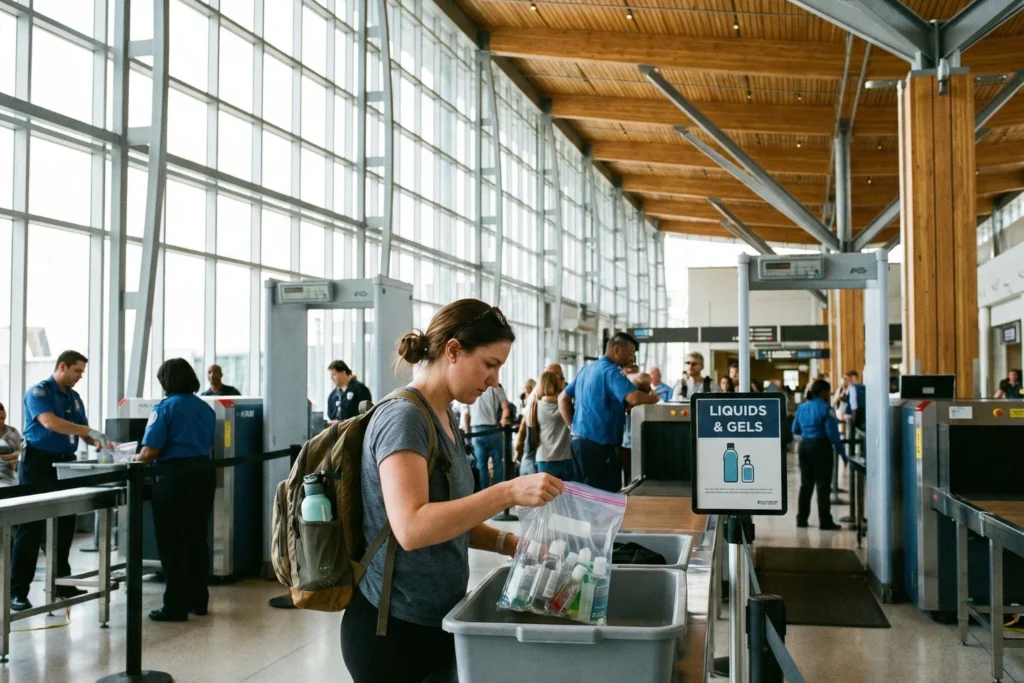
The 3-1-1 rule applies to all U.S. departures: liquids in 3.4 oz (100 ml) containers, inside 1 quart-sized clear bag, 1 bag per passenger. TSA’s official 3-1-1 liquids rule → Transportation Security Administration
Medications, baby formula, and breast milk are exempt from the 3.4 oz limit but must be declared at screening. Electronics larger than a cell phone come out of your bag unless you have TSA PreCheck.
Caveat: International airports follow similar rules, but enforcement varies. Some European airports allow slightly larger clear bags; Asian airports tend to enforce strictly. When in doubt, follow TSA standards — they’re the most restrictive mainstream benchmark.
Common Packing Mistakes to Avoid
1. Packing before checking airline bag dimensions. Spirit, Frontier, and Ryanair enforce smaller carry-on limits than legacy carriers. A bag that flies free on Delta gets gate-checked (and charged $65) on Spirit. Check your specific airline’s dimensions 6 weeks before departure.
2. Bringing full-size toiletries “because I have space.” One spilled shampoo bottle ruins electronics, documents, and clothing simultaneously. Use leak-proof silicone bottles and keep all liquids in a sealed bag — even inside your toiletry kit.
3. Skipping the trial pack. Travelers who trial-pack 2–3 weeks ahead cut an average of 3–5 items from their list. Those items would have gone unused and added 2–4 pounds of dead weight.
4. Forgetting destination-specific adapters. A universal adapter costs $15–$25 online. The same adapter at an airport kiosk costs $35–$50, and hotel front desks frequently run out. Order from Amazon 4–6 weeks ahead.
5. Packing for the trip you want instead of the trip you booked. Three dressy outfits for a hiking trip in Patagonia help no one. Match your packing list to your actual confirmed itinerary — not a fantasy version of the trip.
Conclusion
A solid travel packing list isn’t about remembering everything — it’s about deciding what not to bring, and starting that process 6–8 weeks before you leave. Build your list around your bag size, your trip season, your trip type, and your actual itinerary.
This approach won’t suit travelers who treat packing as part of the excitement and enjoy the abundance of options. If you prefer choices over efficiency, check a bag and budget accordingly — $70–$140 round-trip is a fair price for not thinking about it.
Ready to match your packing list to a specific trip? Start with our summer packing list or browse travel inspiration for your next destination.
Explore more on ChillTraveling:
- Summer packing list for warm-weather trips
- Find your next destination and travel inspiration
- Best time to travel to any destination
FAQ SECTION
Q: How do I pack light for travel?
A: Pack light by choosing a bag under 40 liters, limiting clothing to 5–7 versatile pieces in a single color palette, using compression packing cubes, and wearing your bulkiest items on travel day. Apply the 5-7-2 rule: 5 tops, 7 underwear/socks, 2 bottoms. This method works for 7–14 day trips without checking a bag.
Q: What should I pack for a 7-day trip?
A: Pack 5 tops, 2 bottoms, 7 underwear and socks, one jacket, and one pair of versatile shoes. Add a TSA-compliant toiletry bag, electronics and chargers, and your travel documents. With packing cubes, this fits a standard carry-on. In summer, swap the jacket for a packable rain shell. In winter, wear your heaviest layer on the plane and add one thermal base layer.
Q: How many outfits should I pack for 2 weeks?
A: Pack 5–7 outfits and plan to do laundry once mid-trip. Laundromats cost $5–$10 in most cities; sink-washing with a travel clothesline handles lightweight fabrics. This approach keeps your bag under carry-on limits even for 14-day trips. Travelers heading to Europe in June or September find this easiest since moderate weather means fewer heavy layers.
Q: Are packing cubes worth it?
A: Yes — compression cubes from Eagle Creek or Peak Design reduce bag volume by approximately 30%, keep items organized by category, and prevent the explosion-suitcase problem by day three. A set of four costs $25–$45 and lasts 5+ years. Buy during November Black Friday sales for 20–40% off.
Q: Can I bring a razor in my carry-on?
A: Disposable razors and cartridge razors (like Gillette Mach3) are TSA-approved for carry-on bags. Straight razors and safety razor blades must go in checked luggage. Electric razors are carry-on approved. If you travel carry-on only, switch to a cartridge razor or buy disposables at your destination for $3–$5.
Q: How do I pack for multiple climates on one trip?
A: Layer instead of packing separate wardrobes. A merino wool base layer ($30–$60), a mid-layer fleece, and a packable rain jacket cover temperatures from 40°F to 80°F. Add or remove layers as you move between climates. Travelers doing multi-stop trips in October — Iceland to Spain, for example — report this system handling a 40-degree temperature range in one carry-on.
Q: What’s the best carry-on bag for frequent travelers?
A: For roller carry-ons, the Away Carry-On ($275) and Samsonite Freeform ($170–$220) rank highest for durability and airline compliance. For travel backpacks, the Osprey Farpoint 40L ($140–$170) fits under most airline size limits with backpacking comfort. Business travelers who prefer front-loading access should look at the Peak Design Travel Backpack ($300). Buy during January or Black Friday sales to save 15–30%.
Q: Should I pack a first-aid kit?
A: Yes — a small kit saves time and money at every destination. Include adhesive bandages, ibuprofen, antihistamine tablets, blister pads, and any prescription medications in original packaging. Pre-made travel first-aid kits cost $10–$20 and fit inside a toiletry bag. Travelers heading to remote areas in July–August should add moleskin, electrolyte packets, and antiseptic wipes.
Q: When should I start packing for an international trip?
A: Begin your packing audit 6–8 weeks before departure. Use weeks 6–4 for buying missing gear at regular prices, weeks 3–2 for a trial pack and wardrobe prep, and the final week for washing and final assembly. Travelers departing in December or July should start 8 weeks ahead — popular items like travel adapters and compression bags sell out faster during high-travel months.