
When Is the Best Time to Travel to Thailand? A Month-by-Month Breakdown
Last updated: April 14, 2026
The best time to travel to Thailand is between November and February, when the dry season brings cooler temperatures, clear skies, and lower humidity across most of the country. If you are planning a trip in 2026, understanding regional weather differences—between the Andaman coast, the Gulf of Thailand, and the northern highlands—will save you from costly surprises.
When determining the best time to travel to Thailand, remember that the country sits just above the equator, which means it operates on three distinct seasons: cool dry (November–February), hot dry (March–May), and monsoon (June–October). Each season has real advantages depending on what you want to do. Beach lovers, temple-hoppers, and trekkers all have different ideal windows.
According to the Tourism Authority of Thailand, over 35 million international visitors arrived in 2024, with the highest concentration landing between December and January—confirming that choosing the best time to travel to Thailand affects both prices and availability.
Table of Contents
Best Time to Travel to Thailand by Season and Region
The best time to travel to Thailand depends heavily on which region you are visiting. Travelers who plan by region usually get much better results than those who choose dates solely by price. Weather in Phuket, Koh Samui, Chiang Mai, and Bangkok can differ dramatically in the exact same month, making a regional plan far more useful than a single nationwide rule.
Because weather varies so much, the best time to travel to Thailand for island hopping is completely different than for northern trekking. A little timing research can save both money and stress.
Andaman Coast (Phuket, Krabi, Railay Beach)
For the Andaman Coast, the best time to travel to Thailand is November to April. This is peak season here. Seas are generally calm, visibility for snorkeling and diving is excellent, and rainfall is very low. You should be cautious from May through October—the southwest monsoon hits this coast hard, with rougher seas and some smaller resorts operating at limited capacity in September and October.
Gulf of Thailand Coast (Koh Samui, Koh Tao, Koh Phangan)
If you are looking for the best time to travel to Thailand during the northern hemisphere’s summer, the Gulf coast is your answer. This coast follows a reversed pattern. Its rainy season runs from October through December, while January through September stays mostly dry. Koh Samui averages just 40mm of rain in March compared to over 300mm in November, making it an excellent alternative when the Andaman side is raining.
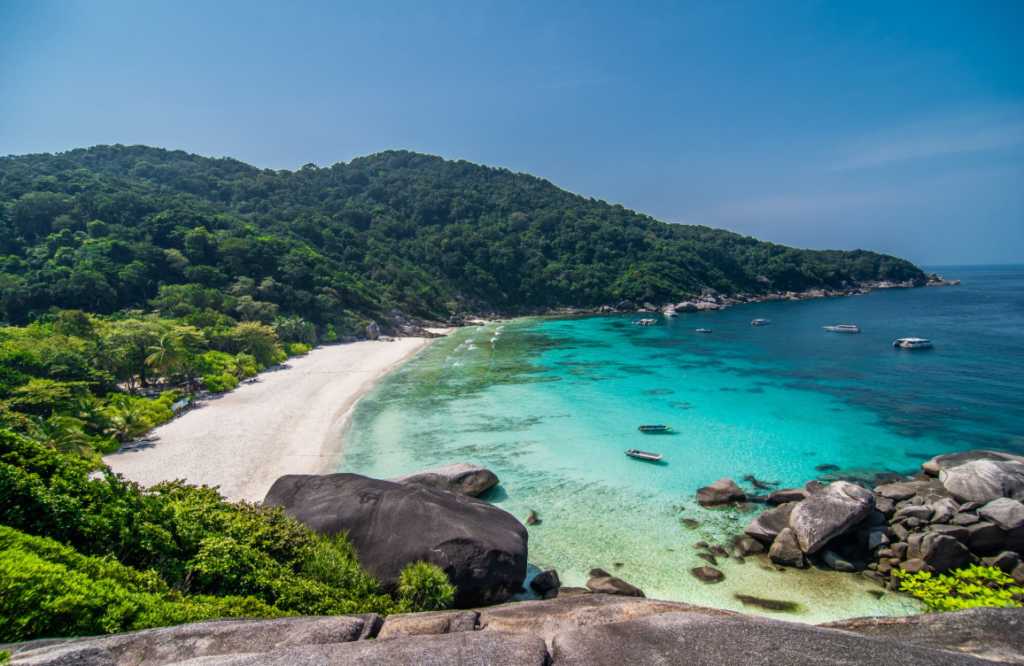
Northern Thailand (Chiang Mai, Pai, Chiang Rai)
For Northern Thailand, the absolute best time to travel to Thailand is November through February. Days sit around 28°C (82°F) and nights dip pleasantly to 15°C (59°F). However, March through May brings the agricultural burning season. Smoke from field burns creates an Air Quality Index (AQI) that frequently exceeds 200 in Chiang Mai during March, making it uncomfortable for many visitors.
When I visited Chiang Mai in late February, the air was still fresh and the Doi Inthanon National Park trails were perfect for hiking. Had I arrived two weeks later, the smoke haze would have severely limited visibility for mountain views.
What Is the Cheapest Month to Travel to Thailand?
The cheapest month to travel to Thailand is May or September. Both fall within the rainy season, when tourist numbers drop sharply and hotels, flights, and tours discount heavily. If you want a balance of budget and weather, deciding the best time to travel to Thailand requires looking closely at May. A mid-range Bangkok hotel that costs $80 per night in December can drop to $40–$50 in May.
May sits at the very start of the monsoon season, meaning rain is often intermittent rather than constant—mornings are frequently clear and sunny. September is typically the wettest month of the year in most regions, so it carries more weather risk but offers the deepest discounts.
A mistake I made was booking a Phuket trip in late September assuming “shoulder season” meant only occasional rain. I arrived to find many beach clubs quiet, choppy seas, and three straight days of heavy downpours. The savings were real, but so were the trade-offs.
Flight prices also follow the same curve. Historical flight data shows that round-trip flights to Bangkok from Europe and North America are often 35–40% cheaper in May and September compared to December. If your schedule is flexible, May is arguably the best bang-for-your-buck month.
The Songkran Festival (Thai New Year) in mid-April is worth a special mention. It falls during the hot dry season, and while prices spike around April 13–15, the cultural experience—massive water fights across every city—is unlike anything else in Southeast Asia.

What Happens at 6pm in Thailand?
While you are researching the best time to travel to Thailand, you should also know about daily cultural moments like what happens at 6pm. At 6pm, the national anthem plays publicly in many spaces—including parks, public squares, and some transportation hubs—and people are expected to stop and stand still as a sign of respect. This happens twice daily, at 8am and 6pm.
Thailand operates on Indochina Time (ICT), UTC+7, with no daylight saving adjustments. At 6pm, Bangkok transitions into its evening rush, with street food vendors fully active along Yaowarat Road (Chinatown) and Silom. Night markets like Rot Fai Market and Jodd Fairs open around this hour.
The 6pm anthem moment is also a great visual cue: if you are standing in a Thai public space and everyone around you freezes, follow suit immediately. It lasts about one minute, and locals take it seriously.
Is It Safe to Go to Thailand Right Now?
Regardless of when you decide is the best time to travel to Thailand, the country is generally safe to visit in 2026, with standard travel precautions applying. The UK Foreign, Commonwealth & Development Office and US State Department both currently rate most of Thailand at “exercise normal precautions,” with the exception of the far southern border provinces where they advise against travel due to ongoing regional tensions.
For the vast majority of visitors heading to Bangkok, Chiang Mai, Phuket, Koh Samui, Pai, or Krabi, Thailand remains one of Southeast Asia’s most traveler-friendly countries. Petty theft and common transport scams are the primary issues to watch out for, not violent crime.
2026-specific update: Thailand launched its Thailand Digital Arrival Card (TDAC) system to replace paper arrival forms. All non-Thai visitors must complete their TDAC online through the official immigration portal before boarding. Failure to complete it can cause delays at the airport.
Road safety remains a legitimate concern. Thailand has high rates of traffic incidents. Renting motorbikes in busy areas like Phuket or Pai without prior riding experience carries real risk. Travel insurance that covers motorbike accidents is essential.
Thailand’s Best Underrated Destinations in 2026
Even if you choose the busiest and best time to travel to Thailand, you can still escape the crowds by visiting underrated destinations. These are specific places that are less crowded than the mainstream circuit but absolutely worth your time.
Koh Kood sits near the Cambodian border in the Gulf of Thailand. It has no airport, no massive moon parties, and a fraction of Koh Samui’s visitor numbers. The beaches—particularly Ao Phrao and Ao Salat—rival anything on the more famous islands. It is best visited from January through April.

Khao Sok National Park in Surat Thani province contains one of the world’s oldest rainforests. Floating bungalows on Cheow Lan Lake are accessible year-round, though the dry season (December–April) offers the clearest lake reflections and excellent wildlife sightings.

Phrae, a northern city rarely on primary tourist maps, preserves some of Thailand’s finest Lanna-era teak architecture. The Vongburi House museum and the walled old city feel genuinely uncrowded even in peak season.
Pai Canyon in Mae Hong Son province is best visited at sunset from October through February, when haze is minimal and the ochre ridges glow sharply.
Common Mistakes to Avoid When Planning Your Thailand Trip
- Booking beach islands during monsoon without checking which coast: A common mistake when picking the best time to travel to Thailand is booking the wrong coast during its rainy season. The Andaman and Gulf coasts have opposite weather patterns.
- Ignoring Chiang Mai smoke season: March and April in northern Thailand can have poor air quality due to agricultural burns. Check real-time AQI data before finalizing spring dates in the north.
- Underestimating Songkran crowds and price spikes: April 13–15 sees flight and hotel prices surge in major cities. Book months in advance or plan your route to avoid transit days during the festival.
- Skipping travel insurance for motorbike coverage: Many budget policies exclude motorcycle accidents. Read the fine print before renting a scooter.
- Not completing the Thailand Digital Arrival Card (TDAC): Doing this at the gate or upon arrival causes unnecessary delays. Fill it out online before you fly.
Thailand Weather Month-by-Month Comparison
Use this month-by-month guide to compare weather and regional conditions across the country. It helps you figure out your personal best time to travel to Thailand without relying on a single national forecast.
| Month | Season | Bangkok Temp | Phuket Rain | Koh Samui Rain | Chiang Mai Temp | Best For |
|---|---|---|---|---|---|---|
| Jan | Cool Dry | 26–32°C | Low | Moderate | 22–30°C | Beaches, temples, trekking |
| Feb | Cool Dry | 27–33°C | Low | Low | 23–32°C | All-round best month |
| Mar | Hot Dry | 29–35°C | Low | Low | 28–36°C | Beach south, smoke risk in north |
| Apr | Hot Dry | 30–36°C | Low | Low | 30–38°C | Songkran festival, high heat |
| May | Monsoon | 29–34°C | High | Low | 27–35°C | Budget travel, Bangkok |
| Jun | Monsoon | 28–33°C | Very High | Low | 26–33°C | Gulf coast islands |
| Jul | Monsoon | 28–32°C | Very High | Low | 26–32°C | Gulf coast, diving Koh Tao |
| Aug | Monsoon | 28–32°C | High | Low | 26–32°C | Gulf coast, waterfalls |
| Sep | Monsoon | 27–31°C | Very High | High | 25–31°C | Lowest prices, risky for beaches |
| Oct | Monsoon | 27–31°C | High | Very High | 24–30°C | High rain on most coasts |
| Nov | Cool Dry | 26–31°C | Moderate | High | 23–29°C | Andaman opens, north ideal |
| Dec | Cool Dry | 25–31°C | Low | Moderate | 20–28°C | Peak season, all regions |
Conclusion
The best time to travel to Thailand for most visitors is November through February—cool, dry, and accessible across all major regions. Budget-focused travelers get the best value in May, while the Gulf of Thailand coast runs its own dry season from January to September. Always factor in your specific destination’s microclimate, check air quality before heading north in the spring, complete your TDAC before flying, and book well ahead if your dates overlap with Songkran.
In short, while the overall best time to travel to Thailand is usually November to February, the right month depends entirely on your destination, budget, and travel style. Check the specific coast and local conditions before booking so you can match your itinerary to the weather instead of hoping for luck.
FAQ Section
What is the best time to travel to Thailand overall?
The best time to travel to Thailand is November through February, during the cool dry season. Temperatures range from 25–32°C (77–90°F), rainfall is low across most regions, and all major attractions—from Phuket beaches to Chiang Mai temples—are highly accessible. This period coincides with peak tourist season, so book accommodations early.
What is the cheapest month to travel to Thailand?
May and September are generally the cheapest months to visit Thailand. Hotel rates can drop 30–50% compared to peak season. May offers better weather trade-offs than September—mornings are often clear, with afternoon showers. September carries the highest rainfall risk but offers the deepest discounts.
Is Thailand safe in 2026?
Yes, Thailand is safe for most tourists in 2026. Government advisories suggest normal precautions for Bangkok, Chiang Mai, Phuket, and other major destinations (excluding the far southern border provinces). The primary risks are petty theft, common scams, and road accidents, particularly involving motorbikes.
What is the rainy season in Thailand?
Thailand’s rainy season runs from June through October across most of the country, driven by the southwest monsoon. The Andaman coast sees the heaviest rain from May to October. The Gulf of Thailand coast has a different wet season entirely, with peak rainfall hitting in October and November.
When should I avoid visiting Chiang Mai?
It is best to avoid Chiang Mai from mid-February through April due to the agricultural burning season. Smoke from field burns regularly pushes the AQI into unhealthy levels in March. The best time for Chiang Mai is November through early February when air quality is clean.
What happens at 6pm in Thailand?
Thailand’s national anthem plays publicly at 8am and 6pm daily. In parks, public squares, and transit hubs, people stop and stand still as a sign of respect. At 6pm, Bangkok’s street food scene also activates fully, with areas like Yaowarat Road hitting peak activity.
Which Thailand islands are open year-round?
Koh Samui, Koh Phangan, and Koh Tao on the Gulf of Thailand coast remain largely accessible year-round, with their main rainy season landing late in the year (October–December). On the Andaman side, some resorts on Koh Lanta and smaller islands limit operations from May to October due to rougher seas.