When Is the Best Time to Travel to Iceland? A Season-by-Season Breakdown
The best time to travel to Iceland is either June through August for long daylight hours and full road access, or September through March if seeing the northern lights is your priority. There’s no single correct answer — Iceland delivers dramatically different experiences depending on the season, and knowing which one fits your goals will save you money, frustration, and missed opportunities. For broader seasonal planning across destinations, see our best time to travel guide.
Most travel guides push summer as the default answer. That’s not wrong, but it’s incomplete. Summer brings real advantages: the Ring Road is fully accessible, the highlands open up, temperatures sit between 10–15°C (50–60°F), and the midnight sun means you’re never scrambling to beat sunset. [Image: Iceland midnight sun over Kirkjufell mountain — iconic basalt peak bathed in golden 11 pm light with Kirkjufellsfoss waterfall in foreground] But July and August also bring nearly 750,000 visitors to South Iceland attractions in a single month — a crowd level that can genuinely affect your experience at popular waterfalls and glacier lagoons.
Shoulder seasons — especially May and September — are Iceland’s most underrated windows. You get a version of the country that feels less like a theme park and more like the raw, wind-battered place it actually is.
Table of Contents
What Is the Best Month to Go to Iceland?
The best single month to visit Iceland is July for first-timers who want maximum daylight and open roads, or September for travelers willing to trade some warmth for far fewer crowds, lower prices, and the first real northern lights opportunities of the season.
Quick Answer: July offers the warmest temperatures (averaging 11–13°C), full access to highland roads like the Kjölur route, and 24-hour daylight — making it the peak month for road trips and hiking. September is the strongest shoulder-season alternative: crowds thin significantly, prices drop, aurora activity begins, and puffins are still visible in early September before they migrate.
Here’s the honest tradeoff. July is the most popular month for a reason — trails are open, the famous Landmannalaugar area is accessible, and you can drive through the Westfjords without worrying about snow closures. But “popular” in Iceland translates directly to booked-out guesthouses, queues at Seljalandsfoss, and rental car prices that can easily run 30–50% higher than in winter months.
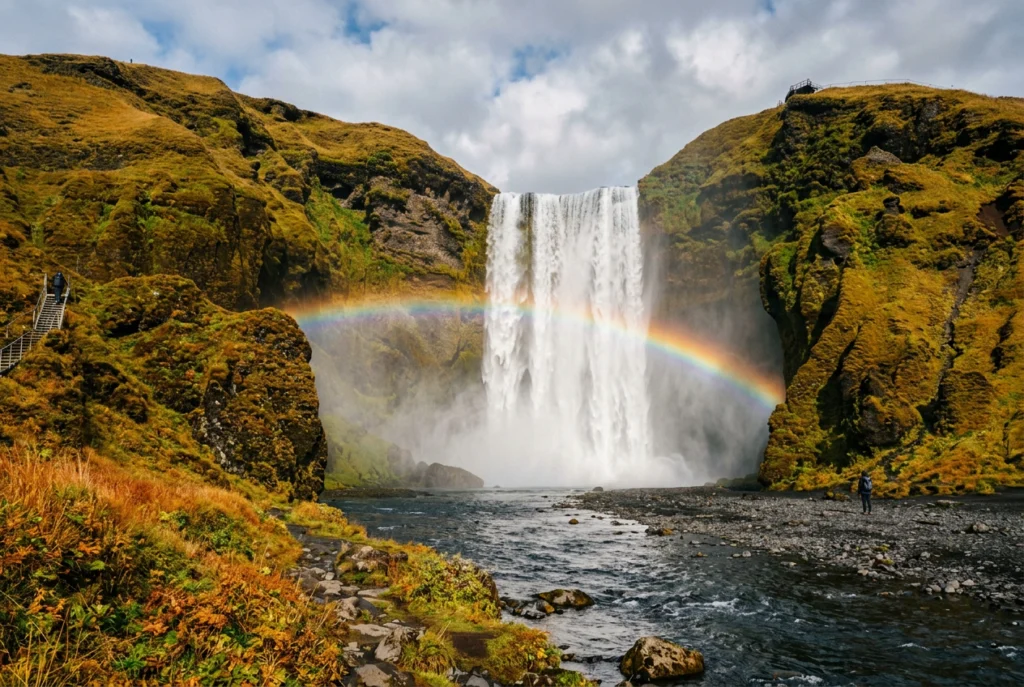
September walks a genuinely useful middle ground. Average temperatures still sit around 8–10°C, many highland roads stay open into mid-September, and the nights get dark enough for aurora sightings after weeks of endless summer light. I spent three days driving the southern coast in late September and found every major waterfall — Skógafoss, Seljalandsfoss, the canyon at Fjaðrárgljúfur — with a fraction of the summer crowds. Parking was easy. Guesthouses had availability. The light had turned golden and low-angle, the kind photographers specifically travel for in autumn.
The lesson: if you have flexibility, late September gives you 80% of summer Iceland’s highlights at roughly 60% of the cost and chaos.
August is a strong runner-up for first-timers who want summer conditions but miss the absolute July peak. Early August still has long daylight hours while the busiest school-holiday crowds begin to thin after the second week.
Iceland by Season: What to Expect
Iceland’s four seasons are real and distinct, but the transitions matter as much as the peaks. Here’s how each period stacks up across the factors that actually affect your trip.
| Season | Months | Avg. Temp | Daylight | Crowds | Northern Lights | Price Level |
|---|---|---|---|---|---|---|
| Summer | Jun–Aug | 10–15°C | 20–24 hrs | Very High | None | Highest |
| Shoulder (Spring) | Apr–May | 4–9°C | 14–20 hrs | Low–Medium | Possible (Apr) | Moderate |
| Shoulder (Autumn) | Sep–Oct | 6–10°C | 8–16 hrs | Low–Medium | Good | Moderate |
| Winter | Nov–Mar | -2–4°C | 4–8 hrs | Low | Excellent | Lowest (excl. Dec) |
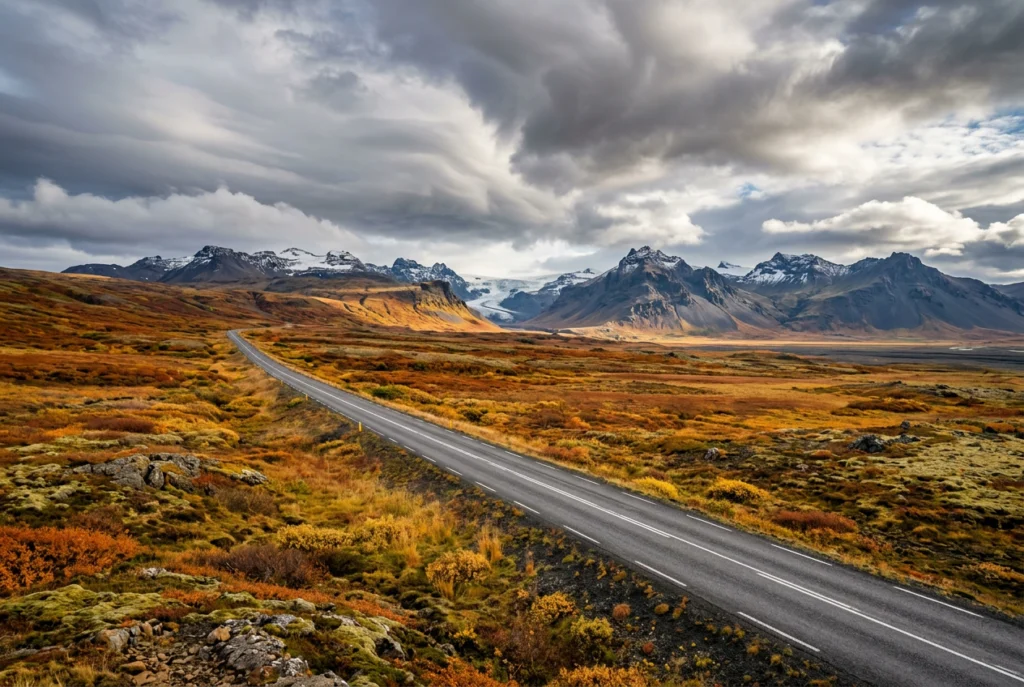
Spring (April–May) is legitimately underrated. April sits in the gap between winter’s drama and summer’s crowds — the lupine fields haven’t bloomed yet, snow still caps the mountains, and aurora sightings are still possible on clear April nights. May extends daylight rapidly, waterfalls run at their fullest from snowmelt, and prices haven’t climbed to peak levels yet.
Autumn (September–October) combines the best of both worlds more effectively than any other window. The landscape turns rust and amber, highland roads are still passable in early September, and aurora season begins in earnest. October is arguably the single best month for northern lights combined with manageable weather — nights are dark enough, storms are less severe than deep winter, and you’re not competing with January’s extreme cold.
Winter (November–March) is for travelers who specifically want ice caves, aurora borealis, and a quieter Iceland. The famous crystal ice caves inside Vatnajökull glacier are only safely accessible between November and March, when the ice is stable. [Image: Vatnajökull ice cave Iceland — electric blue glacial ice tunnel interior with natural light filtering through translucent walls] Roads require care — a 4WD is not optional, it’s necessary — and daylight may stretch only to 4–5 hours in December and January. That said, the atmosphere is unlike anything summer offers.
Best Time to Travel to Iceland for Northern Lights
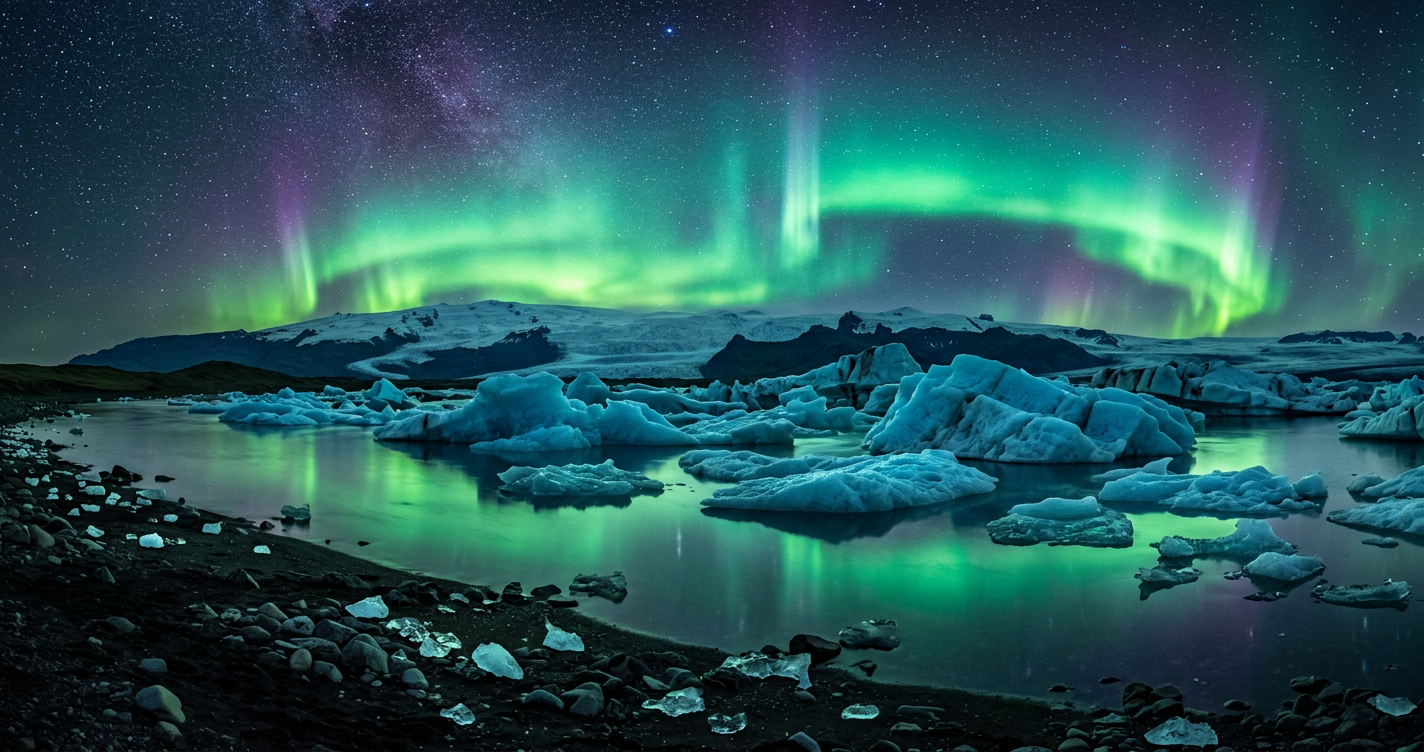
The northern lights are visible in Iceland from late August through mid-April, when nights are dark enough for aurora activity. Peak viewing conditions fall between October and March, with the longest, darkest nights occurring in November through January.
Iceland’s northern lights season officially runs from the moment nights get dark enough — typically late August — through mid-April. The key variable isn’t just month; it’s the combination of darkness, clear skies, and solar activity. We’re currently near the tail end of Solar Cycle 25’s maximum, which has produced exceptionally strong aurora activity through 2024–2025, with the Kp index regularly spiking high enough to push auroras visible even from Reykjavik’s outskirts.
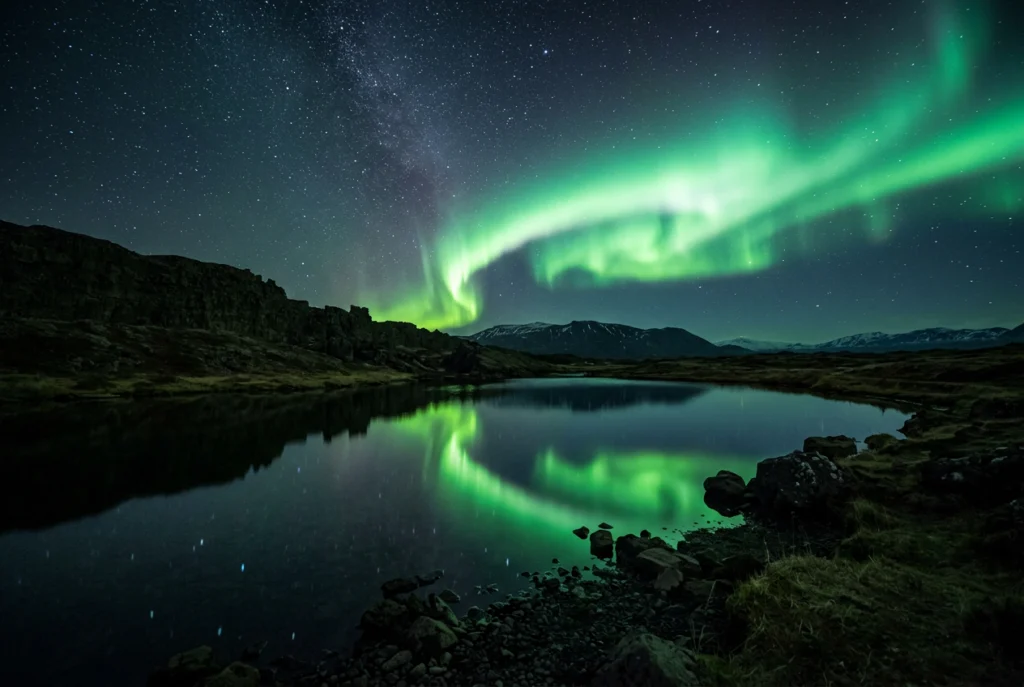
The sweet spots are late September–October and late February–March. Both periods sit near the equinox, when geomagnetic activity statistically tends to spike. Nights are long enough for good viewing, but winter storms are less relentless than in December or January. Some regions of Iceland see up to 19 hours of darkness on the shortest winter days, which creates more viewing windows per night.
For serious aurora chasing, the standard advice is to leave Reykjavik. The best viewing spots include Þingvellir (Thingvellir) National Park, the Snæfellsnes Peninsula, and Jökulsárlón Glacier Lagoon — all of which put enough distance between you and city light pollution to make a real difference.
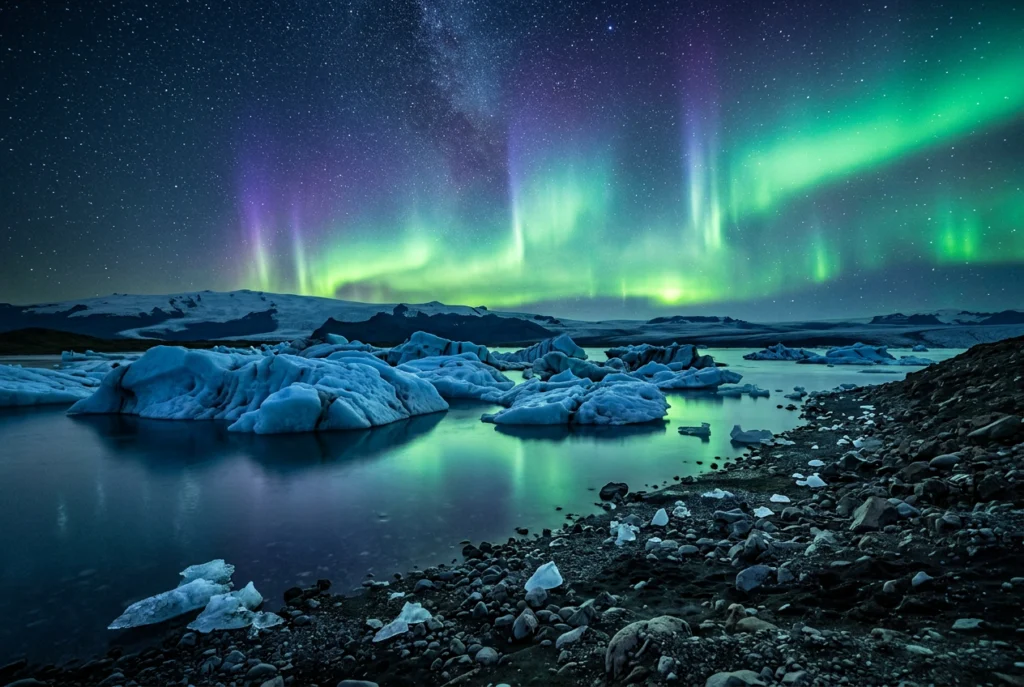
The optimal window each night runs roughly 11 PM to 1 AM, though strong activity can appear from 9 PM to 3 AM.
One practical reality: you cannot guarantee a northern lights sighting regardless of when you visit. Cloud cover is Iceland’s biggest obstacle. Build at least 4–5 nights into your itinerary if aurora is your primary goal, which gives you enough chances to catch a clear window.
Aurora forecast — Icelandic Meteorological Office (vedur.is)
What Is the Cheapest Month to Visit Iceland?
January and February are the cheapest months to visit Iceland, with hotel rates running 30–50% lower than summer peak and significant discounts on car rentals and tours. The exception is the Christmas–New Year window, when prices spike sharply even in deep winter.
Quick Answer: January and February offer the lowest prices across accommodations, flights, and rental cars — often 30–50% cheaper than July. You’ll get shorter days and colder temperatures, but northern lights viewing is excellent, ice caves are open, and major attractions are nearly crowd-free. Avoid the Christmas–New Year period even in winter, as prices surge dramatically.
Off-peak in Iceland runs from mid-September to late May, with January and February representing the absolute floor for pricing. The tradeoffs are real: Iceland’s low-season weather isn’t just cold — it’s unpredictable. Storms can close roads, reduce visibility to near zero, and require itinerary flexibility you won’t need in summer.
That said, winter travel in Iceland rewards preparation. A 4WD rental with winter tires is non-negotiable between November and April. Budget an extra €20–40 per day for a capable vehicle rather than downgrading to save money — getting stuck on Route 1 in a blizzard is an expensive lesson. I booked a small city car for a February trip once without checking road conditions in advance — the F-roads were closed, two highland destinations were inaccessible, and I spent a day rerouting. The lesson: always check road.is before finalizing any winter itinerary, especially if you’re driving beyond the south coast.
November is a strong compromise for budget travelers who still want some daylight. Prices have dropped from the September shoulder peak, aurora season is active, and the Christmas premium hasn’t kicked in yet.
Best Time to Visit Iceland by Traveler Profile
The best time to travel to Iceland shifts significantly depending on what you’re actually trying to do. There’s no universal right answer — the optimal window depends on your priorities, tolerance for weather, and budget.
First-time visitors should lean toward late June or early July. You get the full Iceland experience: accessible roads, mild temperatures, full daylight, and every major attraction open. Yes, it’s crowded and expensive. But your first trip to Iceland is probably not the moment to gamble on winter road conditions or short aurora windows.
Budget travelers do best in January–February or November. Hotels drop dramatically, tour operators offer low-season deals, and popular attractions like the Golden Circle feel manageable without summer queues. The tradeoff is limited daylight and weather that requires genuine flexibility.
Photographers have the most nuanced calculus. The midnight sun in June creates extraordinary long-exposure landscapes and flat golden light at midnight. But late September through October offers something equally compelling: low-angle autumn light, dramatic cloud formations, and aurora-over-landscape compositions that don’t exist in summer. Many professional Iceland photographers actually prefer the shoulder seasons precisely because the light is less predictable and more interesting.
Hikers and Ring Road drivers need mid-June through mid-September. The Kjölur highland route, Landmannalaugar, and the Westfjords all require open F-roads, which typically run from mid-June to mid-September depending on snowmelt. Attempting highland routes outside this window risks getting stranded, and the roads are illegal to drive in a standard 2WD regardless of season.
Families with children typically find July and August easiest — school holidays align, days are long, and whale watching tours out of Húsavík and Reykjavik run at full frequency. Humpback whale sightings peak between June and August, with success rates cited above 95% by some operators during July.
Iceland Weather by Month: A Practical Overview
Iceland’s weather follows its own logic. “Four seasons in one day” isn’t a cliché — it’s a literal description of how conditions shift, especially in the Westfjords and highland interior. Wind matters more than temperature here; a calm 5°C day feels entirely different from a gusty 8°C one.
| Month | Avg. Temp | Daylight Hours | Road Access | Aurora Chance |
|---|---|---|---|---|
| January | -1–3°C | 5 hrs | Limited (coasts only) | Excellent |
| February | 0–3°C | 8 hrs | Limited | Excellent |
| March | 0–4°C | 12 hrs | Coastal + some F-roads | Good |
| April | 2–7°C | 15 hrs | Improving | Possible |
| May | 5–10°C | 18 hrs | Mostly open | Rare |
| June | 9–13°C | 22–24 hrs | Fully open | None |
| July | 11–15°C | 24 hrs | Fully open | None |
| August | 10–14°C | 20 hrs | Fully open | None |
| September | 7–11°C | 15 hrs | Open early month | Possible–Good |
| October | 4–8°C | 10 hrs | Coastal + some closures | Good |
| November | 0–5°C | 7 hrs | Coastal only | Excellent |
| December | -2–3°C | 4–5 hrs | Limited | Excellent |
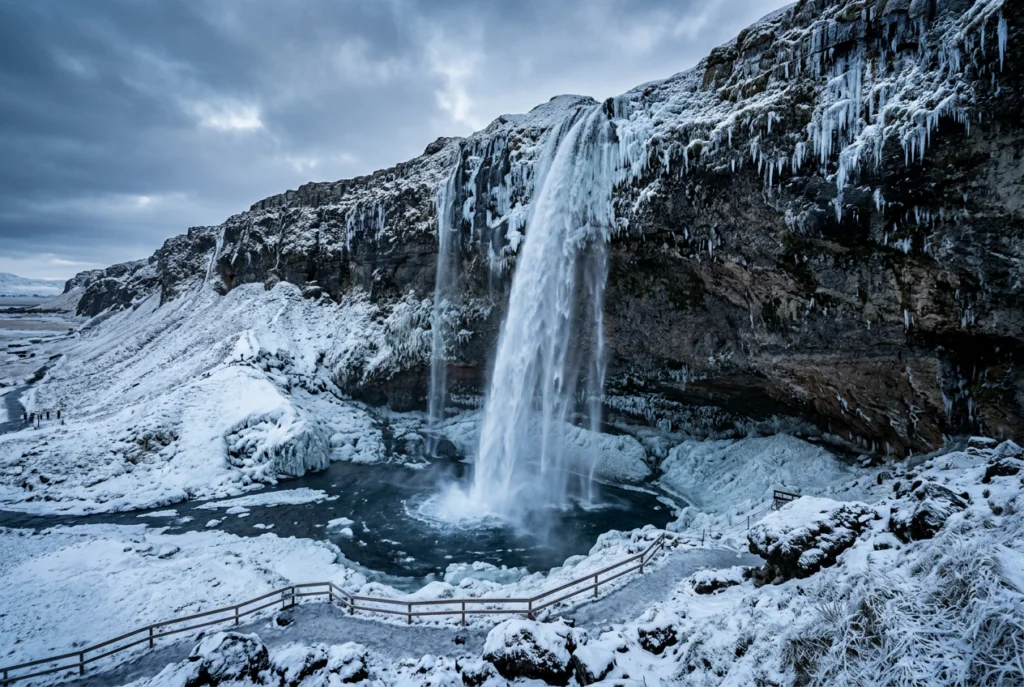
Packing for Iceland means layering, not packing “warm.” A waterproof shell, thermal mid-layer, and moisture-wicking base layer work in every season. Jeans are technically fine in summer but impractical if wet — waterproof hiking trousers are a better call for anyone doing outdoor activities beyond Reykjavik.
Best Time for Whale Watching in Iceland
The best time for whale watching in Iceland is June through August, when humpback whales, minke whales, and occasionally blue whales are most active in Icelandic waters. Húsavík, on the north coast, is considered Iceland’s whale watching capital, with tours running from April through October.
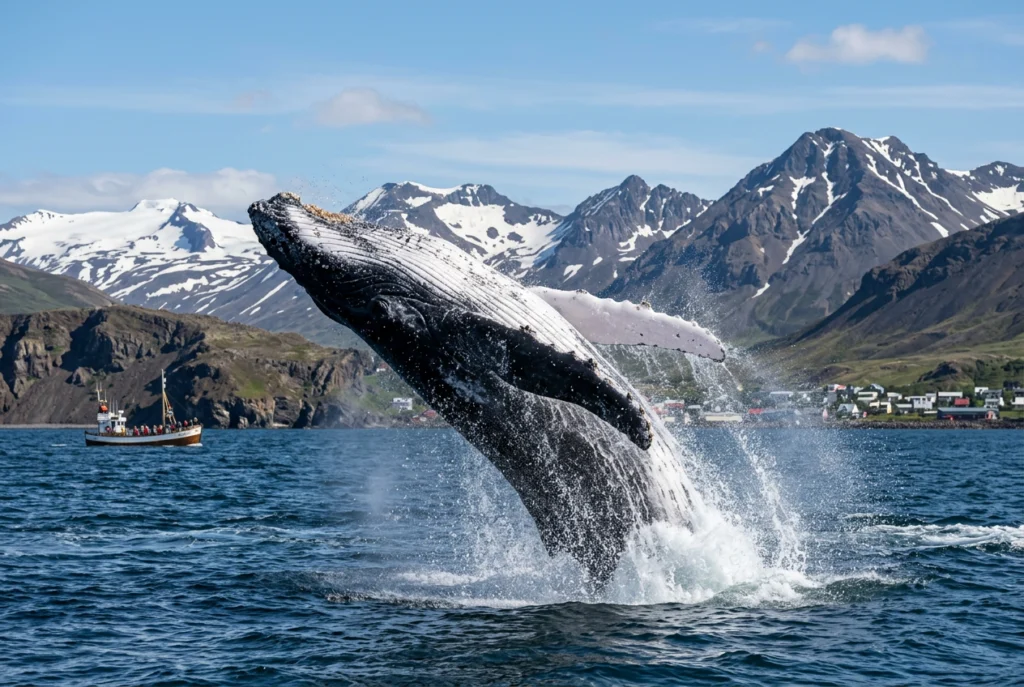
Humpbacks arrive in Icelandic waters in late spring following the herring and capelin that migrate north. By June and July, tour operators out of both Húsavík and Reykjavik’s Old Harbour report success rates that regularly exceed 90%. Minke whales are present through the season, but humpbacks are the main draw — they breach more visibly and spend longer at the surface.
April and May offer an earlier entry point for whale watching at lower prices, though sighting rates aren’t yet at peak. October is the last reliable month, particularly from Húsavík, before tours scale back for winter. If whale watching is your primary goal, book a Húsavík tour in July and combine it with the nearby Mývatn area — it adds almost no travel time and turns a day trip into one of the best itinerary combinations in Iceland.
Common Mistakes to Avoid When Planning Your Iceland Trip
Booking summer-only and missing the shoulder season entirely. Most first-timers default to July without considering that late June, early August, or September offer nearly identical conditions at meaningfully lower costs and smaller crowds.
Ignoring road conditions for winter travel. The Icelandic Road Administration (Vegagerðin) closes F-roads for good reasons. Driving a 2WD on a highland route in October doesn’t just risk your safety — rental car insurance won’t cover off-road incidents on closed roads. Check road.is before every day of driving in winter.
Planning only 2–3 nights for a northern lights trip. Iceland’s cloud cover is relentless in winter. A two-night trip gives you maybe one shot at a clear sky. Plan at least 4–5 nights to give yourself a realistic window.
Assuming Reykjavik weather represents the whole country. The Westfjords can be stormy while the south coast is sunny. The interior can be closed while coastal roads are clear. Iceland’s weather is regional and changes fast — check forecasts for your specific route, not just the capital.
Underestimating summer crowds at iconic spots. Seljalandsfoss, Skógafoss, and the Blue Lagoon see their heaviest traffic in July between 10 AM and 4 PM. Arrive before 8 AM or after 7 PM to get shots without tour buses in the frame and queues at the ticket desk.
Skipping travel insurance. Iceland’s volcanic activity, sudden storms, and road closures can force itinerary changes. Comprehensive travel insurance — including trip interruption for natural events — is not optional.
Match Your Iceland Trip to Your Season
The best time to travel to Iceland isn’t the same for everyone, and that’s the whole point. Summer delivers the easiest, most accessible version of the country. Winter unlocks ice caves, aurora borealis, and dramatically lower prices. Shoulder seasons — particularly September and May — offer the smartest balance of conditions, cost, and crowd levels. Match your timing to what you actually want to experience, check road conditions before you go, and build in flexibility. Iceland rewards it. For full Europe context, see our best time to travel hub.
I’ve planned Iceland trips across three seasons — making the mistake of booking a standard city car for a February road trip and spending a day rerouting when F-roads closed, arriving at Skógafoss in late September to find the car park nearly empty, and learning that 24-hour summer daylight disrupts sleep more than you’d expect. I write about Iceland timing because the difference between showing up in July versus September isn’t just about weather — it’s a fundamentally different trip. I update this guide as road conditions, aurora activity, and seasonal pricing change.
C. FAQ SECTION
Q: When is the best time to see the northern lights in Iceland?
A: The northern lights are visible in Iceland from late August through mid-April. The best months are October through March, when nights are longest and aurora activity peaks. Late September–October and February–March are particularly strong windows, combining dark nights with comparatively stable weather. Viewing requires clear skies and dark locations away from Reykjavik — spots like Þingvellir National Park or Jökulsárlón Glacier Lagoon are reliable choices.
Q: What is the cheapest time to visit Iceland?
A: January and February are the cheapest months, with hotel rates and car rentals dropping 30–50% compared to peak summer. November is also budget-friendly before Christmas prices kick in. Avoid Christmas and New Year even in winter — prices spike sharply. Off-peak travelers should book accommodation in advance even in low season, as options in smaller towns remain limited year-round.
Q: Is summer really that crowded in Iceland?
A: Yes. July 2024 saw nearly 750,000 visitors at South Iceland attractions in a single month. Popular spots like Seljalandsfoss and the Blue Lagoon experience genuine congestion between 10 AM and 4 PM. Arrive early or late in the day to avoid the worst of it. If crowds significantly impact your travel satisfaction, September is a materially better choice.
Q: What is the best time to visit Iceland for the Ring Road?
A: Mid-June through mid-September offers the best conditions for a Ring Road trip. All major roads are open, daylight is abundant, and highland detours like the Kjölur route become accessible. Outside this window, sections of Route 1 may be affected by snow and ice, and F-roads feeding into the interior are legally off-limits for standard vehicles.
Q: Can I visit Iceland in November?
A: Yes, and November is underrated. Prices are low, aurora season is active, and the Christmas tourist surge hasn’t started yet. Daylight is limited to around 6–7 hours, so plan activities accordingly. Stick to coastal routes — highland roads close in October–November. The south coast, Golden Circle, and Snæfellsnes Peninsula all remain accessible and far less crowded than in summer.
Q: What should I pack for Iceland regardless of season?
A: Waterproof outer layer, thermal mid-layer, moisture-wicking base layer, and waterproof footwear — these work across all seasons. Jeans are manageable in summer but become uncomfortable when wet on hikes or in rain. In winter, add a hat, gloves, and neck gaiter. For any outdoor activity beyond Reykjavik, assume the weather will change mid-day and dress in layers you can add or remove quickly.
Q: When is the best time to visit Iceland for the Blue Lagoon?
A: The Blue Lagoon is open year-round, but September and October offer the best combination of cooler air temperatures (which make the hot water feel more dramatic), decent daylight, and fewer summer visitors. Book tickets at least 2–3 weeks in advance regardless of when you go — the Blue Lagoon operates on timed entry and sells out regularly, especially in summer.
Q: When is whale watching season in Iceland?
A: Whale watching runs from April through October, with peak season in June, July, and August when humpback whale sightings are most frequent. Húsavík on the north coast offers the best tours. July delivers the highest sighting success rates, often exceeding 90% per trip. For the best combination of whale watching and other northern attractions, plan a Húsavík visit paired with the Mývatn area in July.