The Best Travel Destinations in Greece for Every Type of Trip
Greece attracted nearly 38 million international visitors in 2025 — a 5.6% increase year‑on‑year according to the Bank of Greece — and the reasons aren’t hard to understand. The country packs ancient ruins, volcanic islands, limestone gorges, and medieval port towns into a geography compact enough to actually navigate in a single two‑week trip.
But here’s the honest truth: Greece is not one destination. It’s closer to fifteen, each with a distinct personality, crowd level, and practical logistics. Santorini and Athens dominate travel content online, and they deserve their reputation — but stacking your entire itinerary around those two alone means missing what makes Greece worth coming back to. This guide separates the best travel destinations in Greece by what you actually want from a trip: culture, beach time, quiet escapes, couples travel, family logistics, and first‑time priorities. No filler, no ranked lists you’ll forget by tomorrow. For broader seasonal planning, see our best places to travel worldwide.
Table of Contents
What is the nicest part of Greece to visit?
The nicest part of Greece to visit depends on what you’re optimizing for. The Cyclades — particularly Santorini, Paros, and Naxos — consistently rank highest for scenery and atmosphere. But if you want the full combination of culture, food, landscape variety, and access to other destinations, Crete is arguably Greece’s most complete single region to base yourself in.
Quick Answer: The nicest part of Greece to visit is widely considered the Cyclades islands, especially Santorini and Paros, for their iconic scenery and atmosphere. For overall variety — combining beaches, ancient sites, and authentic village life — Crete stands out as Greece’s most well‑rounded destination for most travelers.
The Cyclades sit in the Aegean Sea and include about 220 islands, though only a handful handle tourism well. Santorini’s caldera views from Oia are genuinely unlike anything else in the Mediterranean — the way the white‑walled buildings stack down volcanic cliffs at sunset has a visual logic that photographs can’t fully capture.
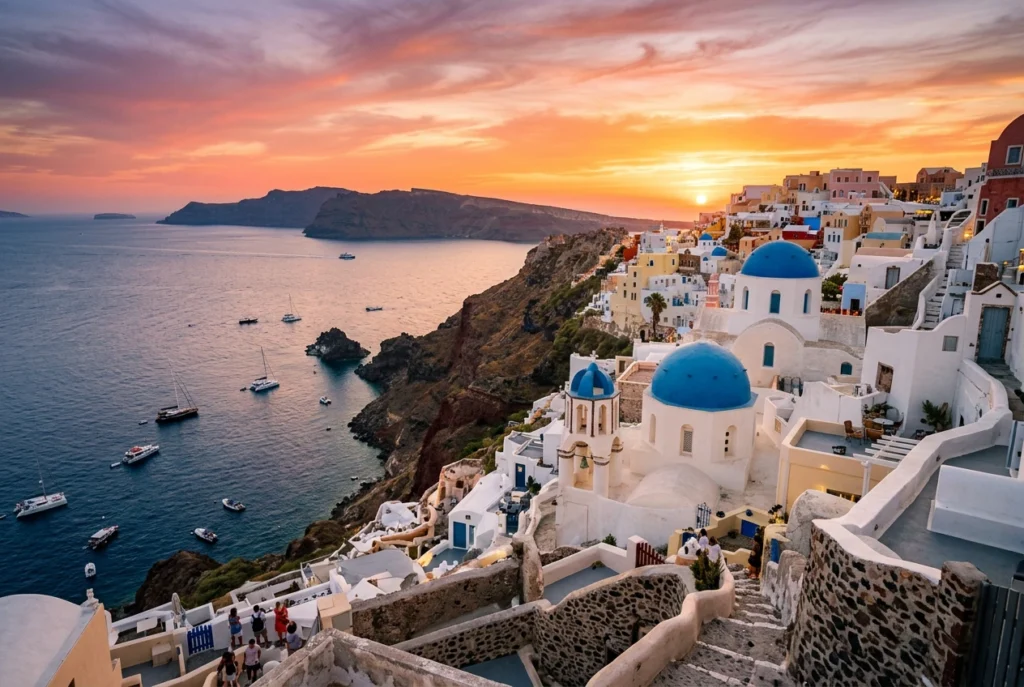
That said, Santorini in July is also genuinely crowded, with cruise passengers flooding the narrow streets of Fira from 10am to 5pm daily. If you want the scenery without the shoulder‑to‑shoulder logistics, arrive in late May or target the northeastern part of the island near Imerovigli.
Crete earns a separate mention because its scale changes the experience entirely. At roughly 260 kilometers long, it’s less a single destination and more a small country: the White Mountains in the west, the Palace of Knossos near Heraklion, Elafonissi’s soft pink‑sand beach on the southwestern tip, and the Lassithi Plateau inland. First‑time visitors who want to understand Greece deeply — not just photograph it — often find a week in Crete more rewarding than a rushed circuit of three smaller islands.
The Peloponnese region on the mainland is the most underused answer to this question. Ancient Olympia, the Byzantine ghost town of Mystras, the Mani Peninsula’s tower houses, and the Nafplio harbor (one of Greece’s most photogenic small cities) are all within a two‑hour drive of each other.
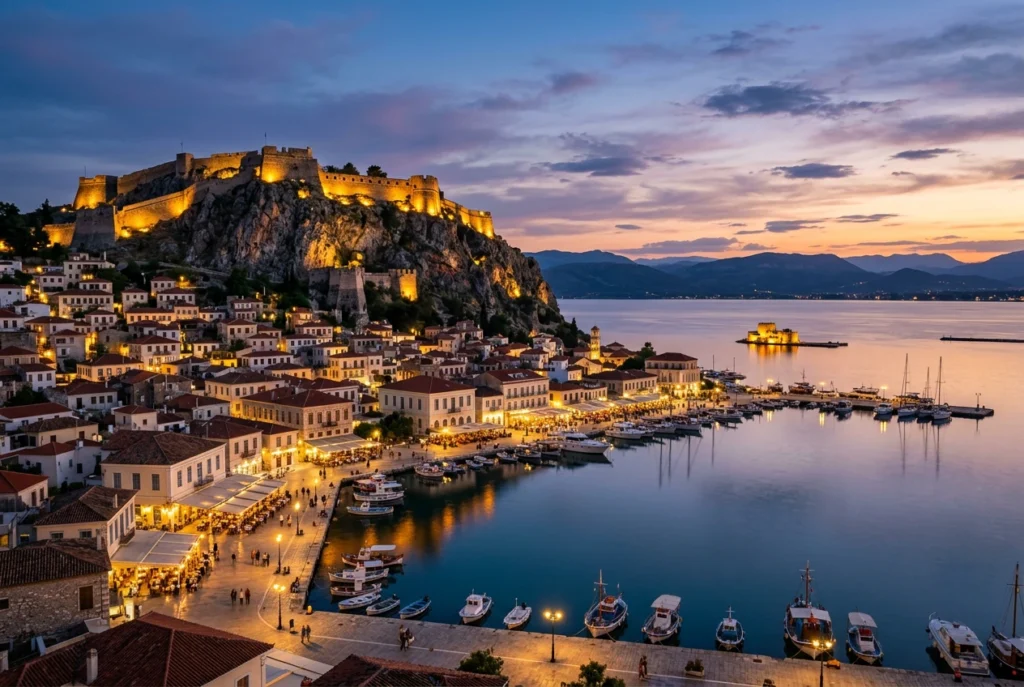
In 2026, TripAdvisor’s Travelers’ Choice Awards included six Greek destinations, confirming that the country’s appeal runs well beyond the usual circuit.
What is considered the best Greek island to visit?
The best Greek island to visit is Crete for first‑timers and travelers who want maximum variety, Santorini for romance and scenery, Naxos for the combination of beaches and authentic village life without Mykonos pricing, and Milos for those who’ve already done the circuit and want something genuinely different.
Quick Answer: The best Greek island overall depends on your priorities. Crete suits first‑time visitors for its sheer variety — beaches, history, and local culture all in one place. Santorini is unmatched for romantic scenery. Naxos offers comparable beaches to more expensive islands at a fraction of the cost and crowds.
Mykonos has a specific audience: it’s genuinely excellent for nightlife, high‑end beach clubs, and a cosmopolitan scene. Little Venice at dusk, the windmills, the narrow lanes of the old town — it works if that’s your thing. But Mykonos charges premium rates for nearly everything, and the beach experience at places like Paradise Beach during high season is closer to a festival than a swim. Go knowing what you’re getting.
Naxos is the choice I’d push for anyone who opens with “I want a Greek island but I’ve heard Santorini is overcrowded.” It’s the largest of the Cyclades, which means quieter beaches on its eastern coast like Plaka and Mikri Vigla, a working agricultural interior with villages that haven’t reorganized themselves around tourism, and the enormous unfinished Temple of Apollo (the Portara) standing at the harbor entrance. [Image: Naxos Portara at sunset — massive marble gateway of Temple of Apollo silhouetted against orange sky above the harbor] Ferries from Athens’ Piraeus port reach Naxos in about five hours — no flight required.
I arrived in Naxos in late June on a morning ferry from Paros, having booked a small guesthouse in the Halki village in the island’s interior. Most travelers stay near the beach towns, so the mountain villages were genuinely quiet — the kind of quiet where locals sit outside in the evenings and you can hear exactly one scooter on the road. The practical takeaway: if you want a Cycladic island experience without the high‑season crush, staying one or two nights inland rather than on the coast changes the trip entirely.
Milos deserves particular attention in 2026. Its coastline — shaped by volcanic activity into bizarre formations like the sea caves at Kleftiko and the ochre‑and‑white cliffs at Sarakiniko — attracts photographers and adventurous travelers who want beaches they can’t easily find elsewhere.
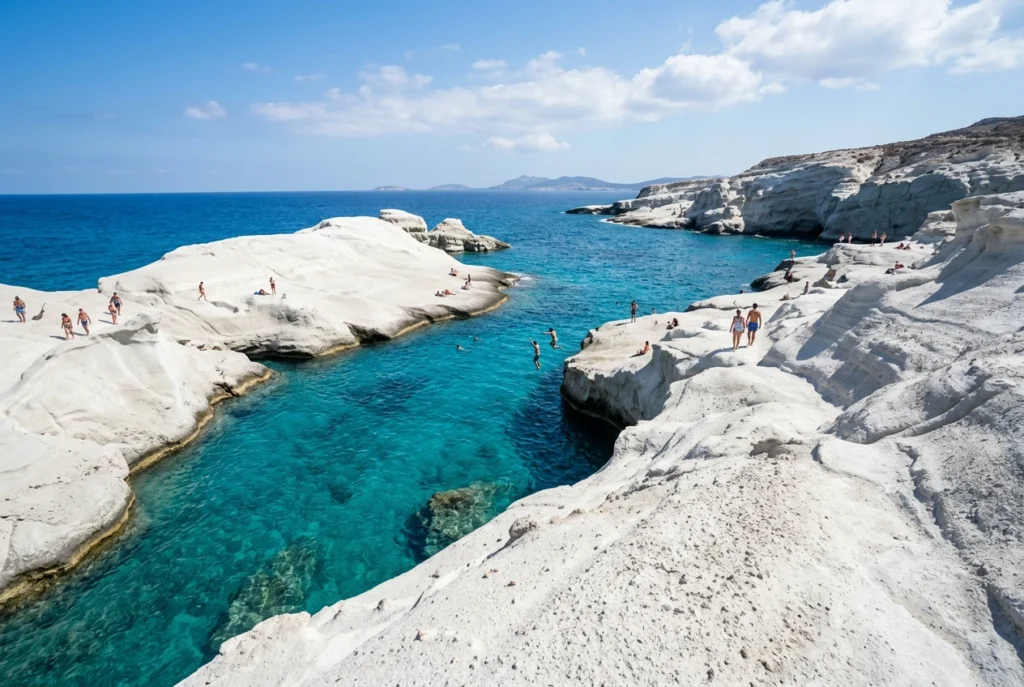
It’s smaller than Naxos and less developed, which means fewer options for nightlife but a more memorable visual landscape. Connections from Athens are available by ferry (roughly six hours) or a short flight.
Best Travel Destinations in Greece by Travel Style
The best travel destinations in Greece look completely different depending on what you want from the trip. Here’s a direct breakdown by travel profile.
What Is the Best Way to Explore Greece as a First‑Timer?
Quick Answer: Start with two days in Athens, then take a ferry to one island for 5–7 days. Crete is the strongest single‑island choice for first timers. Avoid trying to cover more than two islands in one week — the logistics of ferries and packing reduce the experience.
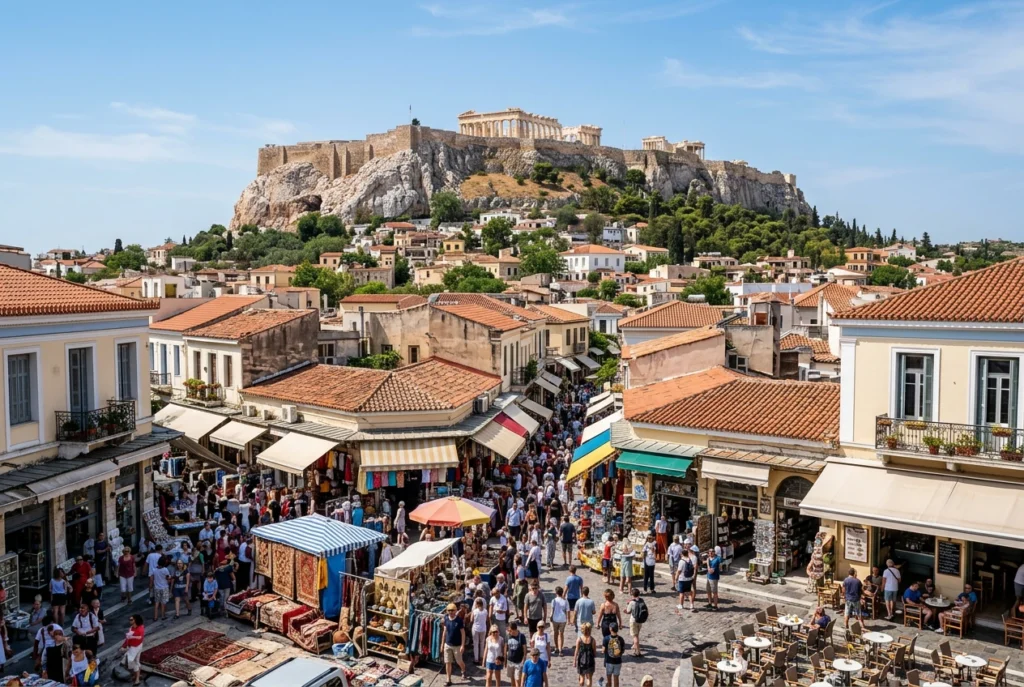
For first‑time visitors, the cleanest structure is: Athens first, then one or two islands. Athens gives you the Acropolis, the National Archaeological Museum, the Monastiraki flea market, and some of the best street food in Southern Europe (specifically the souvlaki in Monastiraki Square) all within walking distance. Paging yourself around three islands in one week rarely feels as efficient as you think — in practice you spend 25–30% of your trip on ferries, waiting, or moving luggage.
From Athens, the most practical single‑island extension is Crete. It has airports with direct international flights, calm beaches for families, and monuments like the Palace of Knossos and the ancient city of Gortyn for history buffs. If you want a more compact island experience, pair Athens with Naxos or Milos for a 10–14 day trip, then return via Athens rather than trying to jump across half the Aegean in one week.
What Are the Best Destinations in Greece for Couples?
Quick Answer: Santorini — especially Oia and Imerovigli — remains the top couples destination for scenery. Hydra (car‑free, 2 hours from Athens) is the best alternative for quiet intimacy. Rhodes Old Town works well for couples who want atmosphere without Santorini prices.
Santorini is the obvious answer and still a valid one, particularly if you stay in Oia or Imerovigli rather than the busier Fira. For something less photographed but equally atmospheric, the island of Hydra — reachable by hydrofoil from Piraeus in under two hours — has no motor vehicles, stone mansions along the harbor, and a quiet that Santorini can’t match.
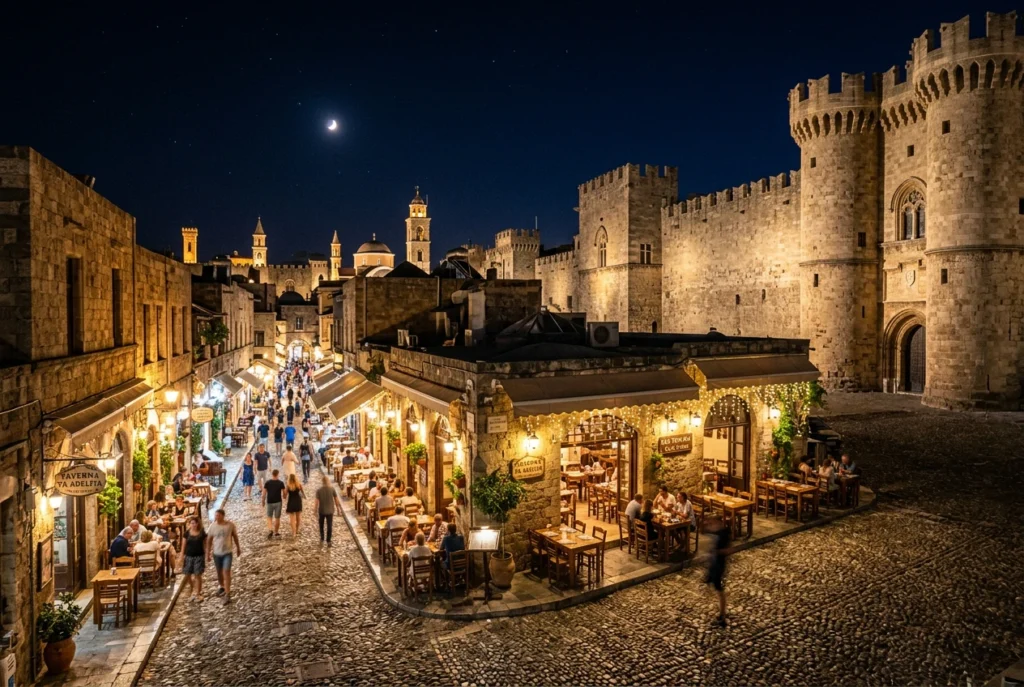
Rhodes Old Town, a UNESCO World Heritage Site, is another underused couples destination with medieval architecture and candlelit tavernas tucked inside a walled city. The advantage: you can have the “old town” experience without the steep hotel prices and crowded sunset viewpoints that characterize high‑season Santorini.
Which Greek Destinations Are Best for Avoiding Crowds?
Quick Answer: Sifnos, Folegandros, Amorgos, Karpathos, and Milos all receive a fraction of Mykonos and Santorini traffic. On the mainland, the Mani Peninsula, Nafplio, and Mystras offer comparable beauty with significantly fewer tourists. Both Ano Koufonisi and Kythira appear on the 2026 European Best Destinations list.
Sifnos, Folegandros, Amorgos, Karpathos, and Milos are the Cycladic and Dodecanese outliers that most travelers skip. They have the same basic ingredients — white buildings, blue sea, local tavernas — but fewer all‑inclusive resorts and late‑night beach parties. Access is more limited, which becomes a benefit if you’re prioritizing quiet over nightlife.
On the mainland, the Mani Peninsula delivers a completely different rhythm: tower houses, stone villages, and long stretches of coastline that feel like they haven’t been updated for Instagram. Nafplio and Mystras — both in the Peloponnese — are compact enough to visit in a day each but quiet enough to feel like an authentic Greek town rather than a tourist arcade. The 2026 European Best Destinations list named Ano Koufonisi and Kythira among the most promising escapes, which is a useful signal for anyone who explicitly wants to dodge crowds.
For Families
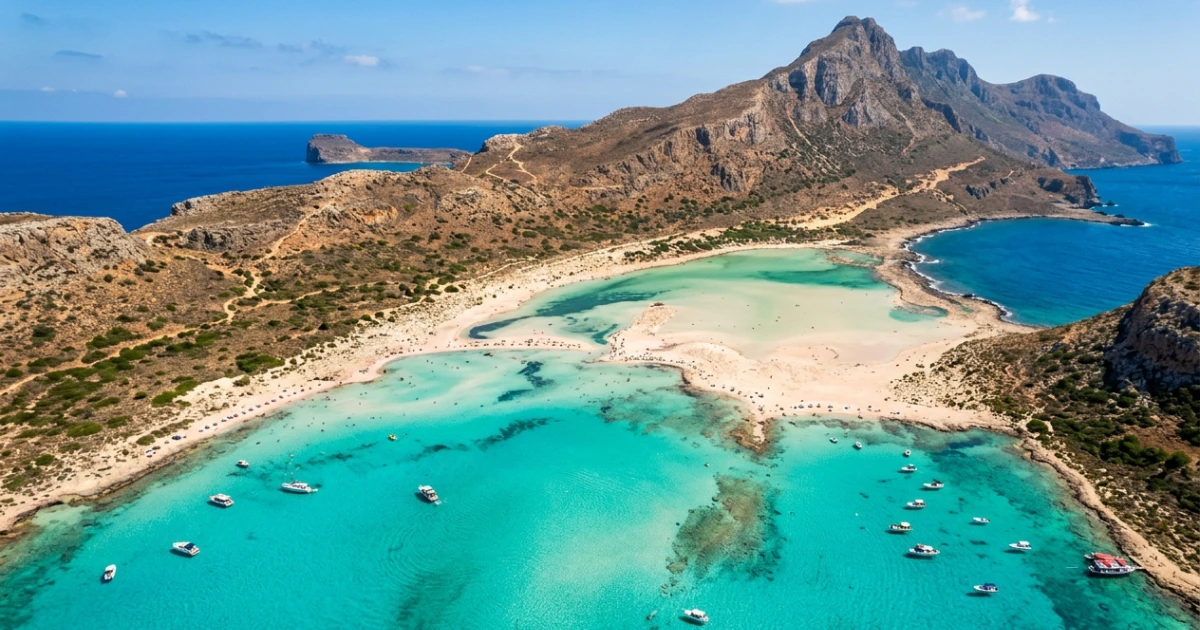
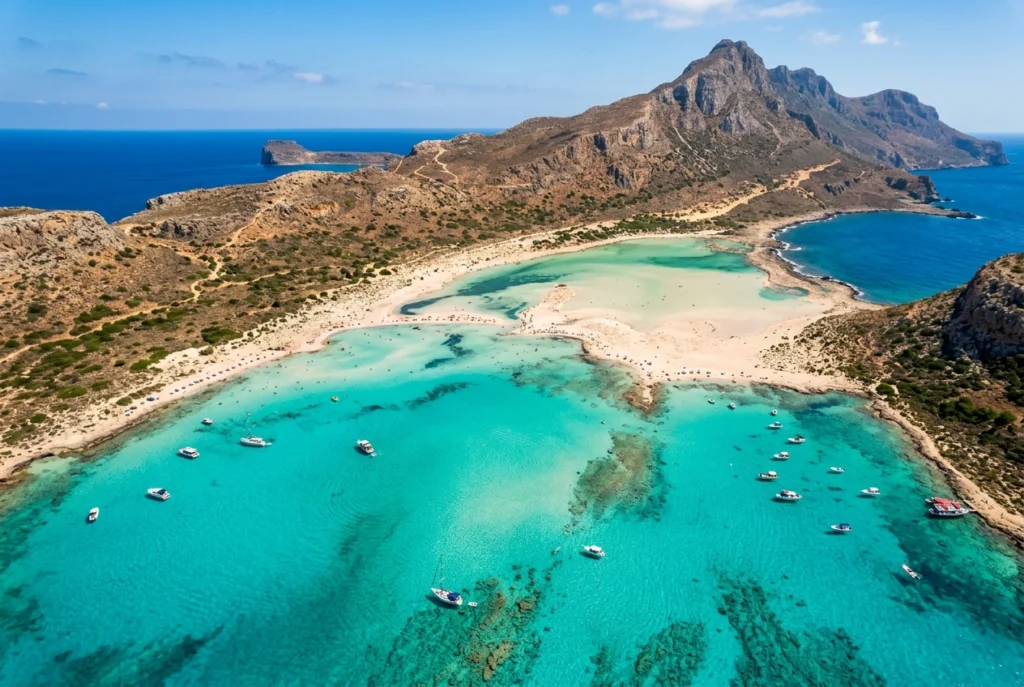
Crete works exceptionally well for families: it has airports with direct international connections, resorts around Chania and Heraklion with calm shallow beaches, and enough variety to keep teenagers interested (Samaria Gorge hike, waterparks near Hersonissos, boat trips to Balos Lagoon). Kefalonia in the Ionian Islands is quieter, with the stunning Myrtos Beach and the famous Melissani Cave — both manageable with children.
For Culture and History
The mainland offers things no island can match. Delphi, the sanctuary of Apollo perched on the slopes of Mount Parnassus, was the spiritual center of the ancient Greek world and remains one of the most atmospheric archaeological sites in Europe. Meteora — monasteries built on top of vertical rock pillars in Thessaly — is technically a UNESCO site but photographs still don’t prepare you for it in person.
I spent a morning at Meteora in early October, arriving just before 9am on a weekday when tour buses hadn’t yet arrived. The light at that hour was flat and grey, and most of the six monasteries weren’t open yet — but walking between them on the paths cut into the rock, with complete silence except for birds, was the single strongest visual memory I took from that trip.
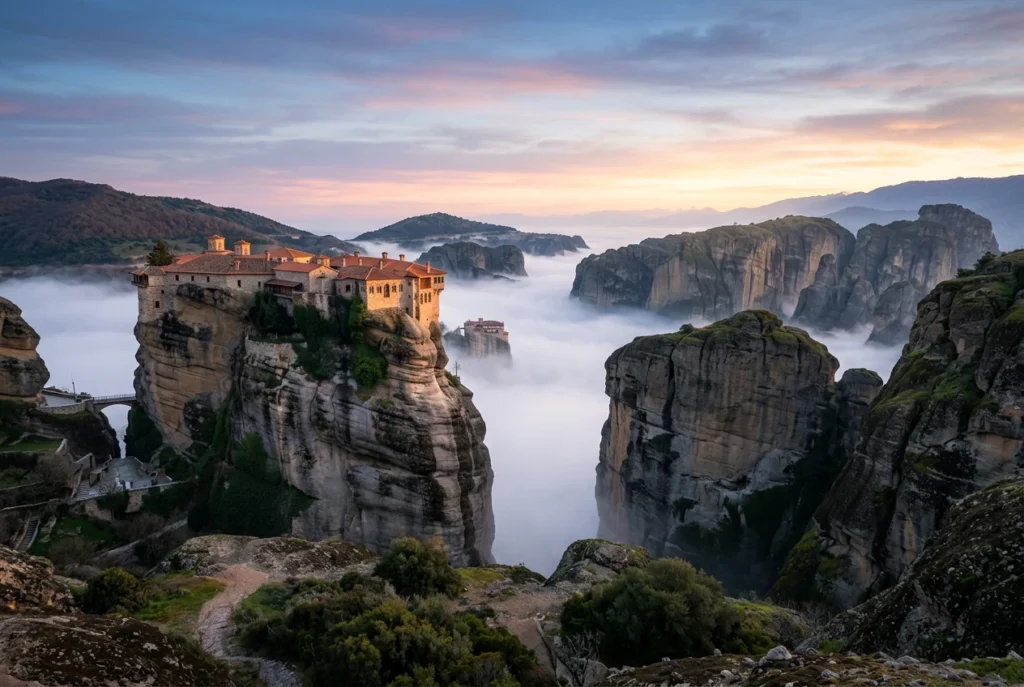
The lesson: mainland Greece rewards early starts and off‑peak visits in a way the islands usually don’t.
Island vs. Mainland Greece: How to Decide
Greece has more than 200 inhabited islands and a mainland packed with ancient sites, mountain terrain, and coastline that most travelers never reach. Here’s how the core tradeoffs look for the best travel destinations in Greece.
| Factor | Greek Islands | Greek Mainland |
|---|---|---|
| Best for | Beaches, sunsets, island hopping, relaxation | History, culture, hiking, road trips |
| Top destinations | Santorini, Crete, Mykonos, Naxos, Milos | Athens, Delphi, Meteora, Peloponnese |
| Crowd level | High (peak islands) to low (lesser‑known) | Lower overall outside Athens |
| Getting around | Ferry, domestic flight, boat | Car rental, train, bus |
| Cost | Higher on popular islands | Lower outside Athens |
| Best season | May–October | April–June, September–October |
| Ideal for | Couples, beach travelers, first‑timers | History lovers, families, road‑trippers |
The honest answer for most first‑time visitors is: do both. Two nights in Athens, a day trip to Delphi if your schedule allows, then five to seven days on one or two islands. That structure gives you ancient Greece and island Greece without fragmenting your trip into a logistics puzzle.
Best Time to Visit Greece’s Top Destinations
The best time to visit the best travel destinations in Greece is May–June or September–October. These shoulder‑season months give you warm weather, open businesses, and significantly lower prices and crowds than July and August.
July and August are the most popular months by a large margin — and also the most expensive, hottest (regularly above 35°C in the Cyclades), and most congested. Ferry delays, overbooked accommodation, and queues at major archaeological sites are real logistics problems in peak summer. Santorini in August, in particular, is genuinely uncomfortable if you’re not specifically there for the party‑adjacent beach scene.
April is interesting for mainland Greece and Crete specifically. Wildflowers are out, the Peloponnese is green, and Delphi and Olympia are walkable without sweating through your clothes. Most island businesses haven’t opened yet, so April is a poor choice for Mykonos or Santorini — but excellent for Athens and a self‑drive road trip through the Peloponnese.
I visited Rhodes for the first time in late September, catching the last week of what felt like full summer. The water temperature was still comfortable for swimming, restaurants were half‑full rather than booked out, and the medieval walls of Rhodes Town had an early‑evening quality of light that felt almost absurdly cinematic. The ferry from Crete took about nine hours overnight — an efficient way to cover distance and save a hotel night. The practical lesson: late September in the Dodecanese often outperforms the exact same locations in August for every metric except the nightlife calendar.
Common Mistakes to Avoid
Trying to island hop too aggressively. Three islands in seven days sounds efficient on paper. In practice, you’ll spend roughly 25–30% of your trip on ferries, waiting in ports, or moving luggage. Two islands maximum for a one‑week trip is a cleaner experience.
Booking Mykonos or Santorini as your only Greece experience. Both are genuinely worth visiting but neither represents Greece the way Athens, Crete, or the Peloponnese do. If you leave feeling like Greece is “pretty but expensive,” that’s usually a destination‑selection problem, not a Greece problem.
Underestimating ferry schedules. Not all islands are connected directly. Getting from Mykonos to Crete sometimes requires going back through Piraeus. Always check ferry routes on Ferryscanner — Greek ferry routes and schedules before building your itinerary around island combinations.
Skipping the mainland entirely. Meteora, Delphi, Olympia, and Nafplio are four of the most rewarding destinations in the country — and far less crowded than any major island. Most itineraries ignore them completely.
Visiting Athens for only one day. Athens gets dismissed as a transit hub. That’s a mistake. The Acropolis Museum alone requires three hours to do properly, and the neighborhoods of Koukaki and Psiri have some of the best taverna dining in the country. Budget two full days minimum.
Not checking whether smaller islands have ATMs. Some smaller Cycladic islands have one ATM that runs out of cash on weekends. Bring cash from Athens or a larger island.
Choose Your Greece — By Travel Style and Season
The best travel destinations in Greece aren’t a fixed list — they’re a function of your timing, travel style, and tolerance for crowds. Athens gives you depth. Crete gives you variety. Santorini and Mykonos give you the iconic experience with well‑known tradeoffs. Naxos, Milos, and the Peloponnese give you Greece without the Instagram queue.
Book shoulder season if you can. Don’t overstuff your itinerary. And make at least one stop on the mainland. Greece rewards the trip built around fewer places done properly. For full Europe context, see our best places to visit in Europe guide.
About the Author
I’ve traveled Greece across different seasons and budgets — booking a Naxos guesthouse inland when the beach towns were full, arriving at Meteora before the tour buses, and taking an overnight ferry from Crete to Rhodes to save both time and a hotel night. I write about Greece because the gap between the standard Santorini‑Athens circuit and what the country actually offers is still wider than most travel content admits. I update this guide as ferry routes, crowd patterns, and accommodation pricing change.
C. FAQ SECTION
Q: What are the best places to visit in Greece for first‑time travelers?
A: For first‑timers, the strongest combination is Athens (two days for the Acropolis, Plaka, and the National Archaeological Museum) followed by one or two islands. Crete is the best single‑island choice for first visits — it combines beaches, ancient ruins like the Palace of Knossos, and authentic village life in a scale large enough to explore for a full week without running out of things to do.
Q: What is the nicest part of Greece to visit?
A: The Cyclades — particularly Santorini, Paros, and Naxos — are considered the most scenic part of Greece for most travelers. Crete is the most versatile region overall, combining beaches, mountains, and history. The Peloponnese is the best answer for travelers focused on ancient sites and authentic culture away from tourist crowds.
Q: What is the best Greek island to visit?
A: Crete is the best overall Greek island for most travelers due to its size, variety, and year‑round accessibility. Santorini is best for couples and romantic scenery. Naxos is the best value Cycladic island with excellent beaches and fewer crowds. Milos is the top choice for dramatic landscape photography and those who’ve already visited the more popular islands.
Q: Is Greece better for island hopping or mainland travel?
A: The best Greece trip combines both. Mainland destinations like Athens, Meteora, and Delphi offer cultural and historical depth that no island matches. The islands — particularly in the Cyclades and Ionian Sea — deliver the beach and scenery experience Greece is best known for. A first‑time itinerary of 10–14 days can realistically include two to three days on the mainland and seven to eight days across one or two islands.
Q: What is the best time to visit Greece?
A: May–June and September–October are the best months. Temperatures are warm but manageable (22–28°C), accommodation costs are 20–40% lower than July–August peaks, and major sites like the Acropolis and Delphi are far less congested. July and August are the most popular but come with heat above 35°C, ferry delays, and higher prices across the board.
Q: What are the best travel destinations in Greece for couples?
A: Santorini remains the most popular couples destination, particularly the villages of Oia and Imerovigli for their caldera views. Hydra — a car‑free island reachable by hydrofoil from Athens — offers a quieter, more intimate alternative. Rhodes Old Town, with its medieval architecture and candlelit tavernas, is another strong couples destination that most itineraries overlook.
Q: Which destinations in Greece are best for avoiding crowds?
A: Sifnos, Folegandros, Amorgos, Karpathos, and Milos attract a fraction of the traffic Santorini and Mykonos receive. On the mainland, the Mani Peninsula, Nafplio, and Mystras (Byzantine ruins in the Peloponnese) offer comparable historical and scenic quality with significantly fewer tourists. Both Ano Koufonisi and Kythira received recognition on the 2026 European Best Destinations list for their unspoiled character.
Q: What do people typically eat for breakfast in Greece?
A: A traditional Greek breakfast varies by region but often includes fresh bread with honey or tahini, local cheese (like graviera or feta), olives, and Greek yogurt with honey. In cafés across Athens and the islands, you’ll also find tiropita (cheese pastry) and coffee — either Greek‑style (strong, brewed in a small pot) or freddo espresso, which is the dominant cold coffee format across the country.