

The Real Bali Travel Guide: What to Know Before You Go
Your Bali Travel Guide Starts Here
This Bali travel guide covers everything you need to plan a smarter trip — the best areas to stay, what things cost, when to go, and what most visitors get wrong. Bali is not an undiscovered island — it hosts over five million international visitors a year, and parts of Kuta feel closer to a resort strip than a cultural destination.
That reality doesn’t make it a bad trip. It makes planning matter more. The island genuinely divides into distinct zones: Ubud delivers the rice terraces and temple culture most people imagine; Seminyak and Canggu run on beach clubs and good coffee; Nusa Dua is quieter, polished, and family-friendly. Nusa Penida sits offshore and plays by entirely different rules.
A 7–10 day trip gives you enough time to move between two or three of these zones without rushing. Use this Bali travel guide to match your timing, budget, and base to what you actually want from the trip.
You can as well read our article about the best destinations worldwide -> The Best Destinations to Travel in June 2026 (By Traveler Type, Budget & Region)
Table of Contents
What Is the Best Month to Go to Bali?
Quick Answer: The best months to visit Bali are May and September — dry season conditions without July–August peak crowds or pricing. July and August are viable but the most expensive and crowded. The rainy season (November–March) offers the lowest prices, with rain typically falling in short afternoon windows rather than all-day downpours.
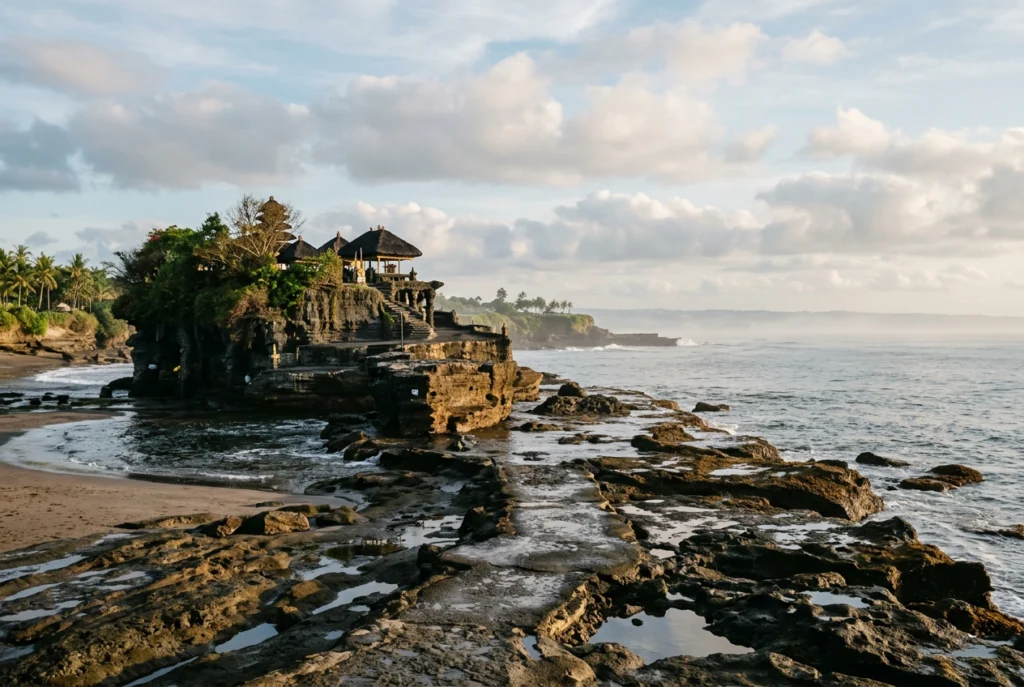
The first question any Bali travel guide should answer is when to go — and the honest answer is more specific than “dry season.” The dry season runs April through October. Most guides stop there and call it done. Here’s what they miss: July and August are genuinely crowded — Uluwatu Temple at sunset can feel like a queue rather than an experience, and villa prices in Seminyak spike 30–50% above shoulder rates.
May and September hit a different balance. The weather is nearly identical to peak season — low humidity, minimal rain — but you’ll find meaningful price drops and shorter lines at places like Tanah Lot and the Tegallalang Rice Terrace.
The rainy season (November through March) gets dismissed too quickly. Travelers who arrive in January consistently report lush, almost electric-green rice fields, spa prices 20–30% lower than dry season, and a version of Ubud that feels less like a tourist circuit. Rain usually arrives between 2pm and 5pm. Plan outdoor activities for mornings and you’ll barely notice it.
Last June, I paid 45,000 IDR for a nasi campur at a warung in Sidemen that had no English menu — best meal of the trip. That kind of serendipitous find is far more common in the shoulder months when you’re not fighting for a table.
Seasonal Snapshot
- May / September — Best overall balance of weather, price, and crowd levels
- July / August — Peak crowds, highest prices, best beach weather
- November–March — Lowest prices, greenest scenery, afternoon rain showers
- April / October — Transition months; generally fine with occasional rain
Seasonal food note: Babi guling (suckling pig) is freshest and most available during festival season in the dry months. Jimbaran Bay grilled seafood dinners on the beach work best May–October when tables stay dry. Black rice pudding and jackfruit dishes are year-round staples available at any local warung.
Is Bali Cheap or Expensive?
Quick Answer: Bali costs approximately $30–50/day on a budget, $80–150/day mid-range, and $300+ for luxury. The gap between budget and luxury is wider here than almost anywhere in Southeast Asia — a $15 hostel bed and a $500 private villa can exist on the same street in Seminyak.
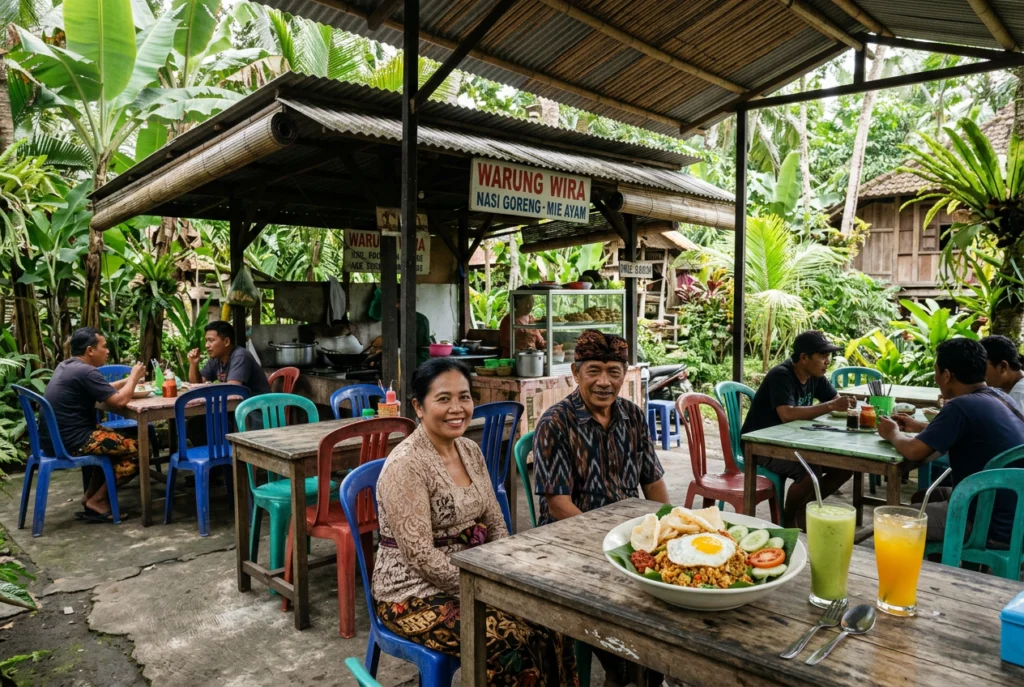
Budget travel in Bali is real and sustainable. A private room in a guesthouse in Ubud runs $20–35/night. A plate of nasi goreng at a local warung costs under $2. Scooter rental sits at $5–10/day — the single best transport investment you can make here. A traveler spending carefully can stay comfortable at $40–50/day including accommodation, food, and one or two paid activities.
Mid-range is where Bali genuinely shines. At $80–150/day, you access private pool villas, good restaurants in Canggu, spa treatments, and guided day trips to Mount Batur or Nusa Penida. This bracket is underserved in most guides, which tend to frame Bali as either backpacker-cheap or honeymoon-expensive.
Luxury in Bali means private villas with staff, in-villa dining, and resort-style wellness. Properties in Nusa Dua and the Ubud jungle ridge regularly exceed $500/night — and deliver genuine value at that price point relative to equivalent experiences in Europe or the Maldives.
In January 2026, I paid just 750,000 IDR (around $48) for a room at a boutique guesthouse in Ubud’s rice field outskirts — a rate that would easily double in July. The rainy season discount is real, and the morning mist over the paddies was worth every drop of afternoon rain.
What Inflates Your Budget Fast
- Renting a driver instead of a scooter (adds $30–50/day)
- Eating exclusively at tourist-facing restaurants in Seminyak
- Booking activities through hotel concierges rather than directly
- Visiting Nusa Penida without planning the ferry in advance (last-minute boats cost more)
What Is the Best Area to Stay in Bali for First-Timers?
Quick Answer: For first-timers, Ubud or Seminyak are the two strongest base options depending on your priorities. Ubud suits travelers who want temples, rice terraces, and wellness. Seminyak suits those who want beaches, restaurants, and nightlife. Canggu works well for digital nomads and younger travelers. Avoid Kuta as a base unless you specifically want a party-heavy beach strip.

Ubud sits inland at elevation — cooler, quieter, and surrounded by rice fields and jungle. It’s the right base if your Bali list includes Tegallalang Rice Terrace, cooking classes, yoga retreats, and day trips to Mount Batur. The town itself has a strong café culture and a concentration of good mid-range restaurants along Jalan Dewi Sita.
Seminyak is polished beach Bali. The streets are cleaner than Kuta, the restaurants are genuinely good, and the beach sunsets are reliable. It connects easily to Canggu (20 minutes north by scooter) and Jimbaran Bay (30 minutes south). A solid pick for couples or anyone who wants beach access plus quality dining.
Canggu has become the digital nomad capital of Southeast Asia. Co-working spaces like Outpost and Lawn Canggu fill up with long-term laptop workers. The café density is absurd in the best way. That said, it’s changed fast — parts of Canggu now feel more like a startup campus than a Balinese town.
Nusa Dua is the quietest major zone — gated resort territory with calm beaches and minimal street-level chaos. Best for families and anyone who wants to decompress rather than explore.
Sanur is the underrated middle ground: calmer than Seminyak, more local-feeling than Nusa Dua, and the main departure point for ferries to Nusa Penida and Lombok.
What Should I Avoid in Bali?
Quick Answer: Avoid drinking tap water, renting a scooter without experience on busy roads, engaging with money changers outside licensed booths, and feeding or approaching the monkeys at Uluwatu Temple or the Sacred Monkey Forest in Ubud. These aren’t scare stories — they’re the situations that reliably derail trips.
The monkey situation at Uluwatu deserves specific attention. The macaques there are bold and practiced thieves — sunglasses, phones, and bags have all gone. Travelers arriving at Uluwatu before the main evening crowd (before 5pm) report fewer incidents simply because the monkeys are less agitated by the volume of people. Keep valuables in a zipped bag, not a pocket.
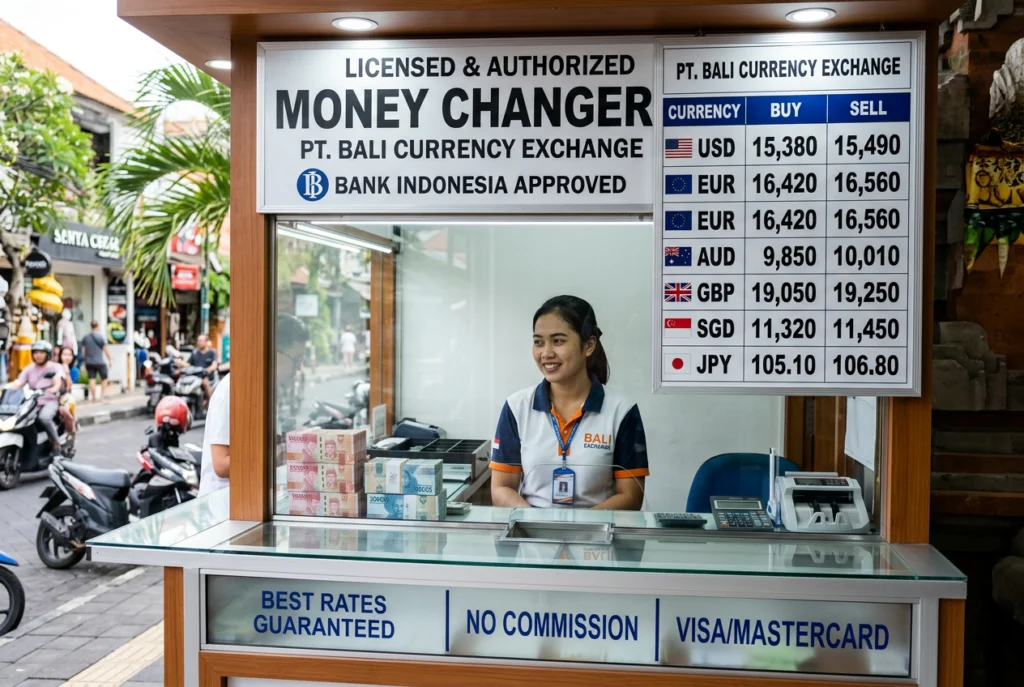
Money changers are another reliable problem. Licensed exchange booths (look for the Bank of Indonesia rate posted clearly) give fair rates. Street-level changers use sleight-of-hand counting tricks that are genuinely difficult to catch. The rule is simple: use ATMs or licensed booths only.
Road safety is real. Bali’s roads, especially between Seminyak and Canggu, carry heavy scooter traffic. If you haven’t ridden a scooter before, a few slow streets in Ubud are not adequate practice for the main roads. Ride-hailing via Gojek or Grab is cheap enough ($2–5 for most short trips) that it’s worth using instead.
Quick Avoidance List
- Tap water — always bottled or filtered
- Unlicensed money changers — use ATMs or bank-licensed booths
- Monkey Forest without securing your belongings
- Kuta at night if you want to sleep before 2am
- Booking tours through hotel lobbies — prices are typically 40–60% higher than direct
Getting There & Getting Around
Quick Answer: Fly into Ngurah Rai Airport (DPS). Most nationalities get 30 days visa-free. Rent a scooter ($5–10/day) for Ubud and Canggu, use Gojek/Grab ($2–5/ride) in Seminyak, or hire a private driver ($40–60/day) for multi-stop day trips. Buy a Telkomsel SIM at the airport for under $10.
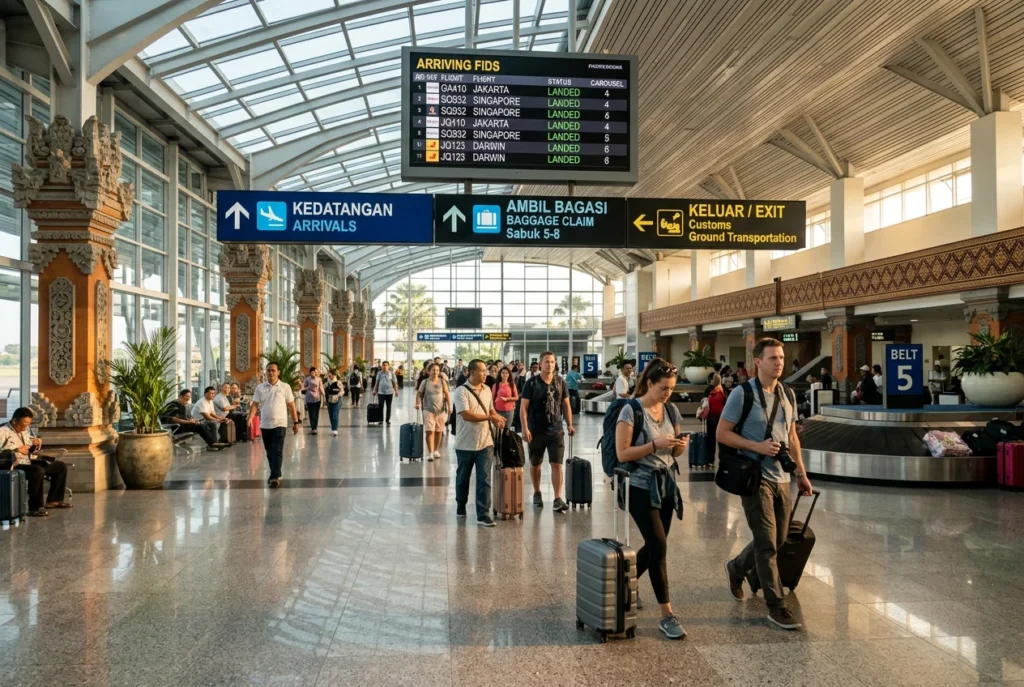
Arriving: Ngurah Rai International Airport (DPS) handles all international and domestic flights. It sits in the south of the island, roughly 30 minutes from Seminyak, 45 minutes from Canggu, and 90 minutes from Ubud in normal traffic. Direct flights connect Bali to Singapore, Kuala Lumpur, Sydney, Tokyo, Dubai, and a growing number of European hubs.
Visa: Most nationalities — including US, UK, EU, Australian, and Canadian passport holders — enter visa-free for 30 days. A Visa on Arrival costs $35 USD and is extendable for another 30 days at the immigration office. Check your specific passport before travel, as the list changes.
Airport transfer: The official taxi counter inside arrivals has fixed rates (around 150,000–250,000 IDR depending on destination). Gojek and Grab cannot pick up inside the airport officially — walk to the designated zone outside. Agree on price before getting in any unmetered vehicle.
Getting Around the Island
- Scooter rental: $5–10/day — best for Ubud and Canggu where traffic is manageable
- Gojek / Grab: $2–5 per ride for most local trips; essential in Seminyak and Kuta
- Private driver: $40–60/day — worth it for multi-stop day trips to places like Mount Batur or the east coast temples
- Blue Bird taxis: metered, reliable, and safer than unmarked cabs
SIM card: Buy at the airport on arrival. Telkomsel and XL Axiata both offer tourist SIMs with 10–20GB data for under $10. Having data from the moment you land makes Gojek and navigation functional immediately — don’t skip this step.
Where to Stay
Quick Answer: Budget travelers should book guesthouses in Ubud ($25–40/night). Mid-range travelers get the best value in Seminyak or Ubud ($100–150/night for boutique villas). Luxury travelers should choose Nusa Dua or Ubud jungle ridge ($300–800+/night).
Budget ($30–60/night)
Guesthouses and small family-run homestays (called losmen) dominate this bracket. In Ubud, properties along Jalan Bisma and the surrounding rice field edges offer private rooms with breakfast for $25–40. In Canggu, hostels and surf lodges around Batu Bolong Beach run $15–25/night for dorms, with coliving spaces like Outpost offering budget rooms with co-working access included. Quality is generally high — Bali’s budget accommodation punches above its price point compared to most of Southeast Asia.
Mid-Range ($80–180/night)
This is the sweet spot. Boutique villas with private or semi-private pools, daily breakfast, and genuine design quality sit at $100–150/night in Seminyak and Ubud. Alaya Resort Ubud and Katamama in Seminyak represent this tier well — locally-influenced design, attentive service, without the corporate resort scale. For families, Sanur’s mid-range hotels offer calm beach access without Kuta’s noise.
Luxury ($300–800+/night)
Bali’s luxury tier is legitimate. The Four Seasons Jimbaran Bay and Amandari in Ubud are benchmarks. Private cliff villas in Uluwatu offer Indian Ocean views from infinity pools. Nusa Dua’s gated resort corridor — home to St. Regis, Mulia, and Sofitel — delivers full-service luxury with calm, swimmable beaches. At this level, Bali competes directly with the Maldives at a fraction of the flight cost from most of Asia.
Top Things to Do

Temple visits: Tanah Lot sits on a sea rock and photographs best at low tide in late afternoon. Uluwatu Temple perches on a 70-meter cliff and hosts a nightly Kecak fire dance performance — arrive by 5:30pm to get a decent seat. Tirta Empul in Tampaksiring is a Hindu water temple where locals perform purification rituals; respectful visitors can participate.
Surfing: Uluwatu and Padang Padang on the Bukit Peninsula handle experienced surfers. Kuta and Seminyak beaches offer gentler breaks for beginners, with surf schools charging $30–50 for a two-hour lesson including board.
Tegallalang Rice Terrace: The terraces are real and genuinely impressive — tiered, bright green, and set against a deep river gorge. Go before 8am. Travelers who arrive early consistently report having the main viewpoints almost entirely to themselves; by 10am the selfie-stick density makes it a different experience entirely.
Mount Batur sunrise trek: A 2am start gets you to the 1,717-meter caldera rim by sunrise. The hike takes roughly two hours up. Guides are mandatory (arranged through your accommodation or directly in Kintamani village). Bring layers — the summit is genuinely cold at 5am even in dry season.
Nusa Penida day trip or overnight: The island’s signature sight is Kelingking Beach — a T-rex-shaped cliff above a narrow strip of white sand. The snorkeling at Manta Point delivers manta ray encounters that are among the most reliable in the region. Fast boats from Sanur take 30–45 minutes.
Wellness and yoga: Ubud is the center. Yoga Barn on Jalan Hanoman runs daily multi-style classes from $12–18 per session. Spa treatments across the island are genuinely good value — a 90-minute traditional Balinese massage runs $15–25 at a reputable spa.
Cooking classes: Half-day classes in Ubud typically start with a market visit to Pasar Ubud, then move to an open-air kitchen for three to four dishes. Expect to pay $35–55 per person. The technique you’ll learn — building a base paste (bumbu) from scratch — changes how you cook Indonesian food at home.
Where to Eat & Drink
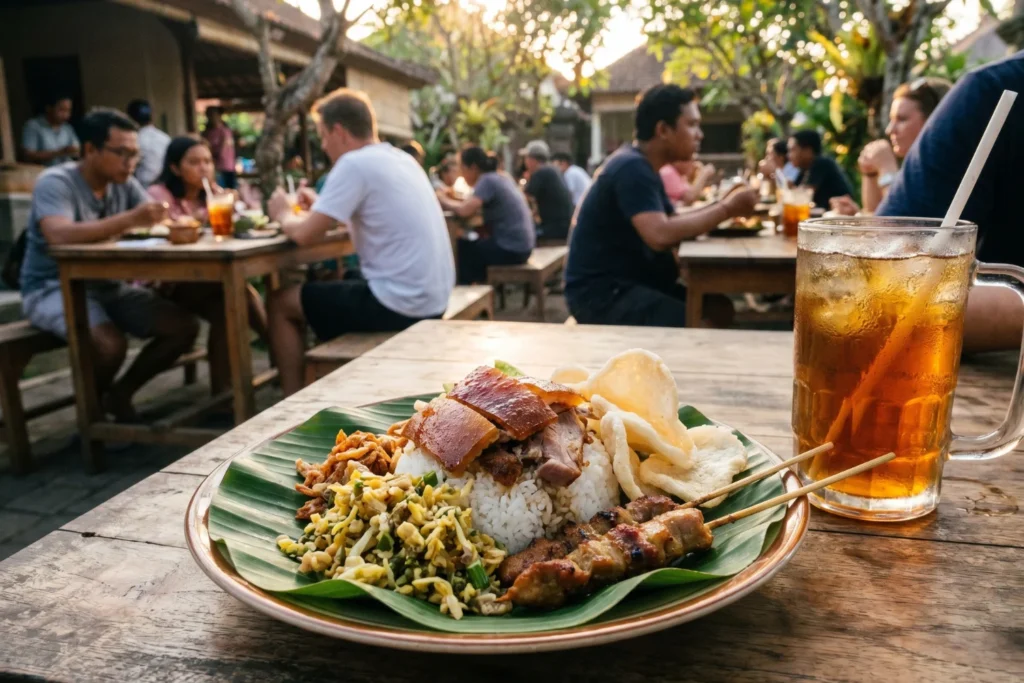
Local Dishes to Eat
- Nasi goreng — fried rice with egg, vegetables, and your choice of protein; available everywhere for $1.50–4
- Babi guling — Balinese suckling pig, slow-roasted with turmeric and spices; Ibu Oka in Ubud is the most cited spot, but the queue moves fast and the food is worth it
- Sate lilit — minced fish or pork satay pressed onto lemongrass skewers and grilled over coconut husks
- Lawar — a traditional minced meat and vegetable dish mixed with fresh coconut and spices; difficult to find outside local warungs
Where to Eat
- Warung Babi Guling Ibu Oka, Ubud — open from around 11am, usually sold out by 2pm; eat before 1pm
- Locavore, Ubud — one of Southeast Asia’s most talked-about restaurants, using hyper-local ingredients in a tasting menu format; book weeks in advance
- La Favela, Seminyak — a converted colonial house with multiple dining rooms and a late-night bar; reliable food and a genuinely interesting space
- Single Fin, Uluwatu — a cliff-side bar above the Uluwatu break; the food is secondary to the view, but the Sunday sessions are a Bali institution
- Crate Café, Canggu — a strong all-day brunch option with good coffee; representative of Canggu’s café culture without being the trendiest or most crowded option
Drink Notes
Bali’s craft beer scene has grown around Canggu. Bintang remains the ubiquitous local lager. Arak (palm spirit) is cheap and widely available — quality varies significantly, and stories of methanol contamination in unlicensed arak are not urban legend. Stick to sealed bottles or reputable bars.
Bali by Season & Budget: Quick Comparison
| Budget Traveler | Mid-Range | Luxury | |
|---|---|---|---|
| Daily spend | $30–50 | $80–150 | $300+ |
| Best season | Nov–Mar (lower prices) | May or September | July–Aug (peak, full availability) |
| Accommodation | Hostel / losmen | Boutique villa | Private pool villa / 5-star resort |
| Transport | Scooter + Gojek | Gojek + occasional driver | Private driver daily |
| Best base | Canggu or Ubud | Seminyak or Ubud | Nusa Dua or Ubud jungle ridge |
| Crowd exposure | High in peak months | Moderate | Low (private/gated) |
Common Mistakes to Avoid

Most Bali travel guides focus on the highlights. This section covers what they leave out.
Spending too much time in Kuta. Kuta is where most flights land, which is how it ends up on itineraries. Unless you’re specifically after a party strip with surf access, move on quickly. Seminyak is 20 minutes north and operates at a completely different level.
Underestimating travel time. Bali is small on a map — 153 kilometers end to end. But the roads between Ubud and the south coast can take 90 minutes in afternoon traffic. Don’t plan Nusa Penida and a Ubud cooking class on the same day.
Ignoring the east and north. Most guides (and most tourists) stay in the south and center. The east coast around Amed and Candidasa offers black sand beaches, excellent diving on the USAT Liberty wreck at Tulamben, and a quieter, more local version of Bali. The north coast around Lovina is different again — calm water, dolphin tours at dawn, and almost no tourist infrastructure.
Booking a packed 10-day itinerary. Bali rewards slowness. Two nights in a place isn’t enough to find the good warung, figure out the roads, or actually relax. Travelers who spend four to five nights in Ubud consistently report it as the best part of their trip.
Not getting a local SIM at the airport. Gojek and Grab require data to function. Without them, you’re dependent on metered taxis or negotiated fares. The SIM takes five minutes to buy and activates immediately.
I once watched a couple argue for ten minutes with a taxi driver at the airport because they hadn’t bought a SIM and couldn’t call a Grab. That $8 mistake cost them 200,000 IDR on a 20-minute ride and a lot of stress. Don’t be that couple.
Conclusion
This Bali travel guide is your starting point — the itineraries and area pages below take you deeper into each zone. Bali works best when you treat it as several distinct destinations that happen to share an island. Pick two or three zones, stay long enough to settle in, and resist the urge to tick every landmark. The Tegallalang terraces at dawn, a cooking class in Ubud, a sunset at Uluwatu, a morning snorkel off Nusa Penida — these experiences hold up. The crowds are real, the logistics require attention, but the island earns its reputation when you approach it with a clear plan. Start with where you want to stay, then build outward.

Ready to plan your trip? Browse our area guides below to build a route that actually fits how you travel.
Finding Your Best Travel Destinations in South America: A 2026 Traveler’s Guide -> Read here
The Best Destinations to Travel in June 2026 (By Traveler Type, Budget & Region) -> Read here
FAQ
Q: What is the best month to visit Bali?
A: May and September are the best months overall. Both sit in dry season with low humidity and minimal rain, but without the July–August price spikes and crowd levels. If budget is the priority, January and February offer the lowest accommodation rates on the island — rain typically falls in short afternoon bursts and mornings are clear. Avoid peak weeks around Christmas, New Year, and mid-July through August unless you book well in advance.
Q: How many days do you need in Bali?
A: Seven to ten days is the practical minimum for covering two or three distinct zones — for example, three nights in Ubud, three in Seminyak or Canggu, and a day trip or overnight to Nusa Penida. Shorter trips of four to five days work if you stay in one area. Two weeks allows you to reach the quieter east and north coasts, which most first-timers miss entirely. Don’t try to see everything on a first visit.
Q: Is Bali expensive for tourists?
A: Bali costs approximately $30–50/day on a tight budget, $80–150/day mid-range, and $300+ for luxury. The range is unusually wide. A local warung meal costs under $2; a dinner at Locavore in Ubud costs $80–120 per person. Scooter rental at $5–10/day is the single best way to keep transport costs low. The biggest budget inflators are private drivers, tourist-facing restaurants, and last-minute activity bookings through hotels.
Q: Do I need a visa for Bali?
A: Most nationalities — including US, UK, EU, Australian, Canadian, and Japanese passport holders — enter Indonesia visa-free for 30 days. A Visa on Arrival is available at Ngurah Rai Airport for $35 USD, extendable for an additional 30 days at the immigration office in Denpasar. Visa rules change periodically, so verify your specific passport status on the official Indonesia Immigration website before travel.
Q: What is the best area to stay in Bali for first-timers?
A: Ubud suits travelers prioritizing culture, temples, and wellness. Seminyak is best for beach access combined with good restaurants and nightlife. Canggu works well for digital nomads and younger budget-conscious travelers. Avoid basing yourself in Kuta unless you specifically want a loud, party-oriented beach strip. Sanur is the calmest option in the south and the most convenient for ferry connections to Nusa Penida.
Q: Is Bali safe for solo travelers?
A: Bali is generally safe for solo travelers, including solo women. The main risks are road accidents (scooter injuries are the most common tourist incident), petty theft in crowded areas, and scams at unlicensed money changers. Use Gojek or Grab instead of unmarked taxis, exchange money only at licensed booths or ATMs, and wear a helmet on scooters — it’s both legally required and genuinely important given road conditions.
Q: What should I pack for Bali?
A: Pack light, breathable clothing — linen and cotton handle the humidity better than synthetics. A sarong is required for temple entry and costs $1–2 at any entrance if you forget. Reef-safe sunscreen is worth bringing from home; local options are limited and expensive. Bring a dry bag if you’re visiting Nusa Penida or doing water activities — boat spray is significant. A portable power bank matters more than you’d expect given how much you’ll use navigation and ride-hailing apps.
Q: Can you visit Bali as a digital nomad?
A: Yes, and Canggu has become one of Southeast Asia’s most established bases for remote workers. Co-working spaces like Dojo Bali and Outpost offer day passes ($15–25) and monthly memberships with reliable fiber internet. Mid-range cafés across Canggu and Ubud run consistent wifi speeds adequate for video calls. The main practical issue is visa duration — the standard 30-day entry doesn’t suit long stays, so many nomads use the extendable Visa on Arrival or plan around the Social/Cultural Visa for longer commitments.